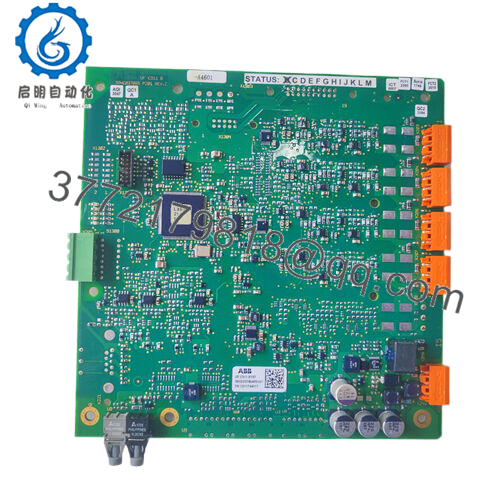
 WhatsApp: +86 16626708626
 Email:
  Phone: +86 16626708626
Description
Key Technical Specifications
For detailed engineering values (cell constant, pressure, temperature limits, wiring), always cross-check with the official ABB TYPE 8225 / conductivity sensor datasheet and your specific analyzer/loop documentation.
| Parameter | Value |
|---|---|
| Brand | ABB |
| Model | 3BHB040253R0001 |
| ABB type designation | TYPE 8225 Replacement Kit |
| Product description | Conductivity sensor kit for process measurement and monitoring |
| Product category | Conductivity sensor / analytical instrumentation accessory |
| Typical application | Power industry, petrochemical, and general process liquid conductivity measurement |
| Country of origin | Sweden (SE) |
| Gross weight | 4.4 kg (kit, packed) |
| Customs tariff number | 90278011 (instruments for physical/chemical analysis, incl. measuring conductivity) |
| Mounting style | As per TYPE 8225 sensor mechanical design (immersion or flow cell, per datasheet) |
| Electrical interface | Compatible with ABB conductivity transmitters/controllers specified for TYPE 8225 |
| Operating environment | Industrial process environment; temperature and pressure limits per ABB sensor specs |
4. Product Introduction
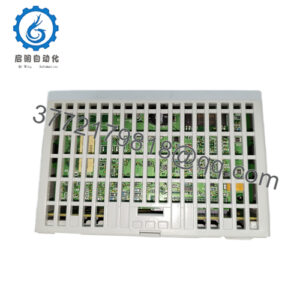
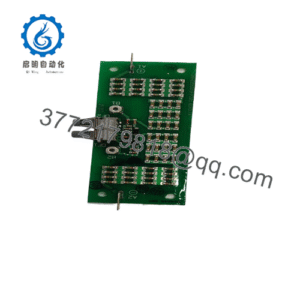
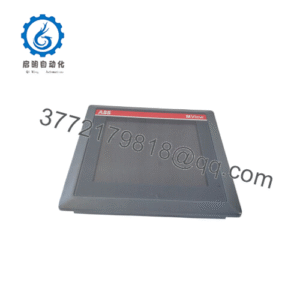
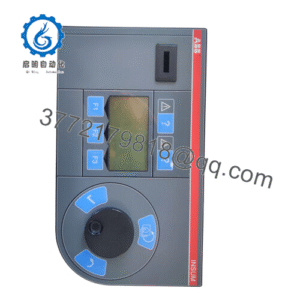
The ABB 3BHB040253R0001 is a TYPE 8225 conductivity sensor replacement kit used in industrial process measurement, typically in power generation, petrochemical, and water treatment applications. It provides the sensing hardware needed to keep existing ABB conductivity monitoring loops in service without changing the associated transmitter or control logic.
Engineers usually specify this kit when they need a direct OEM replacement for an installed TYPE 8225 sensor, keeping wetted materials, wiring, and measurement performance consistent with the original design. That keeps qualification work, re-calibration effort, and validation time to a minimum compared with switching to a different sensor family.
5. Troubleshooting Quick Reference
Use this table when you are trying to decide if the 3BHB040253R0001 / TYPE 8225 sensor kit is actually the culprit, or if the issue lives in the transmitter, wiring, or process.
| Symptom | Possible Cause | Relevance to this Part | Quick Check Method | Recommendation |
|---|---|---|---|---|
| Reading stuck at 0 µS/cm | Open circuit sensor, broken cable, or shorted terminals | ✅ High | Measure continuity from sensor pins to junction box; inspect cable for damage | If wiring is intact and transmitter is powered, suspect failed sensor and replace with new kit. |
| Reading pegged at max range | Sensor fouled, short in cable, wrong range scaling | ✅ High | Pull sensor from process (if safe), inspect for scaling build-up or deposits | Clean per ABB procedure; if still pegged with clean sensor and good wiring, replace the sensor. |
| Slow response to conductivity change | Heavy fouling or aged sensor | ✅ High | Step change conductivity with a known standard solution and watch response time | If response is much slower than spec or previous behavior, plan a replacement during next outage. |
| Large drift vs. lab sample | Sensor aging, temp compensation mismatch, or wiring | ⚠️ Medium | Compare online reading vs. grab-sample lab value at stable process conditions | Re-calibrate transmitter first; if drift persists, schedule sensor replacement. |
| No signal, transmitter error | Power or transmitter fault, not the sensor | ❌ Low | Check transmitter display, supply voltage, and internal diagnostics | Verify transmitter and power before blaming the sensor; replace sensor only after those are good. |
| Intermittent noisy reading | Loose glands, moisture in junction box, EMI coupling | ⚠️ Medium | Open junction box, check dryness, cable shield termination, and terminal tightness | Fix wiring and shielding first; if noise follows the sensor to another loop, change the sensor. |
| Sudden step change with no process shift | Sensor cracked or process ingress into body | ✅ High | Inspect sensor body for cracks, discoloration, or leakage when removed | Do not reinstall a damaged sensor; install a new kit and re-check calibration. |
If you are stuck, take photos of the sensor installation, junction box, and transmitter faceplate, note the tag number and transmitter model, and send that along with a short trend of the conductivity signal to technical support.

- 3BHB040253R0001
6. Frequently Asked Questions (FAQ)
Q1: What exactly is ABB 3BHB040253R0001 used for?
It is a TYPE 8225 conductivity sensor replacement kit used to measure the conductivity of process liquids in industrial applications such as power, petrochemical, and water treatment systems. In most plants, it drops into an existing ABB analytical loop where a TYPE 8225 sensor was originally specified.
Q2: Is 3BHB040253R0001 a direct replacement for my existing TYPE 8225 sensor?
Yes, this part number is identified as a TYPE 8225 replacement kit, so if your installed bill of materials or transmitter manual calls out TYPE 8225, this is the intended OEM replacement assuming the same materials and connection style. You should still verify mechanical connection (thread, flange, or flow cell) and any wetted material requirements against your P&IDs and spec sheets before ordering.library.
Q3: Does this kit include the transmitter, or only the sensor hardware?
This part is documented as a “conductivity sensor kit,” which refers to the sensing assembly and related hardware, not the analyzer or transmitter itself. The existing ABB transmitter in your panel usually stays in place and connects electrically to the new sensor according to the wiring diagram.
Q4: Is the ABB 3BHB040253R0001 / TYPE 8225 kit still an active product or effectively obsolete?
The part is still listed in current ABB-related catalogs and third-party listings, but in practice it behaves like a specialized kit with limited regional stock rather than a high-volume catalog item. That means you should always confirm actual availability and lead time before planning a shutdown or large replacement campaign.
Q5: Why does this sensor kit cost more than generic conductivity probes?
You are paying for an OEM-matched kit that fits an ABB loop and is documented as a TYPE 8225 replacement, with known mechanical, electrical, and metrological behavior in existing ABB architectures. Cheaper generic probes often require adapters, rewiring, or transmitter changes, and they can fail qualification or validation in regulated plants.
Q6: How should I handle installation to avoid early failure?
Treat it like any precision analytical sensor: use a proper grounding and shielding scheme, avoid over-torque on process fittings, and follow ABB’s cleaning and calibration procedures. If your process is hot, dirty, or chemically aggressive, double-check the allowed temperature, pressure, and material compatibility in the ABB datasheet before you commit to the install.
Q7: What warranty and condition should I expect when buying this part as surplus?
New original or new surplus units should still be unused and carry at least a basic third-party warranty period, often 6–12 months from shipment, while refurbished kits (if offered) will typically have a shorter warranty and may be limited to specific applications. Always ask the seller to confirm whether the kit is new original, new surplus, or refurbished and request photos of the actual item and packaging before purchase.