 WhatsApp: +86 16626708626
 Email:
  Phone: +86 16626708626
Description
3. Key Technical Specifications
| Parameter | Value |
|---|---|
| Product Type | Automatic Voltage Regulator (AVR) |
| Input Voltage | 24–250 V AC/DC (wide range) |
| Output Current | 8 A continuous (16 A peak) |
| Voltage Regulation Accuracy | ±0.25% of setpoint |
| Frequency Range | 40–70 Hz |
| Response Time | <20 ms (95% load step) |
| Communication Protocols | Modbus RTU |
| Field Output Voltage | Up to 250 V DC |
| Operating Temperature | −40 to +70 °C |
| Protection Class | IP20 |
| Humidity Range | 5–95% non-condensing |
| Dimensions | 144 × 144 × 155 mm |
4. Product Introduction & Supply Chain Strategy
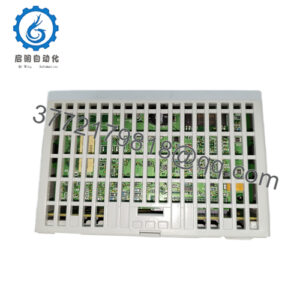
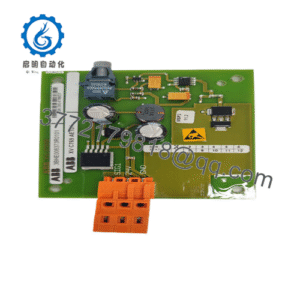
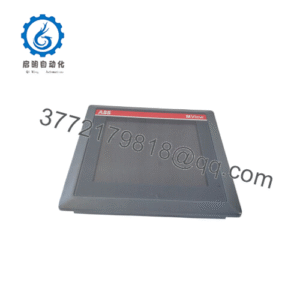
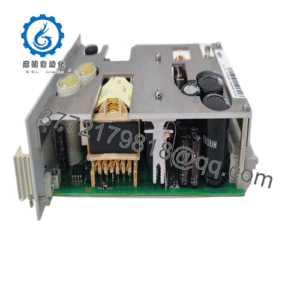
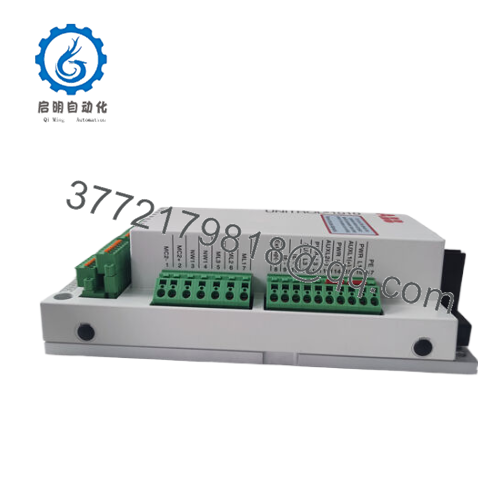
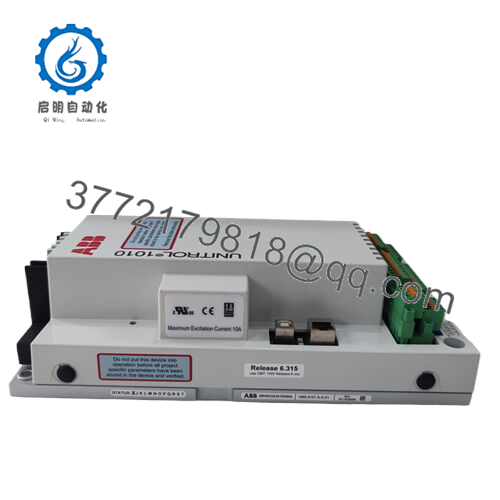
The ABB 3BHE035301R0001 UNS0121A-Z,V1 (UNITROL1010) is a digital automatic voltage regulator used to control excitation systems in synchronous generators. It stabilizes terminal voltage, manages reactive power, and ensures grid synchronization in power plants, industrial generation, and backup energy systems.
From a supply-chain standpoint, this is a mission-critical control node within generator systems. Failure leads directly to generator trips or unstable voltage conditions. Lead time variability is increasing due to lifecycle maturity. Securing New Surplus units reduces exposure to forced outages and eliminates the failure risk associated with refurbished excitation controllers. Maintaining buffer stock aligns with TCO optimization for high-availability power assets.

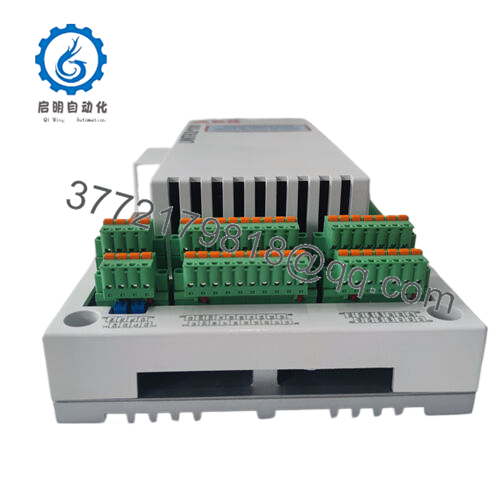
- UNITROL1010
5. Installation & Configuration Guide
Stage 1: Pre-Installation (Prep & Safety)
- Execute lock-out/tag-out (LOTO) on generator and excitation system.
- Use ESD grounding—controller boards are sensitive.
- Record parameter settings (AVR mode, PID tuning, protection limits).
- Back up configuration via engineering tool or SCADA system.
Stage 2: Removal
- Isolate auxiliary supply and field excitation circuits.
- Disconnect control wiring, labeling all analog and communication lines.
- Remove mounting screws and extract controller without stressing connectors.
Stage 3: Installation (Clone & Seat)
- Install module in panel cutout or rack per ABB mounting standard.
- Reconnect all wiring exactly as documented.
- Restore parameter settings or upload backup configuration.
- Verify CT/PT signal inputs and polarity alignment.
Stage 4: Power-On & Testing
- Energize auxiliary supply first, then excitation circuit.
- Confirm normal startup—no protection alarms.
- Validate AVR mode operation and voltage stability.
- Perform synchronization test (phase, frequency, voltage matching).
6. Firmware/Software Versions & Upgrade Notes
- Recommended Practice: Maintain identical firmware version to the existing UNITROL system.
- Compatibility Risk: Firmware differences can affect protection functions, communication protocols, and AVR tuning behavior.
- Critical Warning:
- Upgrading firmware may alter excitation control loops (PID/PSS), requiring full recommissioning.
- Downgrading may disable newer communication interfaces (e.g., Ethernet-based protocols).
- Always document firmware and parameter sets before replacement to avoid extended commissioning time.
7. Frequently Asked Questions (FAQ)
Q1: Is this unit truly new or surplus?
This product is a Brand New Surplus unit. It is not used, not refurbished, and not removed from a running plant. All components are original with zero operational wear.
Q2: Why is this priced above refurbished AVR units?
Excitation controllers are high-risk failure points. Refurbished units often contain aged power electronics (IGBTs, capacitors). A failure can trip a generator instantly, leading to major production loss.
Q3: Is this module considered EOL?
The UNITROL 1000 platform is mature. While still supported, supply is tightening. A last-time-buy strategy should be evaluated for plants with long operational horizons.
Q4: What is the recommended stocking policy?
- Critical generator: Minimum 1 unit onsite (insurance spare)
- Multi-generator plant: 1–2 units shared across assets
- Consider vendor consolidation to secure consistent sourcing
Q5: Can this controller be hot-swapped?
No. Full shutdown and isolation of excitation circuits are required. Hot-swapping risks damage to generator field circuits.
Q6: What happens if configuration is lost?
Improper parameter restoration can cause unstable voltage control or protection trips. Always back up settings before removal.
Q7: What is the expected lifecycle?
New Surplus units typically support 10–15 years of operation under standard conditions, significantly extending system service life and reducing lifecycle replacement frequency.