 WhatsApp: +86 16626708626
 Email:
  Phone: +86 16626708626
Description
- Product Core Brief
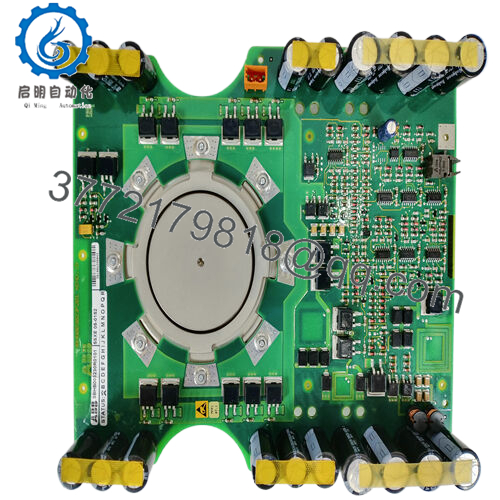
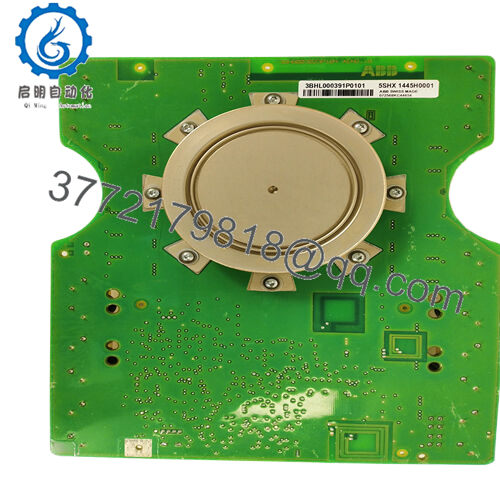
- Model: 3x120uF, 2750V (3BHL000250P0002)
- Brand: ABB
- Series: MV Commodity Parts / Filter Capacitors
- Core Function: DC link / LCL harmonic filtering
- Product Type: Three-phase film capacitor assembly
- Key Specs: 3 × 120 µF capacitance, 2750 V rating (some 3300 V noted), film dielectric
- Condition: New Original / New Surplus
- ⚠️ Obsolete Model – Limited Stock Available
- Key Technical Specifications
- ABB Type Designation: 3x120uF, 2750V
- Capacitance: 3 × 120 µF (three-phase configuration)
- Rated Voltage: 2750 V (DC or AC RMS; confirm per application – some sources list 3300 V)
- Dielectric Type: Film (polypropylene or similar high-energy density)
- Application: Filter in MV drives (e.g., ACS1000 DC link / LCL)
- Mounting: Busbar or cabinet bolted (heavy-duty terminals)
- Operating Temperature: Typically −40 to +70 °C (junction/ambient; verify datasheet)
- Protection: Self-healing properties typical for film caps
- Weight: Approx. 65.11 kg (net product weight per ABB reference)
- Dimensions: Large enclosure (refer to outline drawing; shipping weight often 90 kg)
- Country of Origin: Varies (often Europe or Asia for ABB MV parts)
- Product Introduction
The ABB 3BHL000250P0002 is a three-phase filter capacitor rated 3 × 120 µF at 2750 V, used primarily in medium-voltage variable frequency drives like the ACS1000 series. It forms part of the LCL filter or DC link to suppress harmonics, stabilize voltage, and improve power quality on the grid side.
In field experience with ACS1000 installations (mining, oil & gas, pumps), this capacitor handles high ripple currents and voltage stress reliably when properly cooled and monitored. Its film construction offers better self-healing and lower losses than electrolytic alternatives, though size and weight demand careful rack planning during swaps.
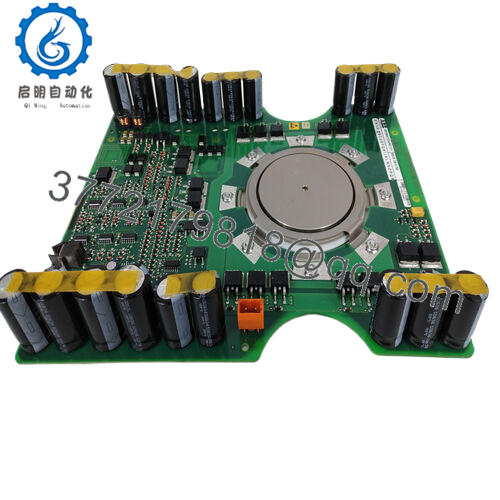
- 3BHL000250P0002
- Installation & Configuration Guide
Stage 1: Pre-Installation Preparation (30–60 min) ⚠️ Safety First: Full MV drive shutdown required. Lock out/tag out all power (input, DC bus). Discharge capacitors thoroughly (use discharge tool/resistor per manual; wait 10+ minutes minimum). Ground busbars. Use arc-flash PPE. Tools Required: Torque wrench (per spec), insulated tools, multimeter/megger, discharge resistor kit, lifting equipment (crane/fork for 65+ kg), smartphone for photos, thermal imaging camera (post-test). Data Backup: Photograph capacitor mounting, busbar connections, torque marks, and any labeling. Note drive firmware/parameters related to filter monitoring (if applicable).
Stage 2: Removing the Old Capacitor (45–90 min)
- Confirm full discharge (megger bus to ground >100 MΩ).
- Disconnect busbar links/terminals (label phases, torque off gradually).
- Unbolt mounting brackets or enclosure fixings (support weight during removal).
- Carefully lift out (team lift or hoist); inspect busbars for arcing or pitting. ⚠️ Note: Retain old unit for analysis if failure suspected (e.g., bulging, leakage).
Stage 3: Installing the New Capacitor (45–90 min)
- Confirm exact match (3BHL000250P0002, voltage/capacitance). Inspect for shipping damage (no dents, clean terminals).
- Configuration Clone (Crucial): No switches here – but ensure phase orientation and busbar connections match photos exactly (A/B/C phasing critical).
- Position and bolt to mounting (torque per ABB spec, typically 20–50 Nm depending on bolt size; use thread locker if specified).
- Reconnect busbars/terminals (clean contacts, apply anti-oxidant if needed; torque evenly). Self-Checklist: [ ] Torque verified, [ ] Phasing correct, [ ] No loose hardware, [ ] Grounding intact.
Stage 4: Power-On & Testing (60–120 min) Pre-Power Check: Megger insulation (>100 MΩ phase-to-ground/phase-to-phase). Verify no shorts. Power-On Steps:
- Power up control circuits; check no pre-charge faults.
- Gradually energize main power (follow drive startup sequence).
- Monitor DC bus voltage stability and ripple (scope or drive HMI).
- Run no-load/low-load test; use thermal camera on capacitor body for hot spots.
- Full load commissioning; log filter performance parameters. ⚠️ Troubleshooting Note: High ripple or overvoltage = possible mismatch or poor connection. Overheating = inadequate cooling or torque issue. Drive trip on cap fault often points to degraded old unit – compare ESR if testable.
- Frequently Asked Questions (FAQ)
Can this filter capacitor be hot-swapped or replaced under power? No – impossible and extremely dangerous. MV DC bus holds lethal charge even after shutdown. Always discharge, lock out, and ground before any work. Skipping this has caused serious incidents.
Is this model obsolete, and is your stock genuinely new? Yes, discontinued as of recent years (surplus/residual stock only in 2026). Our units are new original or surplus from verified channels – we provide photos of packaging/serial numbers and basic tests (capacitance check, insulation) on request.
What is the direct replacement if this is out of stock? ABB may offer updated equivalents in current MV drive spares (e.g., revised filter caps for ACS1000/ACS2000 successors). Check exact capacitance, voltage, and physical dimensions from the drive manual. Substitutes from other vendors require full qualification for ripple current and self-healing.
Will swapping the capacitor require drive re-configuration? Typically no – parameters live in the drive controller. But after install, verify filter monitoring thresholds (if equipped) and perform full commissioning test. Slight tolerance differences can affect harmonic performance.
Why is the price lower than ABB factory list? Discontinued surplus from excess spares, decommissioned drives, or channel overstock – genuine ABB part. We inspect for physical integrity, test basic capacitance/insulation, and provide traceability. You avoid long OEM lead times (if any remain) and pay aftermarket rates for tested hardware.