 WhatsApp: +86 16626708626
 Email:
  Phone: +86 16626708626
Description
2. Product Core Brief
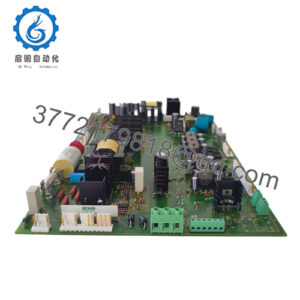
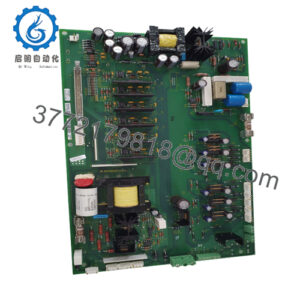
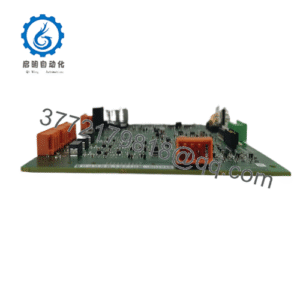
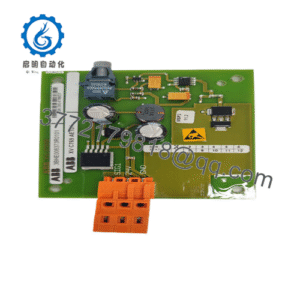
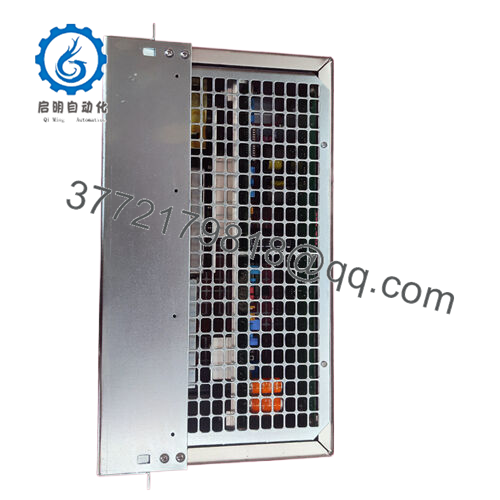
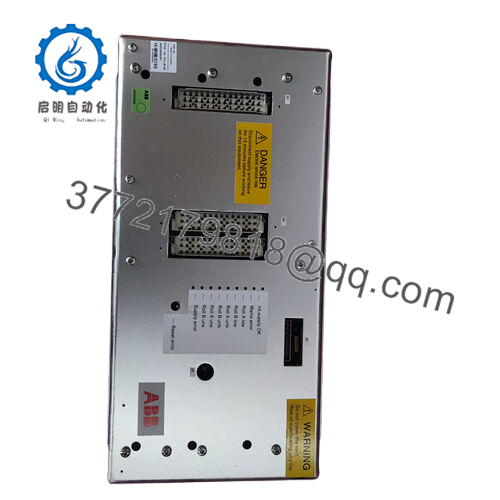
- Model: PFSA103D (3BSE002489R1)
- Brand: ABB
- Series: ABB Tension Electronics System
- Core Function: Amplifies and processes load cell tension signals
- Product Type: Tension Measurement Amplifier / Control Module
- Key Specs: Dual load cell input, analog output control, industrial web tension measurement
- Condition: New Original / New Surplus
3. Key Technical Specifications
| Parameter | Value |
|---|---|
| Model Number | PFSA103D |
| ABB Part Number | 3BSE002489R1 |
| Product Type | Tension Measurement Amplifier |
| Input Type | Load cell signals (strain gauge based) |
| Number of Inputs | Dual load cell channels |
| Output Signals | Analog control output |
| Power Supply | 24 V DC |
| Signal Processing | Web tension measurement and amplification |
| Mounting | Industrial control cabinet mounting |
| Operating Temperature | 0 °C to +55 °C (typical industrial rating) |
| Application | Web handling systems (paper, film, foil lines) |
| Weight | Approx. 0.6 kg |
Verify exact wiring and signal scaling with the official ABB datasheet before installation.
4. Product Introduction
The ABB PFSA103D (3BSE002489R1) is a tension measurement amplifier used in ABB web tension control systems. It receives low-level signals from strain gauge load cells and converts them into stable analog control signals for industrial web handling lines such as paper mills, film production, foil processing, and converting machines.
In field deployments, this unit typically works with ABB tension controllers and drive systems to maintain constant web tension during winding, unwinding, or coating processes. The PFSA103D is chosen when stable load cell signal conditioning and accurate tension feedback are required in continuous production environments.

- PFSA103D
5. Troubleshooting Quick Reference
| Symptom | Possible Cause | Relevance to this Part | Quick Check Method | Recommendation |
|---|---|---|---|---|
| No output signal to controller | Loss of 24 V supply | ❌ Low | Measure 24 V DC at power input terminals with a multimeter | Verify cabinet PSU and fuse first |
| Tension reading stuck at zero | Load cell wiring failure | ❌ Low | Measure mV signal directly at load cell terminals | Check field wiring and sensor before replacing module |
| Tension signal drifting | Grounding or shielding issue | ❌ Low | Inspect shield grounding and cable routing | Ensure shield grounded at one end only |
| Output fluctuates heavily | Signal amplifier fault | ✅ Medium | Disconnect load cells and inject calibrated mV signal | Replace module if instability persists |
| No response from both load cell channels | Internal amplifier failure | ✅ High | Check LED status and verify stable input voltage | Module replacement usually required |
Field note: Load cells and cable shielding cause more failures than the electronics. Check sensors first before ordering a replacement.
If diagnostics are unclear, send photos of wiring terminals and controller readings for review.
6. Frequently Asked Questions (FAQ)
Q1: What exactly does the ABB PFSA103D module do?
It conditions the very small millivolt signals produced by strain gauge load cells and converts them into stable analog signals used by tension controllers or drives. Without this amplifier stage, the control system cannot accurately read web tension.
Q2: Is the PFSA103D still manufactured by ABB?
In many regions this module is considered legacy equipment. Large numbers remain in installed web tension systems, especially in paper mills and converting lines. Availability typically comes from surplus or distributor stock.
Q3: Can this module be replaced while the cabinet is powered?
No. This is not designed for hot swapping. Removing it under power risks damaging the signal electronics or backplane wiring. Shut down the control cabinet and discharge power before replacement.
Q4: Do I need to recalibrate the system after installing a replacement?
Usually yes. Even if the module is identical, load cell systems often require zero calibration and span verification after installation. Most technicians run a quick calibration routine in the tension controller.
Q5: Why is this unit listed as “New Surplus” instead of factory new?
New Surplus means the module is unused OEM hardware sourced from excess industrial inventory. It was never installed in production equipment but may have been stored as spare stock from a project.
Q6: Does replacing the PFSA103D affect PLC programming?
No program changes are normally required. The module outputs analog signals to the control system. However, verify scaling parameters and calibration settings after installation.
Q7: What usually fails first in a tension measurement system?
From field experience, load cells and wiring fail far more often than the amplifier. Moisture ingress, crushed cables, and improper grounding are the common causes. Always test the sensor output before condemning the electronics.