 WhatsApp: +86 16626708626
 Email:
  Phone: +86 16626708626
Description
2. Product Core Brief
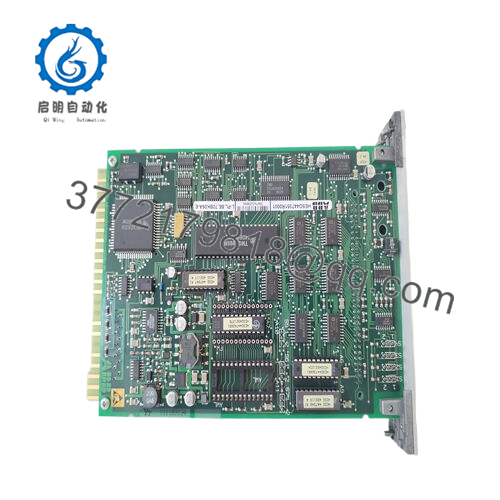
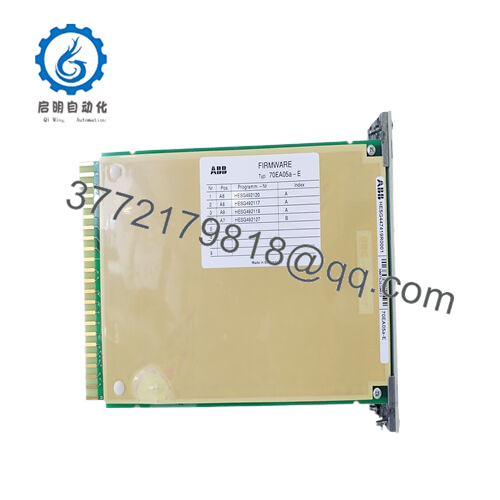
- Model: 70EA02A-ES / HESG447308R0001 / HESG447308R1
- Brand: ABB
- Series: Procontrol P13 I/O Module
- Core Function: Acquire 2-wire transmitter signals
- Product Type: Analog Input Module
- Key Specs: 4 channels | 4-20 mA input | 24 V DC supply
- Condition: New Original / New Surplus (Never refurbished)
- Inventory Status: Classic legacy I/O; strategic buffer stock advised to avoid stock-outs
3. Key Technical Specifications
| Parameter | Value |
|---|---|
| Device Type | Analog Input Module for 2-Wire Transmitters |
| ABB Part Numbers | 70EA02A-ES, HESG447308R0001, HESG447308R1 |
| Series | Procontrol P13 |
| Channels | 4 |
| Input Type | 4-20 mA / 0-10 V from 2-wire transmitters |
| Power Supply | 24 V DC |
| Operating Temp | Typically 0 °C to +55 °C |
| Communication | Legacy backplane / host interface |
| Mounting | Panel / rack module |
| Weight | ~0.4–0.6 kg |
| Origin | Sweden / Switzerland |
Core function and hardware role confirmed by multiple industrial listings.
4. Product Introduction & Supply Chain Strategy
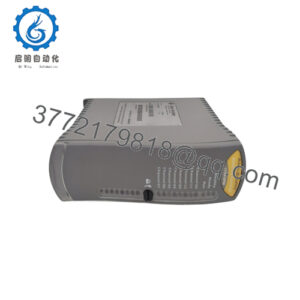
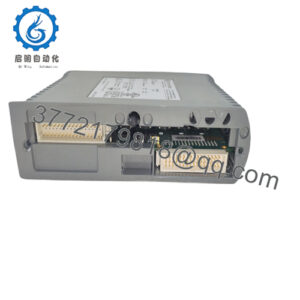
The ABB 70EA02A-ES is a 4-channel analog input module in the Procontrol P13 series, engineered to interface 2-wire transmitters (pressure, temperature, flow) with industrial control systems. It translates analog field signals into process control data for legacy PLC/DCS platforms.
From a supply chain perspective, this is a classic medium-priority I/O spare with relatively low annual usage but high impact on uptime if failed. Due to lead time variability on legacy Procontrol gear and lifecycle transitions, holding 1–2 units as buffer stock reduces stock-out incidents and mitigates costly emergency buys while optimizing Total Cost of Ownership. Never accept refurbished I/O spares that risk latent contact faults.
5. Installation & Configuration Guide
Stage 1: Pre-Installation (Prep & Safety)
- Perform full lock-out/tag-out on the control rack and isolate all power feeds.
- Discharge residual energy; confirm with a meter before handling logic modules.
- Wear a grounded ESD strap; logic board damage can occur from static.
- Photograph existing module orientation and ribbon/terminal connections.
- Record configuration or DIP settings associated with the I/O module.
Stage 2: Removal
- Release the retaining clips or rack latch securing the 70EA02A-ES.
- Extract the module straight out; avoid bending backplane pins.
- Inspect backplane and neighboring modules for debris or bent contacts.
Stage 3: Installation (Clone & Seat)
- Align module edge connector with backplane guide; seat fully with firm, even pressure.
- Ensure fixings or clips are seated and secure.
- Reconnect field wiring exactly as documented—do not rely on memory.
- Confirm torque values on terminals per ABB installation guidelines.
Stage 4: Power-On & Testing
- Restore control bus power and monitor for fault indicators.
- Validate module health via status LEDs or host diagnostic.
- Perform signal integrity tests on all 4 channels (4–20 mA range).
- Observe noise levels and verify accurate data transmission to the controller.
6. Firmware/Software Versions & Upgrade Notes
- The 70EA02A-ES does not contain field-upgradeable firmware; its compatibility depends on the host controller firmware and legacy P13 bus.
- Before replacement, document existing controller versions, serial port settings, and I/O addressing.
- Avoid upgrading controller firmware concurrently with this hardware swap unless required for higher level system support—mismatched control firmware on legacy I/O can create protocol timeouts.
- Retaining configuration backups prior to change is critical to avoid mis-addressing and signal mapping errors.

- 70EA02A-ES
7. Frequently Asked Questions (FAQ)
Q1: Is this part genuinely new surplus?
Yes. This is a Brand New Surplus module with original manufacturing and anti-static packaging. It is not used, pulled from decommissioned equipment, or refurbished. Pricing reflects acquisition savings compared to full OEM list but carries lower risk than secondary market parts.
Q2: Why hold buffer stock for this I/O module?
Procontrol P13 modules face long lead times and limited current production. Holding 1–2 units of buffer stock mitigates lead time variability and prevents system outages if a field I/O module fails unexpectedly.
Q3: What risks come with refurbished I/O modules?
Refurbished logic modules may have degraded contact reliability or unseen board damage. These latent faults can cause intermittent signal errors, leading to misguided control decisions and unplanned downtime.
Q4: Can this be hot-swapped?
No. This module resides in a control rack. You must de-energize the system and follow lock-out/tag-out before service to avoid backplane faults or data corruption.
Q5: Does swapping this affect controller programming?
The hardware swap itself does not change controller logic. However, ensure that all configuration settings relating to analog scaling and channel mapping are replicated exactly after installation.
Q6: What warranty terms apply?
New Surplus parts typically carry a minimum 12-month warranty. Confirm specific terms with your supplier.
Q7: What stocking level do you recommend?
Classify this as a critical A/B item with low annual usage but high operational impact. Maintain 1–2 units of buffer stock and align vendor consolidation to minimize carrying cost and stock-outs.