 WhatsApp: +86 16626708626
 Email:
  Phone: +86 16626708626
Description
3. Key Technical Specifications
| Parameter | Value |
|---|---|
| Manufacturer | ABB |
| Model | AI820 |
| Part Number | 3BSE008544R1 |
| Product Type | Analog Input Module |
| Channels | 4 differential (bipolar) |
| Input Signals | ±20 mA, 0–20 mA, 4–20 mA, ±10 V, 0–10 V |
| Resolution | 14-bit + sign |
| Input Impedance | 250 Ω (current), ≥200 kΩ (voltage) |
| Isolation | Group isolation from ModuleBus |
| Protection | Up to 30 V DC accidental input protection |
| Power Consumption | ~1.7 W |
| Operating Temperature | 0 to +55°C |
| System Compatibility | ABB S800 I/O / 800xA / AC 800M |
| Diagnostics | LED status (RUN, FAULT, WARNING) |
| Lifecycle Status | Active (long installed base) |
4. Product Introduction & Supply Chain Strategy
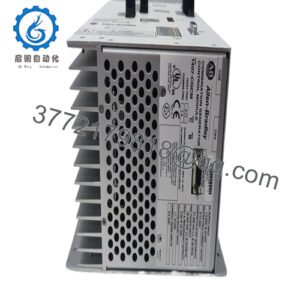
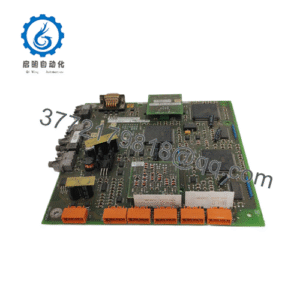
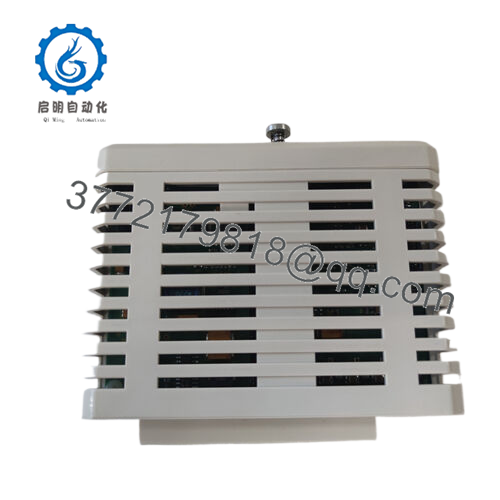
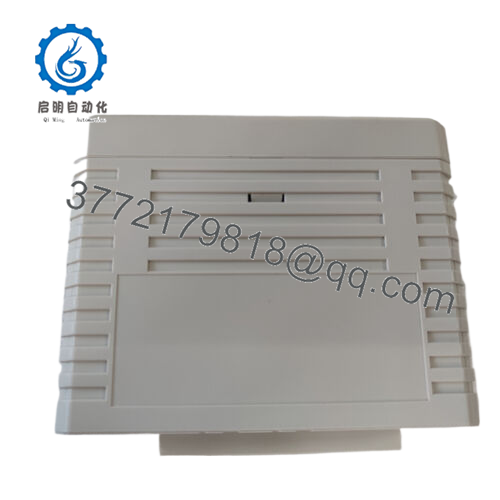
The ABB AI820 3BSE008544R1 is a 4-channel analog input module within the S800 I/O platform, designed to acquire process signals such as pressure, flow, and temperature from field transmitters and convert them into digital data for DCS processing. It supports both current and voltage inputs with differential measurement and built-in signal protection.
From a supply-chain perspective, this is a high-deployment module in process industries, making stock-out risk more critical than obsolescence. Maintaining buffer stock reduces exposure to lead time variability and avoids production interruptions. New Surplus sourcing ensures signal accuracy and eliminates hidden drift risks associated with aged components, improving Total Cost of Ownership (TCO).

- AI820 3BSE008544R1
5. Installation & Configuration Guide
Stage 1: Pre-Installation (Prep & Safety)
- Apply lock-out/tag-out (LOTO) to the control cabinet.
- Use ESD protection (grounded wrist strap required).
- Document field wiring and channel assignments.
- Verify compatible MTU (e.g., TU810, TU830).
Stage 2: Removal
- Confirm ModuleBus power is isolated.
- Release module latch and remove from baseplate.
- Avoid lateral force to prevent connector damage.
Stage 3: Installation (Clone & Seat)
- Insert module into S800 baseplate slot.
- Ensure full seating into backplane connector.
- Reconnect field wiring via MTU interface.
Stage 4: Power-On & Testing
- Restore system power and monitor LED indicators.
- Confirm RUN LED steady, no FAULT alarms.
- Validate input signals via DCS (4–20 mA loop checks).
- Perform loop calibration if required.
6. Firmware/Software Versions & Upgrade Notes
- System Integration: Works with AC 800M controllers and System 800xA platforms.
- Compatibility Note: Ensure controller firmware supports the S800 I/O revision level.
- Configuration Risk: Signal scaling and channel type (current vs voltage) must match engineering configuration exactly.
- Upgrade Warning: Changing controller firmware without validating I/O mapping can result in incorrect signal interpretation.
- Best Practice: Export and archive control logic and I/O configuration before module replacement.
7. Frequently Asked Questions (FAQ)
Q1: Is this AI820 module truly new?
Yes. This is a Brand New Surplus unit. It is not used, not refurbished, and not removed from a plant. All terminals and connectors are unused and verified through QC testing.
Q2: Why not use refurbished I/O modules?
Analog modules degrade over time—especially input resistors and A/D converters. Signal drift can cause process instability. A small saving upfront can lead to major process deviations and downtime costs.
Q3: Is this module obsolete?
No, it remains active, but due to its large installed base, demand spikes can create supply shortages. Buffer stock is recommended for critical loops.
Q4: Can this module be hot-swapped?
In most S800 configurations, hot-swapping is not recommended unless explicitly engineered for redundancy. Always isolate power to avoid signal spikes or channel faults.
Q5: Does it support HART communication?
The module can tolerate HART signals on the loop, but it does not process HART data internally.
Q6: What stocking strategy do you recommend?
- Critical process units: Maintain 1–2 modules as buffer stock
- Multi-line plants: Enable cross-site sharing
- High-density I/O racks: Keep additional safety stock to cover failure clustering
Q7: What warranty and QC controls are included?
Each unit includes 12months warranty, serial traceability, and full QC validation (signal simulation, electrical testing, and communication verification).