 WhatsApp: +86 16626708626
 Email:
  Phone: +86 16626708626
Description
2. Product Core Brief
- Model: AI845
- Brand: ABB
- Series: S800 I/O
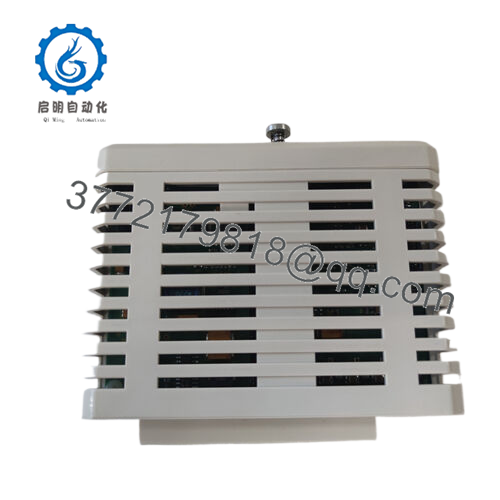
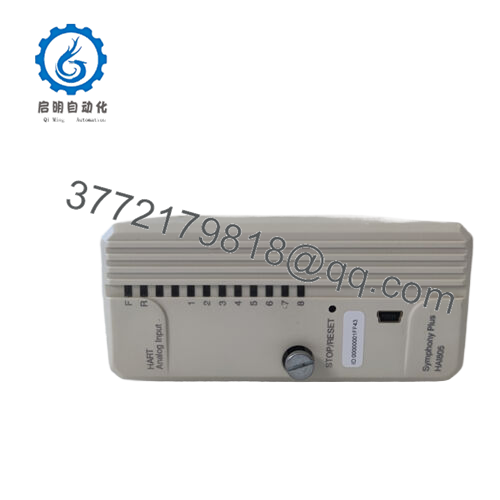
- Core Function: Analog signal acquisition
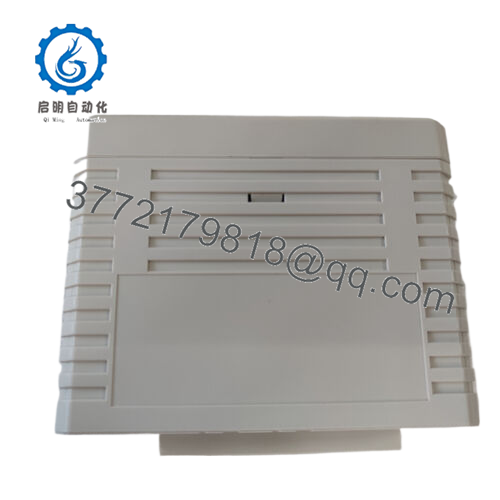
- Product Type: Analog Input Module
- Key Specs: 8 channels | 0/4-20 mA or 0/1-5 V | HART support | Redundancy capable
- Condition: New Surplus (original OEM manufacturing, QC tested, anti-static packaged)
- Inventory Status: Active spare—strategic buffer recommended as S800 ecosystem matures and lead times vary
3. Key Technical Specifications
- Article number: 3BSE023675R1
- Channels: 8 (single-ended, unipolar)
- Signal ranges: 0..20 mA, 4..20 mA, 0..5 V, 1..5 V
- Resolution: 12 bit
- Accuracy: Max. 0.1%
- Input impedance: 250 Ω (current), 10 MΩ (voltage)
- HART support: Yes (pass-through and diagnostics)
- Redundancy: Yes (single or redundant applications)
- Isolation: Groupwise from ground; rated 50 V
- Transmitter power: Current-limited, supervised per channel
- Update time: 10 ms cycle
- Input filter: 290 ms (0-90% rise)
- Power dissipation: 3.5 W
- Current consumption: +5 V Modulebus 100 mA; +24 V Modulebus 50 mA; external +24 V max 265 mA
- Operating temperature: 0 to +55 °C
- Mechanics: S800 DIN rail mount (TU854 terminal unit compatible)

- AI845 3BSE023675R1
4. Product Introduction & Supply Chain Strategy The ABB AI845 (3BSE023675R1) analog input module captures precise signals from field transmitters in System 800xA setups. It supports HART for configuration, diagnostics, and multivariable data over the same wiring, enabling reliable monitoring and control in process industries with redundant options for high-availability loops.
New Surplus procurement protects ongoing S800 operations effectively. While the platform endures, module lead times fluctuate with demand—stock-outs on AI845 can delay analog loop restoration and amplify production losses. Genuine New Surplus sidesteps refurbished concerns like converter drift, HART communication dropouts, or power faults that degrade measurement integrity. Keep 1-2 units on-site as buffer stock to minimize exposure, reduce total cost of ownership versus refurbished uncertainty or extended OEM sourcing, and maintain uptime in mature installations.
5. Installation & Configuration Guide Stage 1: Pre-Installation (Prep & Safety) Lock out/tag out the I/O station power. Discharge any stored energy. Wear grounded ESD wrist strap. Photograph existing module: orientation, terminal block wiring, any labeling, and HART connections if visible. Verify tools: ESD-safe screwdriver, torque driver, multimeter for continuity/insulation checks.
Stage 2: Removal Power down the S800 station. Confirm zero voltage on terminals. Disconnect field wiring carefully (note positions or use labels). Loosen mounting clips/screws. Extract module straight from DIN rail—avoid bending pins or stressing backplane. Inspect contacts and terminal unit for damage. Bag removed unit ESD-safe.
Stage 3: Installation (Clone & Seat) Seat new module fully into the TU854 (or compatible) terminal unit—ensure proper alignment and click-lock. Reconnect field wiring exactly as photographed (match polarity and HART lines). Torque terminals per ABB spec (typically 0.5-0.6 Nm). Verify no loose connections.
Stage 4: Power-On & Testing Apply power step-by-step. Monitor module LEDs for status (power, run, no faults). Use 800xA engineering tools to download configuration and verify channel mapping. Perform HART polling/diagnostics on connected devices. Check input readings against known sources, confirm no over/under range alarms, and run loop tests before full process integration.
6. Firmware/Software Versions & Upgrade Notes The AI845 module has no onboard firmware—HART handling and I/O processing are hardware-based, with configuration managed via System 800xA control builder or engineering station software. No direct firmware version applies to the module itself.
Compatibility note: Fully compatible across S800 I/O generations in 800xA systems—drop-in replacement for single/redundant setups. Document existing controller firmware and I/O configuration before swap. Software upgrades during replacement can affect HART polling rates or diagnostics—always backup config, test in engineering mode, and validate channel accuracy post-install.
7. Frequently Asked Questions (FAQ) Is this really new and not refurbished? Yes—this is New Surplus from authorized channels: original ABB factory production, opened only for QC (visual/electrical), zero hours in service, no repairs or component swaps. We exclude refurbished or field-pulled units.
Why pay more for New Surplus than refurbished options? Refurbished appears cheaper upfront but risks ADC aging, HART interface wear, or power regulation faults that cause signal noise, lost device comms, or false trips—downtime costs multiply savings many times. New Surplus delivers factory accuracy and HART reliability at below current OEM list, with shorter risk than variable lead times.
Is the AI845 obsolete or facing availability issues? S800 I/O stays supported in 800xA, but specific modules like AI845 experience supply variability. Strategic stocking of 1-2 New Surplus units guards against delays without forcing system migrations.
Can this analog input module be hot-swapped? Yes—in redundant configurations with proper setup (e.g., paired modules and controller support). For single setups, always power down the station, discharge, and lock out to avoid data corruption or safety risks. Follow ABB redundancy guidelines.
Does the module retain any configuration? No—configuration (channel ranges, HART parameters, scaling) loads from the controller via engineering tools. Backup/export config before removal, then reload to the new module. Photos aid wiring verification.