 WhatsApp: +86 16626708626
 Email:
  Phone: +86 16626708626
Description
3. Key Technical Specifications
| Parameter | Value |
|---|---|
| Manufacturer | ABB |
| Model Number | 07KT94-S |
| Part Number | GJR5252100R2201 |
| Product Type | PLC Basic Unit (CPU + I/O) |
| System | Advant Controller 31 (AC31) |
| Digital Inputs | 24 × 24 V DC |
| Digital Outputs | 16 × transistor outputs (24 V DC) |
| Analog Inputs | 8 configurable (0–10 V, ±10 V, 4–20 mA, Pt100) |
| Analog Outputs | 4 configurable (±10 V, 4–20 mA) |
| Communication | CS31 bus, 2× RS232, Modbus support |
| Memory | ~240 KB user program + data memory |
| Power Supply | 24 V DC |
| Special Features | Integrated counters up to 50 kHz, RTC, battery backup |
| Mounting | DIN rail or panel |
| Lifecycle Status | Phase-out / obsolete platform |
4. Product Introduction & Supply Chain Strategy
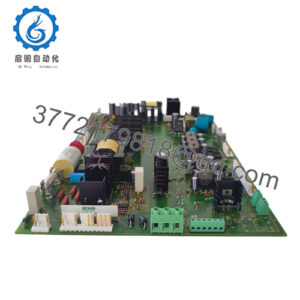
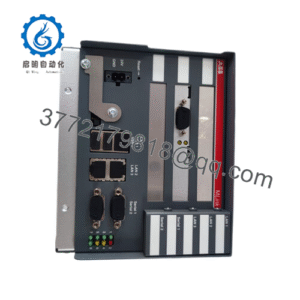
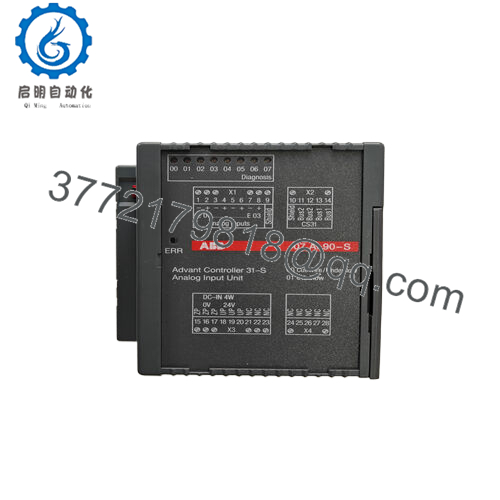
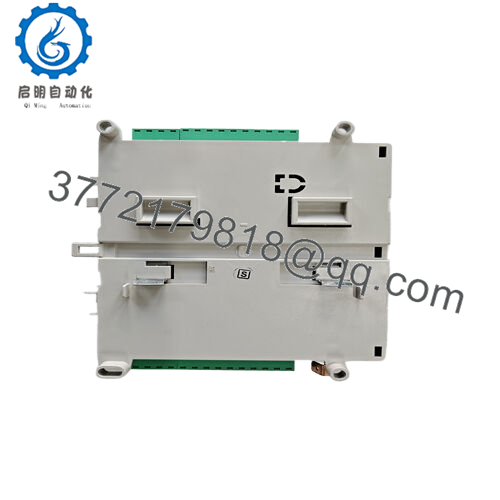
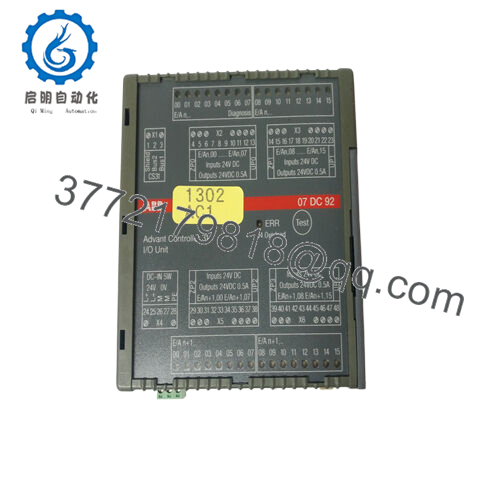
The ABB 07KT94-S (GJR5252100R2201) is a compact PLC basic unit within the Advant Controller 31 system, combining CPU, digital/analog I/O, and communication interfaces in a single module. It operates as a standalone controller, CS31 bus master, or remote slave in distributed automation architectures.
From a supply-chain perspective, this is a classic EOL-risk controller. OEM production has largely phased out, and secondary market availability is tightening. Securing New Surplus units protects against lead time variability and eliminates failure risks associated with non-original inventory. A controlled last-time-buy combined with buffer stock reduces Total Cost of Ownership (TCO) and avoids emergency procurement premiums.
5. Installation & Configuration Guide
Stage 1: Pre-Installation (Prep & Safety)
- Execute lock-out/tag-out (LOTO) on the PLC cabinet.
- Use ESD protection (grounded wrist strap mandatory).
- Back up PLC program and system parameters.
- Photograph all terminal wiring, I/O mapping, and communication ports.
Stage 2: Removal
- Confirm 0 V on 24 V DC supply terminals.
- Disconnect terminal blocks carefully (label if needed).
- Remove the unit from DIN rail or panel mount.
Stage 3: Installation (Clone & Seat)
- Mount replacement unit securely on DIN rail.
- Reconnect terminal blocks exactly as documented.
- Install backup battery if required for memory retention.
- Ensure communication bus (CS31) connections are correctly seated.
Stage 4: Power-On & Testing
- Apply 24 V DC supply and monitor startup LEDs.
- Confirm RUN mode without fault indicators.
- Download PLC program and verify I/O mapping.
- Perform functional test: digital I/O, analog scaling, communication handshake.

- GJR5252100R2201 07KT94-S
6. Firmware/Software Versions & Upgrade Notes
- Programming Environment: AC31 programming tools (legacy ABB software suite).
- Critical Risk: Firmware and program structure are tightly coupled—mismatched versions can cause execution faults or I/O misalignment.
- Communication Warning: Modbus/CS31 configurations must match existing network settings exactly.
- Upgrade Strategy: Avoid firmware upgrades during replacement unless a full system migration is planned.
- Downgrade Risk: Older firmware may not support newer configuration files—always archive original program version before swap.
7. Frequently Asked Questions (FAQ)
Q1: Is this unit truly new or just surplus stock?
This is a Brand New Surplus unit. It is not used, not pulled from a plant, and not refurbished. All modules undergo QC verification with zero wear on terminals and connectors.
Q2: Why is this more expensive than refurbished controllers?
Refurbished PLCs often contain aging components like capacitors and relays. A failure can halt an entire production line. The cost of downtime outweighs any initial savings.
Q3: Is the 07KT94-S obsolete?
Yes. It is in phase-out status. This makes proactive last-time-buy planning and buffer stock (minimum 1–2 units per site) essential.
Q4: Can I hot-swap this PLC?
No. This is not designed for hot-swapping. Power must be fully isolated before removal or installation.
Q5: Does the PLC retain its program without power?
Only if the internal battery is installed and functional. Without it, RAM-based program data will be lost.
Q6: What is the recommended inventory strategy?
- Critical lines: Maintain 1–2 units as buffer stock
- Multi-site plants: Enable cross-site sharing
- Long-term: Execute a last-time-buy based on installed base size
Q7: What warranty and QC controls are included?
Each unit includes a 12month warranty, serial traceability, and full QC testing (power-on, I/O simulation, communication verification).