 WhatsApp: +86 16626708626
 Email:
  Phone: +86 16626708626
Description
2. Product Core Brief
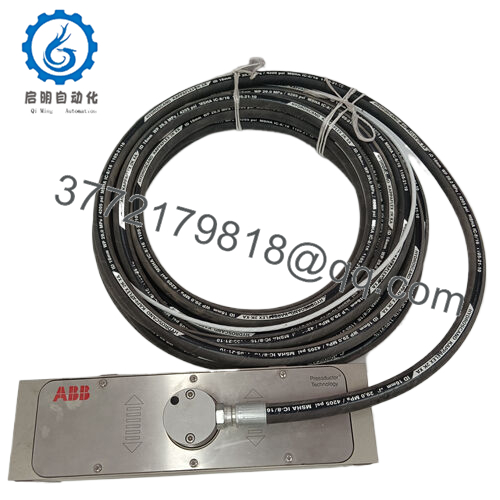
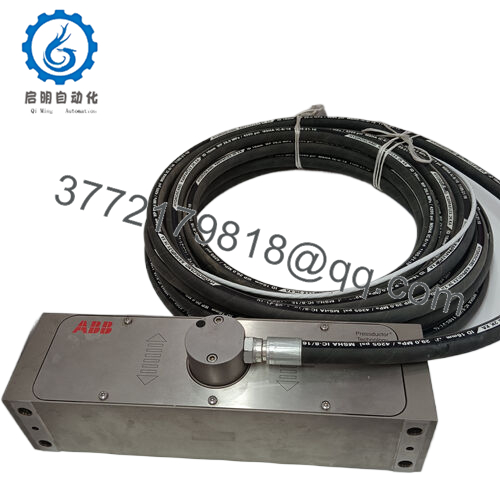
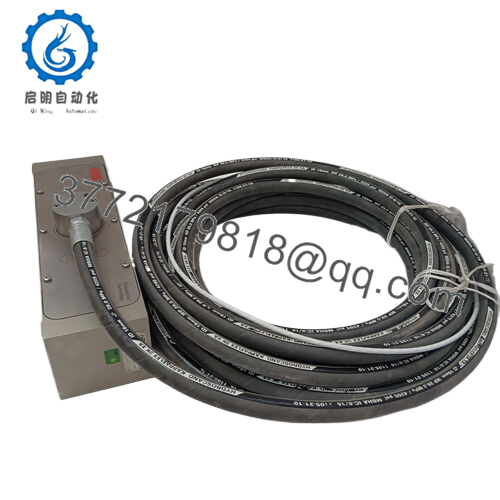
- Model: PFCL201CE 10KN (3BSX105983-100)
- Brand: ABB
- Series: Pressductor PillowBlock (PFCL 201 vertical measurement)
- Core Function: Vertical force / strip tension measurement
- Product Type: Load Cell (PillowBlock style)
- Key Specs: 10 kN nominal, 15 kN extended, 0.5% accuracy class, mill-duty hose cable
- Condition: New Original / New Surplus
3. Key Technical Specifications
- Nominal Load (rated capacity): 10.0 kN (2250 lb)
- Extended Load: 15.0 kN (3375 lb)
- Overload Capacity (measurement direction): 100.0 kN (22500 lb)
- Permitted Transverse Load (vertical, h≤300 mm): 100.0 kN (22500 lb)
- Deflection at Nominal Load: 0.02 mm
- Spring Constant: 500 kN/mm
- Accuracy Class: 0.5% (includes linearity, hysteresis, repeatability)
- Repeatability Error: < ±0.05%
- Operating Range: 30:1
- Operating Principle: Electromagnetic Pressductor Technology
- Material: Stainless steel SIS 2387 (DIN X4CrNiMo16-5-1 equivalent)
- Working Temperature Range: −10 to +90 °C
- Zero Point Drift (20–80 °C): < ±0.005%/°C
- Sensitivity Drift (20–80 °C): < ±0.010%/°C
- Connection: Fixed cable in protective hose (mill-duty version)
- Weight: Approx. 4–6 kg (typical for 10 kN size; verify with calipers)
- Dimensions: Height ≈220 mm, base 450 × 410 mm (refer to ABB outline; M16 mounting holes)
4. Product Introduction
The ABB PFCL201CE 10KN (3BSX105983-100) is a vertical measuring Pressductor PillowBlock load cell designed for strip tension and force applications, particularly in paper machines where vertical force components dominate (felt/wire sections, dryer positions). It mounts under rolls to sense total downward force accurately.
Engineers favor this model for its extreme ruggedness—single-block stainless construction handles massive overloads without calibration shift—and immunity to electrical noise or harsh mill conditions. It outperforms strain-gauge alternatives in wet, dusty, or vibrating environments by eliminating drift and delivering stable signals over years of continuous operation.
5. Installation & Configuration Guide
Stage 1: Pre-Installation Preparation (20–30 minutes) ⚠️ Safety First: Coordinate shutdown with operations, lock out/tag out machine power (drive motors, tension controls), wait 10+ minutes for any residual voltage/capacitors. Verify zero energy on load cell cables and mounting areas with multimeter. Tools Required: Grounded ESD strap (though low-risk here), torque wrench (M16 bolts per spec, typically 80–100 Nm), digital multimeter, wire labels, smartphone/camera for photos, alignment tools (level, shims). Data Backup: Photograph existing load cell orientation, mounting bolts, cable routing, and any adapter plates. Record tension system calibration values and junction box settings via ABB tension controller (e.g., PFEA series) if accessible.
Stage 2: Removing the Old Load Cell (15–25 minutes)
- Remove protective covers and access the pillowblock mounting under the roll.
- Label and disconnect cable at junction box (note shielding/ground; do not cut unless necessary).
- Loosen and remove mounting bolts (M16); support roll weight if required during swap.
- Lift out old unit carefully; inspect mounting surface for flatness, corrosion, or debris—clean and shim if needed. ⚠️ Note: Keep old load cell as reference until new one calibrates and runs stable for 24–48 hours.
Stage 3: Installing the New Load Cell (20–30 minutes)
- Apply ESD precautions minimally (static less issue than on electronics). Confirm exact match: PFCL201CE 10KN 3BSX105983-100.
- Configuration Clone (critical): No DIPs/jumpers, but ensure adapter plates (if used) match original height/orientation for roll centerline alignment (h ≤300 mm typical).
- Position on mounting base; insert bolts and torque evenly to ABB spec (cross-pattern to avoid stress).
- Route and connect cable to junction box exactly as original—secure hose, torque glands, verify shielding continuity. Self-Checklist: [ ] Mounting torqued and level, [ ] Cable routed/secured without strain, [ ] Alignment matches photos.
Stage 4: Power-On & Testing (30–60 minutes) Pre-Power Check: Multimeter continuity on signal wires; no shorts between excitation/signal and ground. Power-On Steps:
- Restore power to tension system/junction box only.
- Monitor output via controller (expect mV/V signal; zero with no load if possible).
- Run machine at low speed/no web; verify stable reading and no alarms.
- Apply known tension/web; check against controller display or external reference.
- Perform zero/tare and span calibration per ABB manual if drift noted. ⚠️ Troubleshooting Note: Erratic readings often from cable damage, poor shielding, or misalignment (roll not centered). Overload trips or zero shift? Inspect for mechanical binding or improper shimming. Pressductor cells rarely fail internally—issues usually external.

- PFCL201CE 10KN (3BSX105983-100)
6. Frequently Asked Questions (FAQ)
Can this load cell be hot-swapped or installed under power? No. Never work live. High forces involved; accidental roll drop or electrical hazard during cable disconnect risks injury or damage. Full lockout/tagout required.
Is this model obsolete, and is your stock genuinely new? Still active for legacy paper/web systems but production may be limited. Our units are new surplus from OEM excess or project spares—unused, factory condition where sealed. We inspect visually, verify serials, and bench-test output with excitation supply (photos/videos on request).
What is the direct replacement if this is out of stock? Same series PFCL201CE in 10 kN range; no pin-for-pin change needed as form/fit/function identical across PFCL201 variants. ABB may supersede to updated revision—check with ABB service using your machine serial. Avoid mixing C/CD/CE versions without verifying cable compatibility.
Will swapping erase calibration or tension parameters? No—the load cell is passive (sensor only). Calibration resides in the tension controller (PFEA, etc.). Still, re-zero and verify span after install; document original readings before removal.
Why is the price lower than ABB factory list? Sourced as new surplus from decommissioned machines, canceled orders, or authorized channels—no refurbishing or gray-market. Reflects current availability without full OEM markup, but quantities limited.
Keep these checks in mind and you’ll avoid 90% of typical rework time on PillowBlock swaps. If this is for a specific paper machine section or tension controller model, provide details for more precise advice.