 WhatsApp: +86 16626708626
 Email:
  Phone: +86 16626708626
Description
2. Product Core Brief
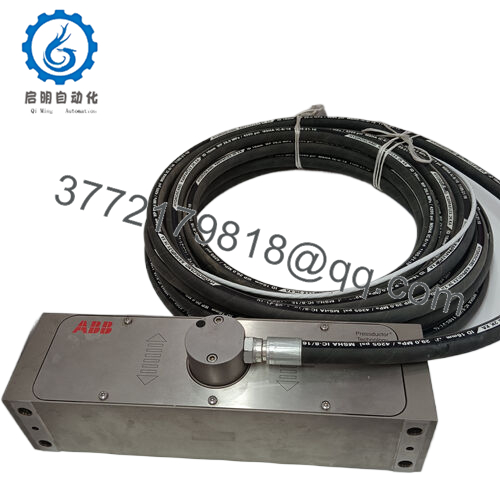
- Model: PFCL201CE-20KN (3BSE027062R20)
- Brand: ABB
- Series: ABB Pressductor® Force Measurement – PFCL201
- Core Function: Strip tension / vertical force measurement
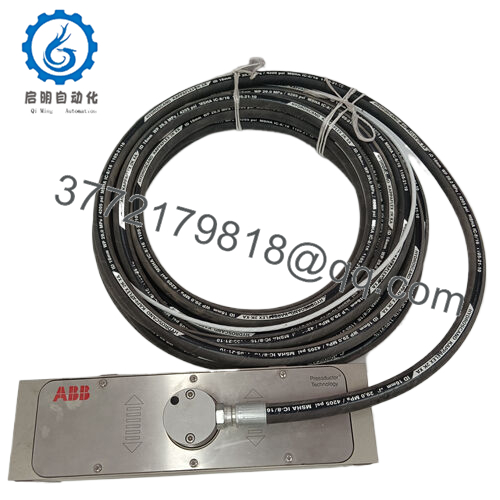
- Product Type: Pillow-block load cell sensor
- Key Specs: 20 kN rated force; Pressductor magnetoelastic sensing; IP67 industrial protection
- Condition: New Original / New Surplus
3. Key Technical Specifications
| Parameter | Value |
|---|---|
| Manufacturer | ABB |
| Model | PFCL201CE-20KN |
| ABB Part Number | 3BSE027062R20 |
| Product Type | Vertical force load cell / tension sensor |
| Measuring Principle | Pressductor® magnetoelastic technology |
| Rated Capacity | 20 kN |
| Accuracy | approx. ±0.1% FS |
| Repeatability | < ±0.05% FS |
| Bridge Resistance | ~350 Ω |
| Output Signal | ~2 mV/V analog signal |
| Protection Rating | IP67 |
| Operating Temperature | −20 °C to +80 °C |
| Housing Material | Stainless steel |
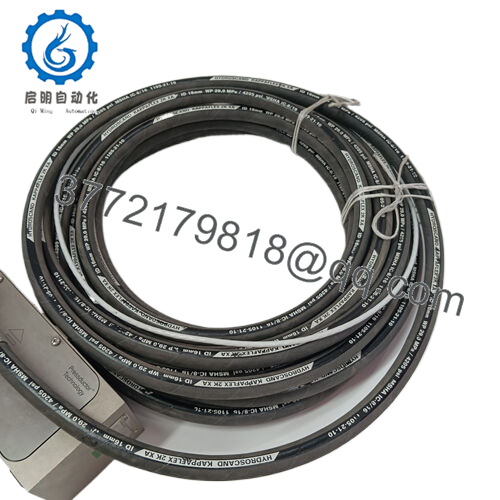
| Cable Connection | Fixed cable with protective hose |
| Typical Applications | Rolling mills, paper machines, strip tension control |
PFCL201 series load cells measure the vertical force component acting on a roller bearing block, which allows indirect calculation of strip tension in continuous production lines.
4. Product Introduction
The ABB PFCL201CE-20KN (3BSE027062R20) is a pillow-block style load cell used for industrial strip tension measurement. It measures vertical force applied to a roller bearing housing and converts the mechanical load into an electrical signal used by tension control systems.
In rolling mills, paper machines, and film production lines, this sensor works with ABB tension control electronics such as the PFEA11x series controllers to regulate strip tension in closed-loop control systems. The Pressductor-based sensing method provides high resistance to electrical interference and mechanical overloads.

- PFCL201CE-20KN
5. Installation & Configuration Guide
Estimated replacement time for a maintenance technician: 25–30 minutes
Stage 1 — Pre-Installation Preparation (10 minutes)
⚠️ Safety First
- Inform operations before intervention on the production line.
- Stop the strip or web transport system.
- Lock out the drive motors and tension control cabinet.
- Wait 5 minutes for power supplies to discharge.
Tools Required
- ESD wrist strap
- Torque wrench or socket set
- Multimeter (Fluke 115 recommended)
- Wire labels
- Smartphone for documentation
Data Backup
Before removing the sensor:
- Record Nominal Load parameter configured in the tension controller
- Document wiring terminals (excitation and measurement leads)
- Photograph cable routing and shielding
Stage 2 — Removing the Old Load Cell (5–10 minutes)
- Support the roller assembly so no load rests on the sensor.
- Disconnect the load cell signal cable from the control cabinet.
- Remove the mounting bolts from the bearing housing.
- Carefully lift the bearing block off the load cell.
⚠️ Important
Do not reuse the old calibration data blindly. Load cells can drift after mechanical damage.
Stage 3 — Installing the New Sensor (5–10 minutes)
- Wear an ESD wrist strap before connecting signal wires.
- Confirm the replacement model PFCL201CE-20KN / 3BSE027062R20.
- Install the sensor under the bearing housing.
- Tighten mounting bolts using the torque specified by ABB.
- Route the signal cable away from VFD power cables.
Self-Checklist
- Sensor orientation correct
- Mounting bolts torqued evenly
- Signal cable shield grounded
- No mechanical preload on sensor
Stage 4 — Power-On & Calibration (10 minutes)
Pre-Power Check
- Verify sensor excitation wiring (E+, E−) and signal pair (S+, S−).
Startup Procedure
- Restore power to the tension controller.
- Observe the analog reading from the load cell.
- Perform zero calibration with no strip tension.
- Run the line slowly and verify tension feedback.
⚠️ Troubleshooting Note
If the measured tension appears negative or unstable, the signal pair may be reversed or the sensor orientation may be incorrect.
Technical Pitfalls & Survival Guide
Field lessons from strip-tension control systems.
❗ Controller Calibration Mismatch
Load cells only output millivolt signals.
If the Nominal Load parameter in the controller is wrong (for example 50 kN instead of 20 kN), the displayed tension will be off by a large margin.
I’ve seen commissioning teams chase “mechanical problems” for hours when the issue was simply the wrong range configured.
❗ Incorrect Load Cell Direction
These sensors measure vertical force direction only.
Install it rotated 90° and the controller reads almost zero tension.
Always check the arrow or orientation mark on the housing.
❗ Cable Shielding Errors
Load cell signals are only a few millivolts.
Running the cable next to VFD motor cables will inject noise and cause unstable tension readings.
Route the cable separately and ground the shield at one end.
❗ Mechanical Preload
During installation some technicians tighten mounting bolts while the roller is already loaded.
That creates a permanent offset in the sensor.
Always remove the strip load before tightening.
❗ Electrostatic Discharge (ESD)
Pressductor electronics inside the cable interface can still be damaged by static.
Use a grounded wrist strap when handling wiring.
Follow these checks and you’ll eliminate most commissioning issues with strip tension measurement systems.
6. Frequently Asked Questions (FAQ)
Q1: What does the 20KN rating mean?
It indicates the maximum nominal vertical force the sensor measures — 20 kilonewtons, roughly 2,000 kg of force. The tension controller calculates strip tension from this value.
Q2: Is PFCL201CE-20KN still manufactured?
ABB still supports many sensors in the PFCL201 family, but some variants are supplied mainly through industrial spare-parts inventory or project surplus stock.
Q3: Can I replace a 20 kN sensor with a 50 kN version?
Technically yes, but the controller calibration must change. Otherwise the system will display incorrect tension values.
Q4: What controller works with this sensor?
Typical ABB tension control electronics include:
- PFEA111 / PFEA112 / PFEA113
- Web tension measurement systems used in rolling mills or paper machines.
Q5: Why does the system require two load cells?
Most tension measurement setups install one sensor on each side of the roller. The controller sums the vertical forces to calculate the actual strip tension.