 WhatsApp: +86 16626708626
 Email:
  Phone: +86 16626708626
Description
- Product Core Brief
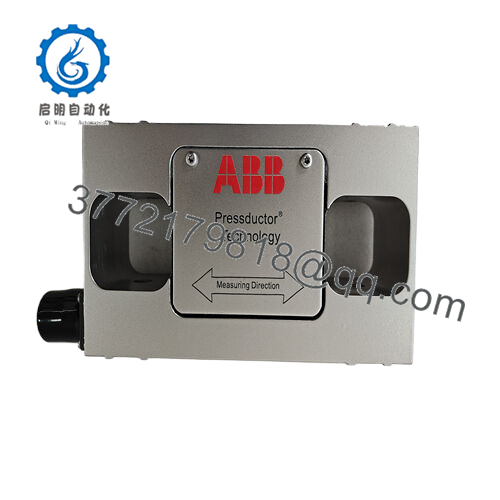
- Model: PFTL101A-0.5kN (3BSE004160R1)
- Brand: ABB
- Series: Pressductor PillowBlock (PFTL101 family)
- Core Function: Horizontal force/tension measurement
- Product Type: Magnetoelastic load cell (pillow block style)
- Key Specs: 0.5 kN nominal load, 500% overload, 0.5% accuracy class, <±0.05% repeatability
- Condition: New Original / New Surplus
- ⚠️ Obsolete Model – Limited Stock Available (variant-specific; series supported)
- Key Technical Specifications
- ABB Type Designation: PFTL101A-0.5kN
- Nominal load (rated capacity): 0.5 kN (112 lbs)
- Measuring direction: Horizontal
- Overload capacity: 500% of nominal load
- Accuracy class: 0.5%
- Repeatability error: <±0.05%
- Deflection at nominal load: 0.015 mm
- Output signal: Typically mV/V (bridge; requires transmitter/amplifier like PFEA series)
- Wetted materials: Stainless steel (AISI 316L typical for housing/force elements)
- Protection class: IP67 (when installed properly)
- Operating temperature: −40 to +80 °C (or per manual; check for extremes)
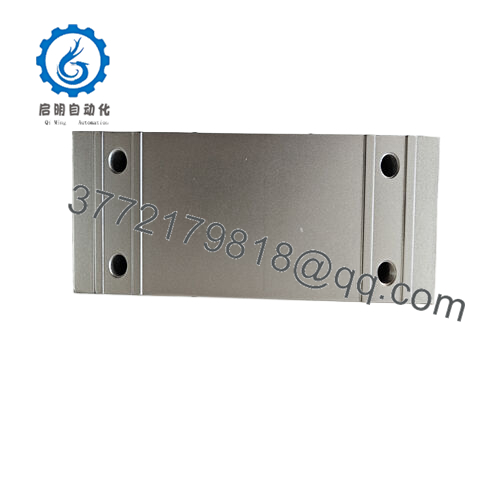
- Mounting: Pillow block / bearing housing style (bolted to machine frame)
- Weight: Approx. 9 kg (gross; net around 8–10 kg depending on variant)
- Product Introduction
The ABB 3BSE004160R1 (PFTL101A-0.5kN) is a Pressductor PillowBlock load cell for precise horizontal tension measurement in web-handling processes. It uses magnetoelastic sensing for force detection without strain gauges or electronics inside the load element.
Paper mills and converters favor this model for its ruggedness in humid, dusty environments and exceptional stability under vibration or temperature swings. The 0.5 kN range handles light tensions on smaller rolls or low-force zones, delivering reliable signals to tension controllers with minimal drift over years of service.

- PFTL101A-0.5kN 3BSE004160R1
- Installation & Configuration Guide
Stage 1: Pre-Installation Preparation (20–30 min) ⚠️ Safety First: Coordinate machine shutdown. Lock out/tag out drives/motors. Ensure web is slack or removed. Use PPE for mechanical work. Tools Required: Torque wrench, PH2 screwdriver, multimeter, alignment tools (level, shims), smartphone for photos, cleaning supplies. Data Backup: Photograph old load cell mounting (orientation, shims, bolting pattern). Note wiring to transmitter (cable colors, terminal numbers). Record calibration values if accessible via controller.
Stage 2: Removing the Old Load Cell (15–25 min)
- Support roll/shaft to relieve force.
- Disconnect signal cable at junction box or transmitter (label wires).
- Loosen and remove mounting bolts (typically 4–6 M12/M16; note torque sequence).
- Carefully lift out; inspect pillow block seats for wear or misalignment. ⚠️ Note: Keep old unit as reference until new one calibrates correctly.
Stage 3: Installing the New Load Cell (20–30 min)
- Confirm exact match (3BSE004160R1, PFTL101A-0.5kN). Inspect force surfaces for damage.
- Configuration Clone (Crucial): No DIP switches – but replicate mounting orientation, shim stack, and alignment from photos (load direction arrow must match force vector).
- Position in pillow block seat; shim for level/parallelism if needed.
- Bolt down evenly (torque per manual, typically 80–120 Nm for M12; use thread locker). Reconnect cable securely. Self-Checklist: [ ] Alignment/level correct, [ ] Bolts torqued evenly, [ ] Cable strain relief intact, [ ] No binding.
Stage 4: Power-On & Testing (30–60 min) Pre-Power Check: Verify wiring continuity and no shorts with multimeter. Power-On Steps:
- Power transmitter/controller.
- Check zero reading (no load; adjust tare if needed).
- Apply known test force (weights or jack) or run web slowly.
- Verify output scales correctly (mV or engineering units via HMI).
- Perform full calibration per ABB manual (zero + span with certified weights). ⚠️ Troubleshooting Note: Drift or no output = wiring fault or damaged cable. Nonlinear readings = misalignment or improper shimming. Overrange alarms = check overload (rare at 0.5 kN).
- Frequently Asked Questions (FAQ)
Can this load cell be hot-swapped while the machine is running? No. Never. Removing under tension risks shaft drop, injury, or inaccurate readings from shock. Always stop the line, relieve force, and lock out before work.
Is this model obsolete, and is your stock genuinely new? The PFTL101A-0.5kN variant is discontinued or low-production as of 2026; series still referenced, but stock is surplus/residual. Our units are new original or surplus from verified channels – photos of seals/serial numbers and basic bridge resistance test reports available.
What is the direct replacement if this is out of stock? Check PFTL101A higher ranges (e.g., 1.0 kN variant) or PFTL101B series if mechanical fit allows, but confirm load rating and dimensions. Newer Pressductor models or third-party equivalents require full qualification for accuracy and mounting.
Will swapping the load cell require recalibration? Yes – always. Even identical units have slight manufacturing tolerances. After install, zero and span calibrate with known forces per the manual to maintain 0.5% accuracy. Skipping this causes offset errors up to several percent.
Why is the price lower than ABB factory list? This is discontinued/surplus from excess spares or decommissioned lines – genuine ABB part. We inspect housing, check bridge integrity (resistance/insulation), and provide traceability. You get proven hardware at aftermarket pricing with shorter lead times than OEM remnants.