
 WhatsApp: +86 16626708626
 Email:
  Phone: +86 16626708626
Description
3. Key Technical Specifications
| Parameter | Value |
|---|---|
| Model Number | REF541DB115BAAA |
| Brand | ABB |
| Product Type | Feeder Protection & Control Relay |
| Application Voltage | Medium Voltage (MV) networks |
| Auxiliary Supply | Typically 110–240 V AC/DC |
| Current Inputs (CT) | 1 A / 5 A selectable |
| Voltage Inputs (VT) | 100–110 V AC nominal |
| Protection Functions | Overcurrent, earth fault, overload, voltage/frequency |
| Communication Protocols | IEC 61850, IEC 60870-5-103, Modbus, Profibus, DNP3, SPA bus |
| I/O Capacity | Configurable binary inputs/outputs (expandable) |
| Mounting | Panel / switchgear flush mount |
| Operating Temperature | -10°C to +55°C (typical) |
| Lifecycle Status | Mature product, declining OEM availability |
4. Product Introduction & Supply Chain Strategy
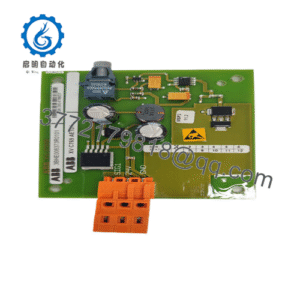
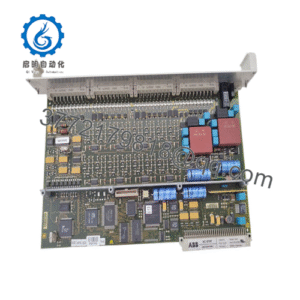
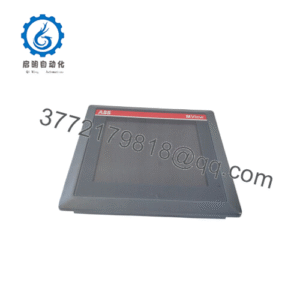
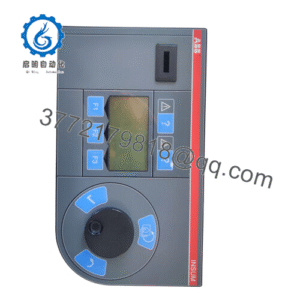
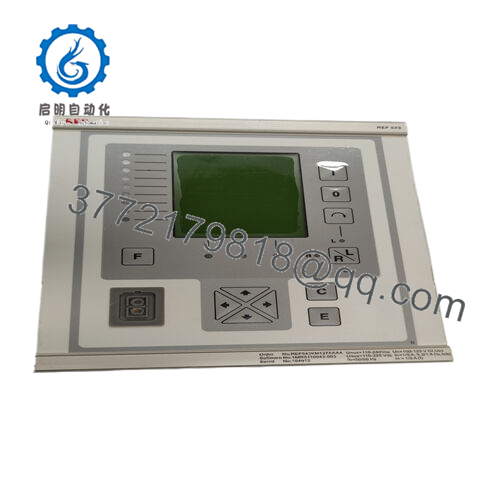
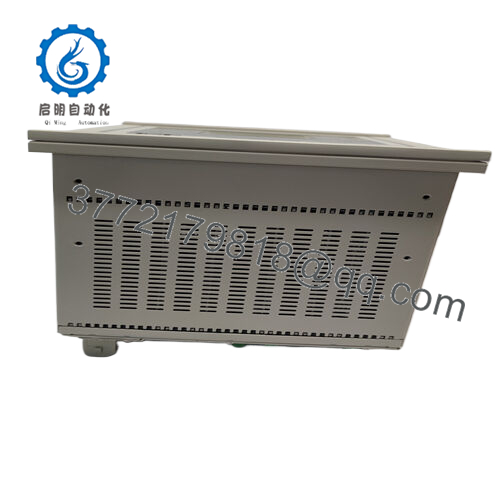
The ABB REF541DB115BAAA is a feeder protection and control relay designed for medium-voltage switchgear. It integrates protection, measurement, control, and communication functions into a single terminal, enabling reliable feeder management, fault detection, and substation automation. Typical applications include industrial distribution systems, substations, motor feeders, and capacitor bank protection.
This product is a Brand New Surplus unit. It is not used, not pulled from a decommissioned plant, and not refurbished. From a supply-chain perspective, REF541 units are high-criticality spares with increasing lead time variability. A failure in feeder protection can trip entire distribution sections. Maintaining 1–2 units as buffer stock significantly reduces stock-out risk and protects Total Cost of Ownership (TCO) versus relying on refurbished units with uncertain reliability.

- REF541DB115BAAA
5. Installation & Configuration Guide
Stage 1: Pre-Installation (Prep & Safety)
- Execute full lock-out/tag-out on the MV switchgear panel.
- Verify CT/VT circuits are de-energized and grounded.
- Wear ESD protection and insulated gloves.
- Photograph all terminal wiring, CT polarity, and communication settings.
Stage 2: Removal
- Disconnect CT/VT inputs, binary I/O, and communication cables.
- Label all wires to prevent re-termination errors.
- Remove panel mounting screws or clamps.
- Extract the relay carefully to avoid stressing rear terminals.
Stage 3: Installation (Clone & Seat)
- Install the replacement unit into the same panel cutout.
- Reconnect CT/VT circuits with correct polarity.
- Restore all binary I/O and communication links.
- Upload or replicate configuration settings (protection logic, addresses).
Stage 4: Power-On & Testing
- Energize auxiliary supply and observe startup diagnostics.
- Verify no protection alarms or self-test faults.
- Inject test signals to validate protection functions.
- Confirm SCADA/DCS communication and event logging.
6. Firmware/Software Versions & Upgrade Notes
- Recommended Firmware: Maintain the same firmware revision as the installed system.
- Compatibility Risk: IEC 61850 and legacy protocols (IEC 103, SPA) can fail if firmware mismatches occur.
- Configuration Dependency: Protection logic and parameter files are tightly linked to firmware versions.
- Upgrade Warning:
- Upgrading may require full relay revalidation and protection coordination study.
- Downgrading may disable newer communication features.
- Best Practice: Always back up relay settings and disturbance records before replacement.
7. Frequently Asked Questions (FAQ)
Q1: Are these REF541 relays genuinely new?
Yes. These are New Original / New Surplus units sourced from authorized channels. No prior field use, no repairs, and no component degradation.
Q2: Why not choose a cheaper refurbished relay?
Protection relays are safety-critical. Refurbished units often have aged relays or degraded internal components. A failure can cause feeder trips or protection misoperation, leading to costly outages.
Q3: Is the REF541 series obsolete?
The platform is considered mature, with declining OEM production. Availability depends on secondary markets. A last-time-buy strategy is strongly recommended for long-term operations.
Q4: What stocking policy should we follow?
- Critical feeders: Minimum 1 spare per system
- Multi-substation operations: consider cross-site shared inventory
This reduces emergency procurement exposure and stabilizes inventory turnover.
Q5: Can this relay be replaced without shutting down the feeder?
No. Protection relays must be replaced during controlled outages. Live replacement risks incorrect tripping or loss of protection.
Q6: Does the relay retain configuration after replacement?
No. Settings must be restored from engineering files or backups. Always export configuration before removal.
Q7: What warranty and lifecycle value does this provide?
New surplus units include 12 months warranty