 WhatsApp: +86 16626708626
 Email:
  Phone: +86 16626708626
Description
- Key Technical Specifications
- Application voltage range: Medium and high-voltage overhead lines and cables (MV/HV distribution and transmission)
- Protection functions: Distance protection with up to five zones (forward and reverse) plus optional longitudinal differential
- System frequency: 50 Hz or 60 Hz (selectable by version
- Analog inputs: Up to 9 analog inputs (e.g., 3 currents, 3 voltages) depending on hardware version
- Current input ratings: 1 A, 2 A, or 5 A nominal; thermal rating up to 30 × IN for 1 s and 100 × IN dynamic (half period)
- Voltage input ratings: 100 V or 200 V nominal; thermal rating up to 1.3 × UN continuous and 2 × UN for 10
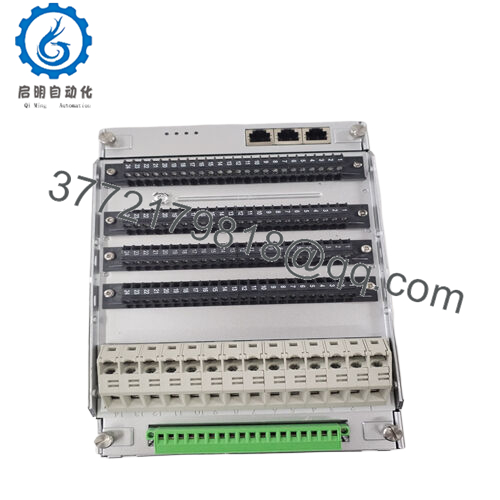
- Optocoupler inputs: 8, 4, or 14 inputs depending on I/O unit type (316DB61/62/63), with multiple DC voltage ranges (e.g., 18–36 V, 36–75 V, 82–312 V)
- Binary outputs: Tripping and signaling relays on I/O units 316DB61/62/63, up to 2 tripping relays per I/O unit with N/O
- Operating time: Fast fault clearance, typical operation around 25 ms (distance protection)
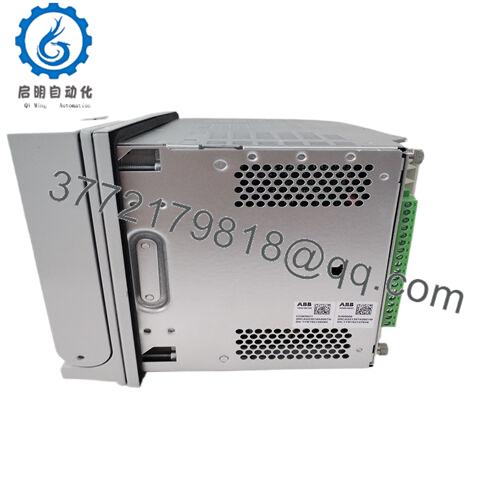
- Mounting: Semi-flush, surface mounting or rack installation; 6 U high, approx. 225 mm or 271 mm wide depending on order
- Communication: Optical fiber link to station monitoring/automation systems (SMS/SAS) for remote communication and disturbance records
- Environment: Designed for substation environments; verify exact temperature and dielectric ratings against the specific REL316 data sheet for your variant
- Product Introduction
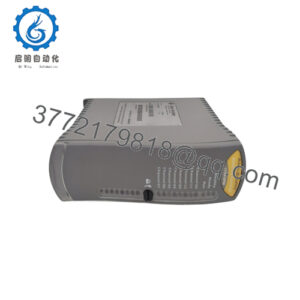
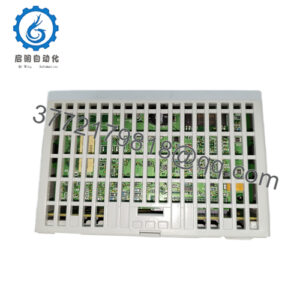
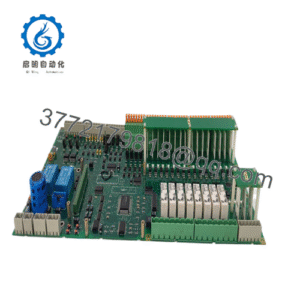
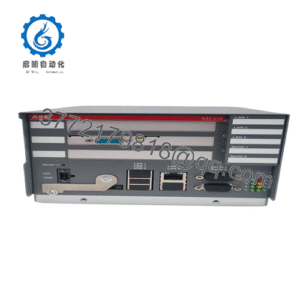
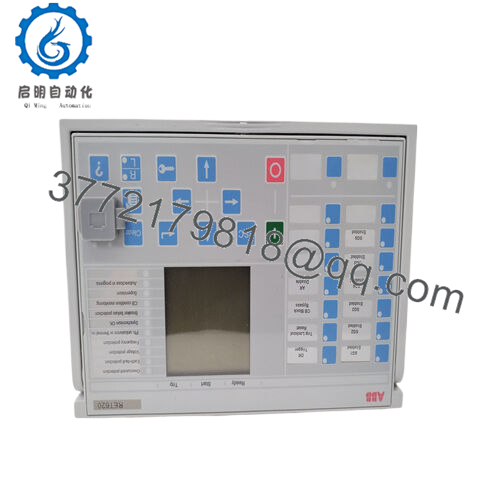
ABB REL316 is a numerical line protection relay used on medium-voltage and high-voltage overhead lines and cables in distribution and transmission systems. It handles distance protection as the main function and can combine with longitudinal differential protection in the same hardware platform for complex feeders.
In field deployments, engineers pick REL316 when they need fast distance protection with multiple zones, good power swing blocking, and integration into digital substations over optical links. The relay supports a broad range of current and voltage inputs and offers flexible I/O configurations, so it can cover main and backup protection roles in one unit when correctly engineered.

- REL316
- Troubleshooting Quick Reference
| Symptom | Possible Cause | Relevance to this Part | Quick Check Method | Recommendation |
|---|---|---|---|---|
| No LEDs on the front panel | No auxiliary DC supply or blown fuse in the panel | ✅ High | Measure the relay auxiliary supply at the terminal strip with a multimeter and compare to rated aux range in the datasheet | If no voltage, fix panel supply first; only suspect the relay PSU if correct DC is present and the unit stays dead |
| Continuous alarm LED, no trips | External wiring or CT/VT issues causing alarms | ✅ Medium | Check CT and VT secondary wiring continuity and fuses; compare measured currents/voltages with relay measurand display if HMI is available | Verify instrument transformer circuits and panel wiring before condemning the relay hardware |
| Relay fails to trip for proven line fault | Protection settings not coordinated or wrong zone reach | ✅ High | Pull event/disturbance records and check which function operated; review distance zone settings against line impedance | Treat as a settings/engineering problem first; only replace relay if internal self-diagnostics report hardware faults |
| Nuisance trips during power swings | Power swing blocking disabled or misconfigured | ✅ Medium | Review power swing blocking configuration and disturbance records; confirm system swing behavior during the event | Adjust settings according to protection study; replacement will not fix improper power swing settings |
| Trips not issued to breaker even though relay records operation | Output contact wiring or breaker trip circuit fault | ✅ Medium | Measure continuity from relay trip contacts to breaker trip coil; simulate a test trip with outputs forced from test mode (if permitted) | Repair trip circuit wiring or auxiliary relays; replace the protection relay only if output contacts fail continuity under test |
| Some binary inputs do not register | Wrong DC input level or blown optocoupler | ✅ Medium | Measure the DC control voltage on the relevant binary input terminals against the specified voltage range (e.g., 18–36 V, 36–75 V) | Correct the external control voltage first; if correct and still not detected, the I/O unit may need repair or replacement |
| Communication loss to station SCADA | Fiber link problems or protocol configuration issues | ✅ Medium | Check fiber connectors for dirt/bends, verify link status LEDs, and compare COM settings with station automation system configuration | Fix the communication path and settings; only consider relay replacement if optical ports fail basic loopback tests |
| Relay reports internal self-supervision fault | Hardware fault or corrupted configuration | ✅ High | Read self-supervision codes from HMI or remote tool; power-cycle once to rule out transient error | If self-supervision persists, plan relay replacement and reload settings from a verified backup before energizing |
If these checks do not isolate the issue, capture front panel photos, event lists, and disturbance records and send them to technical support for review before you order a replacement.hitachienergy+1
- Frequently Asked Questions (FAQ)
Q1: What exactly does the ABB REL316 protect in my system?
REL316 is a numerical line protection relay designed for high-speed discrimination of faults on medium-voltage and high-voltage overhead lines and cables. It handles distance protection with multiple zones and can include longitudinal differential and backup overcurrent functions in one unit.
Q2: Is the REL316 obsolete and how does that affect availability?
REL316 is part of an earlier generation of ABB/Hitachi Energy line protection, and in many regions it is considered a legacy relay with lifecycle services rather than a current catalog item. In practice that means stock usually comes from surplus, last-time buys, or dismantled panels, so availability is limited and batches can move fast.new.
Q3: Can I use REL316 as a direct replacement for another REL316 in an existing bay?
Yes, but only if you match the exact hardware version, order code, and I/O unit combination, and then reload the correct configuration. The safest approach is to document the existing relay order code, firmware version, and settings file before removal, then mirror those on the replacement unit.
Q4: Will I lose settings when swapping an REL316, and how should I handle configuration?
If you install a bare replacement relay, it does not magically inherit the old settings; you either restore a saved configuration via engineering software or manually re-enter parameters. To avoid nasty surprises, always back up the existing parameter set and disturbance records before de-energizing the old unit.
Q5: Is REL316 hot-swappable? Can I pull it with the panel live?
No, treat REL316 like a protection relay in a substation panel, not a plug-in low-voltage card in a PLC rack. It sits in a casing with multiple plug-in units and connections to CTs, VTs, and trip circuits, so you should follow standard substation lockout/tagout and isolate the bay before removal
Q6: What are the key technical pitfalls when replacing an REL316 in the field?
The big ones are mismatched CT/VT ratios in settings, incorrect distance zone parameters for the actual line impedance, and forgetting to configure power swing blocking on heavily loaded lines. Another common trap is assuming trip and binary I/O mapping are identical between two relays; always verify the logic configuration before you re-energize the feeder.
Q7: What condition should I expect if I buy a replacement REL316 from surplus stock?
Most units on the market today are either New Surplus (never commissioned but from canceled projects or spares stock) or Refurbished that have been cleaned and electrically tested. Always look for clear statements on functional testing, I/O checks, and a written warranty so you know the relay has been verified under power and not just visually inspected.