 WhatsApp: +86 16626708626
 Email:
  Phone: +86 16626708626
Description
Product Core Brief
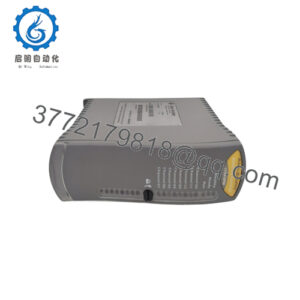
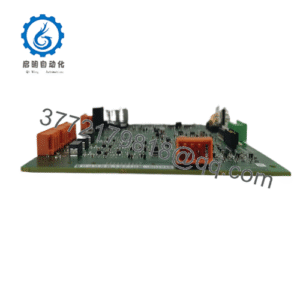
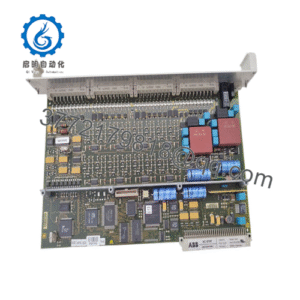
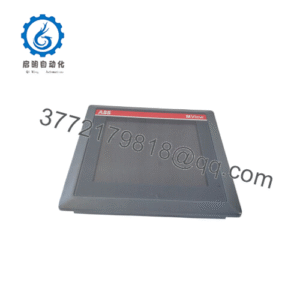
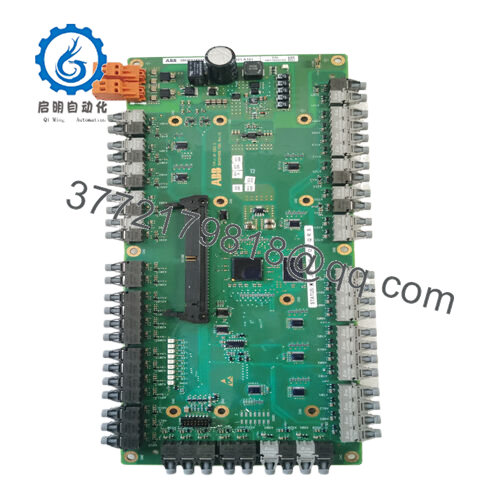
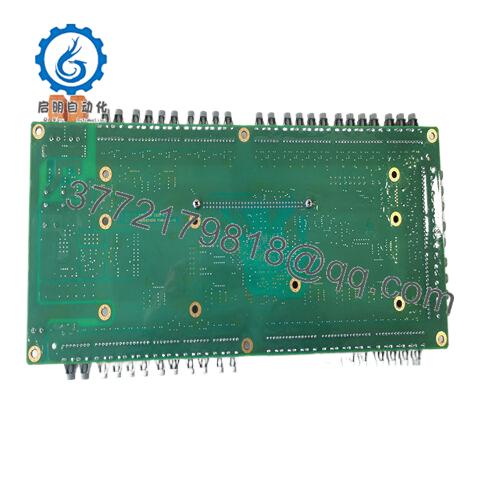
- Model: UFC933A102 (3BHE048062R0102)
- Brand: ABB
- Series: AMC Platform (used in UNITROL excitation and drive systems)
- Core Function: Pulse transformer / interface board for excitation control
- Product Type: Control board / INT3 board
- Key Specs: Integrated in AMC platform, supports pulse signal isolation and transformation, high-power excitation compatibility
- Condition: New Original / New Surplus
Key Technical Specifications
| Parameter | Value |
|---|---|
| Ordering number | 3BHE048062R0102 |
| Type designation | UF C933 A102: INT3 BOARD (AMC PLATFORM) |
| Application | Pulse transformer in UNITROL excitation; interface in AMC drives |
| Mounting | Plug-in board for AMC platform rack |
| Country of origin | Switzerland (typical for ABB excitation boards) |
| Ambient temperature | -20 to +60 °C operating (typical for series) |
| Weight | Approx. 0.3–0.5 kg (board only) |
| Customs tariff | 8537 10 91 (control boards) |
| Protections | Built-in isolation for pulse signals |
| Integration | Direct fit in UNITROL or ACS drive systems |

- UFC933A102 3BHE048062R0102
Product Introduction
The ABB UFC933A102 (3BHE048062R0102), labeled UF C933 A102: INT3 BOARD on the AMC platform, functions as a pulse transformer and interface module primarily in UNITROL excitation systems for synchronous generators. It handles isolated pulse signal transmission to thyristor bridges or gate drivers, ensuring reliable field excitation in power generation and large motor drive applications.
From commissioning UNITROL setups in hydro and thermal plants, this board provides essential galvanic isolation and signal integrity for high-current pulses without external transformers in many configurations. It fits the AMC platform architecture, allowing straightforward integration where precise timing and noise immunity matter for stable voltage regulation.
Installation & Configuration Guide
Stage 1: Pre-Installation Preparation (20-30 minutes) ⚠️ Safety First: Isolate all power to the excitation or drive cabinet. Lock out/tag out AC supplies and field circuits. Use multimeter to confirm zero voltage on pulse outputs and input rails. Wait 10 minutes minimum for discharge. Tools Required: ESD wrist strap (grounded), PH1/PH2 screwdrivers, digital multimeter, torque driver (0.5 Nm typical), wire labels, camera/phone for documentation. Data Backup: Photograph all edge connector alignments, any jumpers (if present), and cable routing on the old board. Note slot position in the rack and capture any system fault codes or LED patterns before removal.
Stage 2: Removing the Old Module (15-20 minutes)
- Access the AMC rack slot (often in the pulse firing or interface section).
- Label or photograph every connector: pulse inputs/outputs, power feeds, and control links.
- Disconnect cables gently—avoid pulling on wires; use proper release tools if keyed.
- Loosen retaining screws or release ejectors and extract the board straight out to protect gold edge fingers.
- Check rack backplane for debris, oxidation, or damaged contacts. ⚠️ Note: Store the removed board in ESD bag, clearly labeled, until new installation verifies full operation.
Stage 3: Installing the New Module (20-25 minutes)
- Apply ESD precautions. Verify replacement matches exactly 3BHE048062R0102 UFC933A102.
- Configuration Clone (Critical): Most INT3 boards use no user jumpers—factory set. Confirm visually against photos; alignment notches must match.
- Align edge connector with rack slot and insert firmly (apply even pressure until seated). Secure any captive screws.
- Reconnect all cables in exact positions, torque terminals as per ABB guidelines (typically 0.5–0.6 Nm). Inspect for bent pins. Self-Checklist: [ ] Board fully seated, [ ] Connectors matched and secure, [ ] No strain on cables, [ ] Slot correct.
Stage 4: Power-On & Testing (30-60 minutes) Pre-Power Check: Verify no continuity shorts between pulse lines and ground; check supply fuses intact. Power-On Steps:
- Power auxiliary supplies to rack only (no full excitation enable yet).
- Monitor board LEDs (if equipped) and main system HMI for recognition—no “missing board” or pulse fault alarms.
- Use engineering tool to check pulse channel integrity and timing.
- Perform low-voltage dry test of excitation: monitor pulse waveforms if oscilloscope available.
- Enable full system under controlled load; watch for stable field current. ⚠️ Troubleshooting Note: Pulse faults or no firing? Recheck cable polarity and seating—reversed pulses fry gates fast. Intermittent alarms often trace to dirty edge contacts—clean with isopropyl if needed.
Frequently Asked Questions (FAQ)
Can this board be hot-swapped? No. The UFC933A102 INT3 board sits in a live backplane environment. Hot insertion risks arcing or corrupting pulse timing circuits. Always power down the entire rack section first.
Is the UFC933A102 obsolete, and is your stock genuinely new? AMC platform components like this see continued use in legacy UNITROL systems, though newer platforms (e.g., UNITROL 6000/1000) phase them out. Supplied units are new original surplus from OEM channels—traceable, factory sealed where applicable, with inbound anti-counterfeit checks, 24-hour powered testing, and full parameter verification. Test data/photos on request.
What is the direct replacement if unavailable? Stay with exact 3BHE048062R0102 for drop-in in existing AMC/UNITROL setups. For upgrades, ABB may direct to equivalent in newer excitation lines—often requires firmware and rack changes. Avoid cross-series swaps without pin-for-pin verification.
Will replacing this board affect excitation parameters? No—setpoints, gains, and limiters live in the main regulator board or non-volatile memory. This INT3 handles pulse interfacing only. Re-verify pulse timing and firing angles post-swap via diagnostic tools.
Why is the price lower than ABB list? Sourced as new excess or surplus inventory from verified suppliers, skipping standard distribution layers. Units undergo rigorous QC: visual/traceability inspection, functional power-on/load test, and insulation resistance (>10 MΩ). No repairs or refurbs—price reflects availability, not quality cut.
What systems commonly use this board? Primarily UNITROL excitation for medium/large generators (hydro, gas, steam turbines). Also appears in some ACS high-power drive pulse sections on AMC platform. In field, I’ve seen it in 5–50 MVA range machines where reliable pulse isolation prevents commutation failures.
Common failure indicators? Look for missing pulses (oscilloscope shows flatline), erratic field current ripple, or “Pulse Fault” alarms. Over time, capacitor degradation or solder joint stress from vibration can cause intermittents—especially in high-temp cabinets. Always test under load before closing out.