 WhatsApp: +86 16626708626
 Email:
  Phone: +86 16626708626
Description
- Product Core Brief
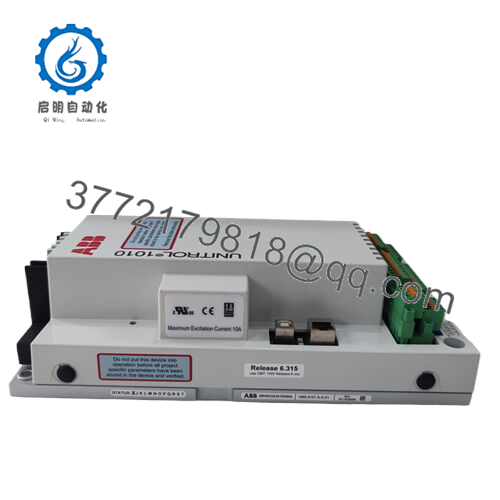
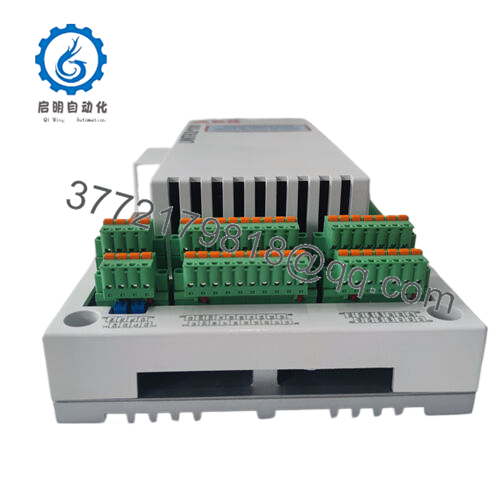
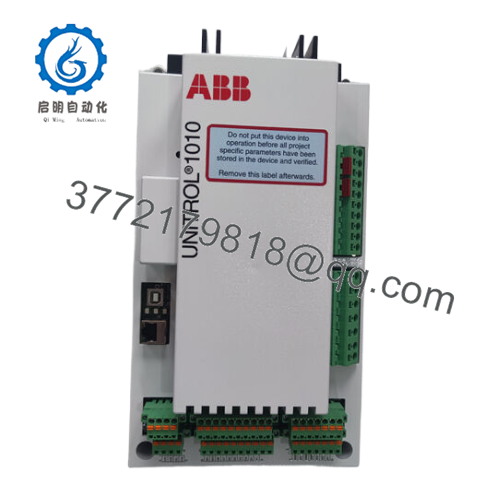
- Model: UNITROL 1010-0003 3BHE035301R410
- Brand: ABB
- Series: UNITROL 1000 (UNITROL 1010)
- Core Function: Digital automatic voltage regulator for synchronous machines
- Product Type: Brushless excitation system / AVR module
- Key Specs: Excitation current up to 10 A; AC or DC power input; Ethernet/RS‑485 communication (Modbus)
- Condition: New Original / New Surplus
- Key Technical Specifications
(Values below are representative for UNITROL 1010 family; verify exact ratings for 1010‑0003 / 3BHE035301R410 against the ABB datasheet and your project documents before final design or commissioning.)
- Exciter output current (continuous): up to 10 A DC at 55 °C
- Exciter overload: up to 20 A DC for 10 s (typical family rating)
- Power electronic input (AC): 3‑phase up to ~300 V AC (sinusoidal)
- Power electronic input (DC): up to ~420 V DC
- Auxiliary supply input: wide‑range AC (single or three‑phase) or DC, typically 18–300 V DC / 9–300 V AC
- Machine voltage measurement: 1‑, 2‑, or 3‑phase, up to about 500 V AC
- Network voltage measurement: 1‑phase, up to about 500 V AC
- Frequency range: roughly 10–150 Hz
- Regulation accuracy: around 0.2% at 25 °C, ±1% over full temperature range
- Analog I/O: typically 3 analog inputs and 2 analog outputs, ±10 V range
- Digital I/O: typically 4 dedicated digital inputs plus 8 configurable digital I/O; 24 V logic, with one 24 V / ~600 mA relay supply output
- Communication: Ethernet (10/100 Mbit/s) and RS‑485 (Modbus RTU / vendor protocol), CAN for dual‑channel setups
- Operating temperature: approx. −40 to +70 °C (derate by mounting position and enclosure)
- Mounting: Panel or cabinet mounting on aluminum baseplate, designed for high‑vibration environments

- UNITROL 1010-0003 3BHE035301R410
- Product Introduction
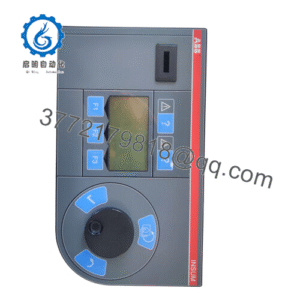
The ABB UNITROL 1010-0003 3BHE035301R410 is a compact automatic voltage regulator from the UNITROL 1000 family, intended for brushless excitation control of small to medium synchronous generators and motors. It handles voltage regulation, power factor or VAR control, and protective functions while taking machine voltage and current feedback directly from the generator terminals.
Engineers use this variant where they need up to about 10 A excitation current with tight regulation and flexible I/O, but do not want the footprint of a larger excitation cubicle. The UNITROL 1010 platform combines wide‑range AC/DC inputs, configurable analog and digital I/O, and Ethernet/RS‑485 connectivity, which makes it a straightforward retrofit or replacement in existing UNITROL 1000‑based systems as long as the rating and software option set match the original unit.
- Troubleshooting Quick Reference
| Symptom | Possible Cause | Relevance to this Part | Quick Check Method | Recommendation |
|---|---|---|---|---|
| Generator will not build up voltage after start | No excitation output from UNITROL 1010 (no DC on field) | ✅ High | With the machine secured and following your plant safety rules, measure DC voltage/current at the exciter output terminals during a start attempt | If there is no field output while the regulator is enabled and inputs are valid, the AVR or its power input is suspect; check supply first, then plan a controlled AVR swap if needed |
| Output voltage unstable or hunting | AVR tuning or feedback wiring problem (VT/CT), or incorrect control mode | ✅ Medium | Verify machine voltage and current wiring to the UNITROL, confirm CT/VT ratios and control mode (AVR/PF/VAR) in parameters | Correct wiring and settings first; only blame the hardware if a known‑good UNITROL with the same settings behaves correctly |
| AVR trips on over‑excitation or over‑current | Field current above rating due to system fault or wrong limits | ✅ Medium | Check event log/alarms, then compare field current against nameplate and limit settings; look for grid or machine faults | If the unit repeatedly trips at currents within spec, you might have a sensing or hardware issue; otherwise treat the trip as a protective action and find the root‑cause in the power system |
| Communication loss over Ethernet/Modbus | Network or wiring issue, not always the regulator itself | ❌ Low | Ping the configured IP from your HMI/PLC, check link LEDs, verify RS‑485 terminations and biasing where used | Fix cabling, IP settings, and bus termination first; the AVR is rarely at fault if local HMI access still works |
| UNITROL 1010 does not power up (no LEDs, no HMI) | Missing auxiliary/control supply or incorrect wiring | ✅ High | Measure auxiliary supply at the UNITROL control power terminals and compare it with the required voltage range; check fuses and breakers | Restore correct supply, polarity, and fusing; only replace the regulator if the right voltage is present and it still stays dead |
| Generator trips on over‑voltage when switching modes | Misconfigured voltage setpoint or ramping behavior | ✅ Medium | Review setpoints for AVR, PF/VAR, and limiters; check ramp times and any line‑charging or soft‑start functions | Adjust parameters and test with the machine de‑loaded; if behavior is consistent and repeatable, it is configuration, not hardware |
| Device overheats or derates unexpectedly | High ambient temperature, poor cooling, or over‑current operation | ✅ Medium | Check panel temperature near the baseplate, look for blocked airflow, and compare field current and duty cycle to the 10 A / 20 A family ratings | Improve cooling or reduce loading; replace the AVR only if overheating persists under correct loading and good ventilation |
If you are still unsure whether the UNITROL 1010-0003 itself is bad, capture event logs, parameter backups, and clear photos of power, measurement, and field connections, then review them against the UNITROL 1010 user manual or share with your technical support contact.
- Frequently Asked Questions (FAQ)
Q1: What exactly is the ABB UNITROL 1010-0003 3BHE035301R410 used for?
It is a digital automatic voltage regulator used to control the excitation of synchronous generators or motors, keeping terminal voltage (or PF/VAR) within set limits and providing protective functions like over‑/under‑voltage and over‑excitation. In many plants it sits in a small excitation panel directly tied to the generator terminals.
Q2: Is this unit a drop‑in replacement for any UNITROL 1010?
Not automatically. The mechanical platform is the same, but option codes (like “1010‑0003”), firmware, and sometimes I/O or software feature sets differ. Before ordering, match both the UNITROL 1010 type code and the full 3BHE0… part number to your existing nameplate, and export your current parameter set so you can load it into the replacement.
Q3: Will I lose my settings if I swap the regulator?
If you pull one unit and insert another without a configuration backup, you will lose all your tuned parameters and limits. The correct workflow is to connect with the ABB configuration tool or local HMI, save the existing parameter set, and then restore that file into the new UNITROL 1010 before returning the generator to service.
Q4: Can I hot‑swap the UNITROL 1010 while the generator is online?
No, do not treat this like a hot‑swappable I/O card. The AVR is central to excitation; pulling it live can drop the field, trip the generator, and in a worst case stress your grid connection. Plan an outage, isolate all relevant supplies per your LOTO procedure, confirm field discharge is complete, and then change the unit.
Q5: Why does your UNITROL 1010-0003 stock look cheaper than buying new from ABB?
Pricing differences usually come from channel, not magic. New Surplus or distributor‑held stock may come from canceled projects or over‑purchases, so you avoid the OEM’s current list price and some lead time. The trade‑off is that you are buying outside ABB’s primary channel, so you should insist on clear condition labeling and a written test/warranty policy.
Q6: Is the UNITROL 1010 family still current, or is this already obsolete?
The UNITROL 1000 family is still widely supported in the field, but specific order codes can move into limited availability as ABB revises the line. From a reliability standpoint, if your generator is built around UNITROL 1010, it is sensible to keep at least one spare regulator on site, especially for islanded or critical power applications.
Q7: Any practical tips to avoid problems when replacing this unit?
Yes. Before touching anything, back up the parameter set, photograph all wiring and labels, and note CT/VT ratios and setpoints. Wear an ESD strap when handling the electronics, double‑check polarity and fuses on both power and field connections, and after installation run a low‑risk test (no or light load) to confirm voltage control and protection responses before you put the machine back on full duty.