 WhatsApp: +86 16626708626
 Email:
  Phone: +86 16626708626
Description
In power conversion systems for industrial drives and turbine auxiliaries, precisely controlling the firing of SCRs (silicon-controlled rectifiers) in phase-controlled bridges is essential for smooth torque delivery, efficient power regulation, and protection against overcurrents or commutation failures. Without a reliable firing control mechanism, issues like asymmetric gating, feedback delays, or noise-induced misfires can lead to unstable operation, reduced motor performance, or even bridge damage—particularly in high-power applications where load variations are frequent and downtime is costly. In setups involving AC or DC drives with non-reversing bridges, achieving synchronized, diagnostic-rich firing becomes critical for maintaining process continuity and equipment longevity.
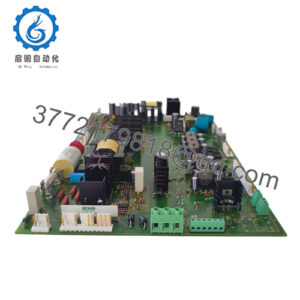
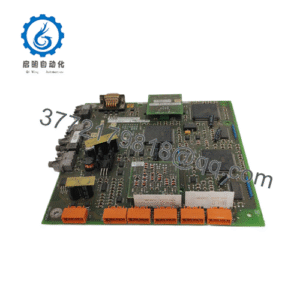
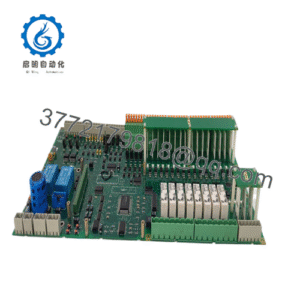
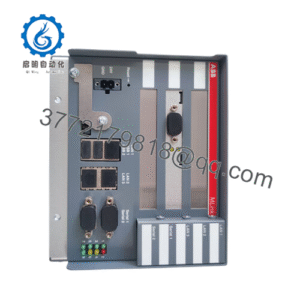
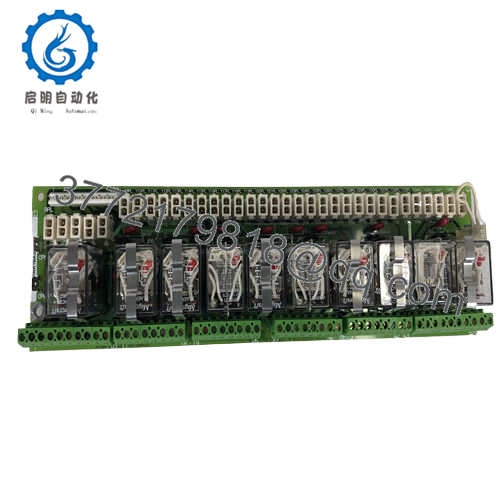
The GE DS200FCRRG1AJD addresses this as a firing circuit control board in the Speedtronic Mark V turbine and drive control series, providing high-reliability gating for industrial automation and process control. It generates and distributes precise firing pulses to SCR bridges, incorporating feedback scaling and status monitoring to ensure accurate phase control. This proves essential in environments requiring robust power regulation—such as LCI (load commutated inverter) static starters, regenerative drives, or auxiliary power bridges—where signal integrity prevents harmonics, torque ripples, or fault propagation. By supporting onboard diagnostics and programmable logic, the GE DS200FCRRG1AJD enhances system stability in demanding process control applications, especially when interfacing with legacy Mark V cores or upgrading older excitation systems. Its design emphasizes noise immunity and fault tolerance, reducing risks in high-voltage, high-current loops common to industrial automation.
The GE DS200FCRRG1AJD sits in the power bridge interface layer of the Mark V architecture, typically installed in the control rack alongside drive processors and feedback cards. It receives bridge current/voltage feedback and command signals via ribbon cables or backplane connections, processing them to output gated firing pulses through dedicated connectors to gate drive amplifiers. Positioned between the main controller (like SDCC or LDCCH) and the SCR bridge, it handles phase angle computation for alpha firing control in 6-pulse configurations.
The board includes scaling circuits for analog feedback, programmable devices for custom timing, and status relays for fault reporting back to the core. Diagnostics cover misfires, open gates, or feedback anomalies, visible via LEDs or relayed to the operator interface. While primarily for non-reversing bridges, it supports integration with reversing setups through complementary boards. In broader Mark V systems, the GE DS200FCRRG1AJD ensures deterministic pulse delivery over the VME or LAN bus, minimizing latency in closed-loop regulation critical for stable drive performance.

- DS200FCRRG1AJD
- DS200FCRRG1AJD
| Specification | Details |
|---|---|
| Model Number | DS200FCRRG1AJD |
| Brand | GE (Speedtronic Mark V) |
| Type | Firing Circuit Control Board |
| Input Voltage | 5V/±15V DC (backplane typical) |
| Operating Temp Range | 0°C to 60°C |
| Mounting Style | VME rack slot |
| Dimensions | Standard Mark V board (approx. 12 x 9 inches) |
| Weight | Approx. 2 kg |
| Interface/Bus | Ribbon cables, VME backplane |
| Compliance | CE, UL (industrial standards) |
| Supported Protocols | Mark V internal signaling |
| Typical Power Draw | <50W |
Selecting the GE DS200FCRRG1AJD means incorporating a board engineered for consistent gating in power conversion loops, where precise pulse timing and feedback handling ensure long-term performance under electrical stress and thermal cycling. Its robust components and isolation deliver reliable operation in noisy cabinet environments, minimizing drift or failure risks over extended service.
Integration stands out in legacy upgrades—direct compatibility with Mark V racks reduces engineering overhead, with configurable jumpers and connectors allowing adaptation without extensive rewiring. In operation, the value lies in maintenance efficiency: clear status indicators and diagnostic relays enable quick fault localization, while the board’s design supports hot insertion in many setups.
Overall, the GE DS200FCRRG1AJD contributes to drive reliability by providing fault-tolerant firing control that maintains power quality, supports efficient load handling, and aligns with stringent industrial automation standards.
The GE DS200FCRRG1AJD is commonly found in power generation facilities with gas or steam turbines, where LCI starters or auxiliary drives require accurate SCR firing for startup sequencing and load sharing in harsh conditions of vibration and heat. In oil and gas pipeline compressor stations, it regulates power bridges for motor acceleration, ensuring continuous uptime during variable flow demands.
Metals or pulp processing plants deploy it in large drive systems for fans, pumps, or mills, handling fast current cycles while tolerating electrical transients. These process control environments leverage its diagnostic capabilities for critical system uptime in high-power applications.
DS200FCRRG1AKD – Later revision with enhanced diagnostics for demanding bridges
DS200FCRRG1ACA – Conformal-coated variant for improved environmental resistance
DS200FCRRG2A – Higher pulse capacity version for expanded bridge configurations
DS200FCGDH1B – Gate distribution and status card often paired for feedback scaling
DS200FGPAG1A – Gate pulse amplifier board downstream for signal boosting
DS200DCFBG1B – Power supply board commonly used in the same rack
DS200SDCCG1A – Drive control card for overall bridge command processing
DS200LDCCH1A – LAN/drive control complement for system integration
Before installing the GE DS200FCRRG1AJD, verify rack slot and backplane revision for compatible signaling—check jumper settings against bridge type to match firing characteristics. Ensure ribbon cable integrity and proper shielding to reject noise, and confirm power sequencing from the supply board to avoid startup surges.
Maintenance involves routine LED checks for status and fault codes, along with visual inspection of connectors and heat sinks for dust or looseness in vibrating installations. Periodically validate firing symmetry via scope checks on outputs during scheduled tests. Keep configuration data archived for quick replacement, as the board supports plug-and-play in most Mark V cores.