 WhatsApp: +86 16626708626
 Email:
  Phone: +86 16626708626
Description
In industrial drive and turbine control systems, managing high-current gate pulses to SCR bridges or IGBT modules demands precise amplification, status monitoring, and isolation to prevent misfiring, commutation failures, or bridge overloads that could cause torque instability, harmonic distortion, or forced outages. In non-regenerative or load-commutated inverter setups, noise on feedback lines, mismatched pulse timing, or inadequate drive strength can degrade performance, especially under rapid load changes or in electrically harsh environments. A dedicated gate pulse amplifier becomes vital for delivering clean, high-integrity signals in high-power conversion loops common to industrial automation.
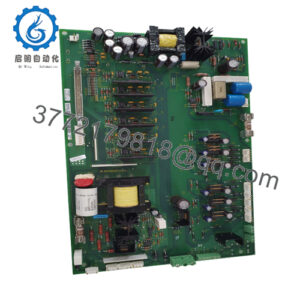
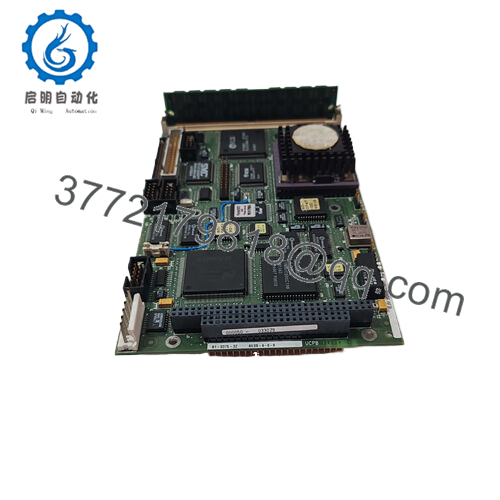
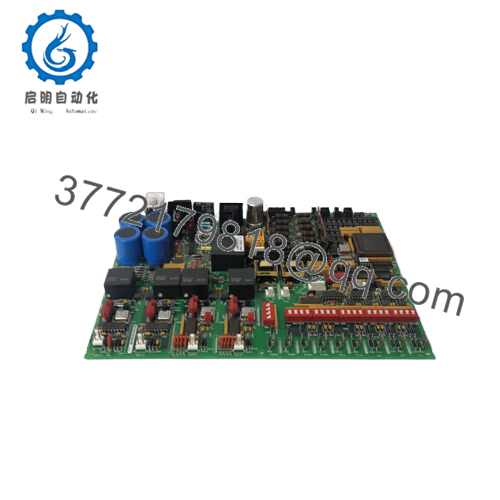
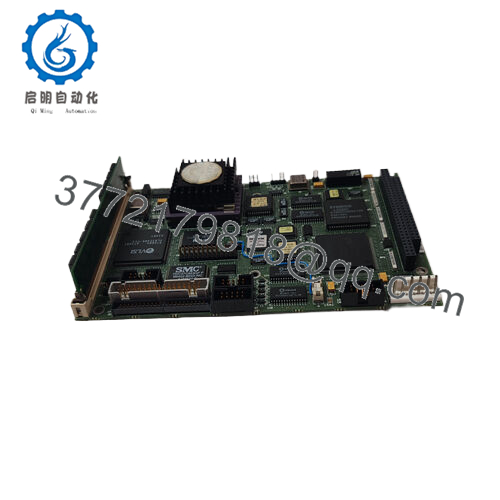
The GE DS200FGPAG1AGD addresses this as a Gate Pulse Amplifier board in the Speedtronic Mark V series, offering high-reliability signal boosting for industrial automation and process control in turbine and drive applications. It amplifies low-level firing commands from the control card, distributes pulses to multiple gate drivers, and monitors SCR or cell status for immediate fault feedback. This proves essential in situations requiring synchronized bridge operation—such as LCI static starters, excitation systems, or large motor drives—where pulse accuracy prevents asymmetric conduction or overstress. By incorporating test points, status indicators, and robust isolation, the GE DS200FGPAG1AGD ensures consistent I/O signal delivery in process control environments, supporting twelve-pulse configurations and reducing risks in high-voltage power electronics.
The GE DS200FGPAG1AGD operates in the power bridge drive layer of the Mark V architecture, typically mounted in the control rack and connected via ribbon cables to the drive control card (SDCC) and downstream gate drivers. It receives phased timing signals, amplifies them to the required current/voltage levels for reliable SCR gating, and provides feedback on conduction status or faults back to the processor. Positioned between the logic-level controller and the power stage, it handles multiple channels for A and B gate groups in multi-pulse bridges.
The board includes numerous test points (typically 30 across gates and status) for oscilloscope verification of pulse symmetry and timing. Diagnostics cover gate health, cell voltages, and misfire conditions, visible via onboard indicators or relayed to the operator interface. In larger systems, it supports integration with LAN communications for remote monitoring. The GE DS200FGPAG1AGD emphasizes deterministic pulse generation, making it suitable for closed-loop regulation where precise alpha control is needed for stable operation.

- DS200FGPAG1AGD
| Specification | Details |
|---|---|
| Model Number | DS200FGPAG1AGD |
| Brand | GE (Speedtronic Mark V) |
| Type | Gate Pulse Amplifier Board |
| Input Voltage | 5V/±15V DC (backplane typical) |
| Operating Temp Range | 0°C to 60°C |
| Mounting Style | VME rack slot |
| Dimensions | Standard Mark V board (approx. 12 x 9 inches) |
| Weight | Approx. 2 kg |
| Interface/Bus | Ribbon cables, multiple connectors |
| Compliance | CE, UL (industrial standards) |
| Supported Protocols | Mark V internal signaling |
| Typical Power Draw | <50W |
Choosing the GE DS200FGPAG1AGD provides a board engineered for reliable pulse amplification in power conversion systems, where consistent gate drive strength and status monitoring ensure long-term performance under high-frequency switching and thermal stress. Its design delivers clean signals in noisy environments, minimizing risks of partial conduction or bridge failures.
Integration is straightforward in Mark V setups—standard connectors and configurable options reduce engineering overhead during commissioning or upgrades. In use, the value shows through maintenance efficiency: accessible test points and status feedback allow quick verification of pulse integrity, while the board’s robustness supports extended intervals between interventions.
Overall, the GE DS200FGPAG1AGD contributes to system uptime by enabling precise, fault-aware gating that optimizes power delivery and protects expensive bridge components in critical industrial automation applications.
The GE DS200FGPAG1AGD is deployed in power generation plants with gas or steam turbines, where it drives SCR bridges in LCI starters or excitation systems under harsh conditions of vibration and elevated temperatures for continuous uptime. In oil and gas facilities, it supports compressor drive power stages, handling variable loads and fast transients.
Heavy manufacturing operations use it in large pump or fan drives, ensuring reliable firing during high-torque demands in noisy electrical settings. These process control environments benefit from its support for multi-pulse converters and diagnostic features for critical system uptime.
DS200FGPAG1AHD – Enhanced revision for improved pulse characteristics
DS200FGPAG1AMD – Variant with additional monitoring capabilities
DS200FGPAG1AFC – Conformal-coated for harsher environments
DS200FCRRG1AKD – Firing control board often upstream for command generation
DS200FCGDH1B – Gate distribution card complement for status scaling
DS200SDCCG1AGD – Drive control card providing input signals
DS200DCFBG1B – Power supply board in the same rack
DS200GDPAG1AKF – High-frequency gate driver power supply
Before installing the GE DS200FGPAG1AGD, confirm rack slot and backplane compatibility—verify connector alignment and jumper settings match your bridge configuration to ensure proper pulse mapping. Route ribbon cables securely away from power sources to maintain signal integrity, and check downstream driver impedance for optimal amplification.
Maintenance focuses on periodic test point checks for pulse waveform symmetry during outages, along with visual inspection of connectors and heat sinks for dust accumulation in enclosed cabinets. Monitor status indicators for any recurring faults, and archive configuration data for seamless replacement. A yearly functional validation—observing gate responses under simulated loads—confirms ongoing reliability.