 WhatsApp: +86 16626708626
 Email:
  Phone: +86 16626708626
Description
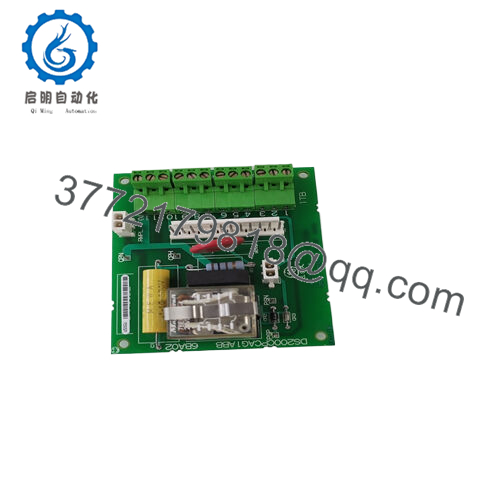
Turbine operators in combined-cycle plants and simple-cycle peakers running GE Mark V Speedtronic controls depend on the GE DS200TCDAG1A to interface emergency trips, permissive signals, and discrete status from field devices like vibration switches, fire detectors, and lube pump interlocks directly into the protection core. It shows up in generator bays and compressor stations where clean 24/125 VDC signals prevent nuisance shutdowns during load transients or startups, while feeding diagnostic bits back to the HMI for root-cause hunts. In these setups, the board handles grouped inputs that tie into the turbine’s master trip circuitry—think overspeed relays, thrust wear alerts, or starting sequence inhibits—ensuring the <Q> core logic executes failsafe actions without delay. Maintenance shifts pull it during C-inspections to verify solder joints after vibration cycles, and control room techs watch its fault LEDs during permissive faults. The GE DS200TCDAG1A fits harsh turbine halls where EMI from exciters and hydrogen seal oil pumps demands isolated fronts, making it applicable in control systems that prioritize redundancy and quick signal validation over raw speed.
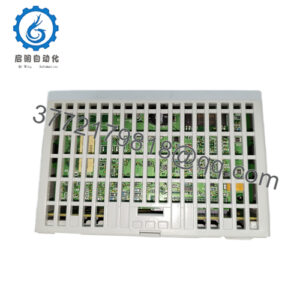
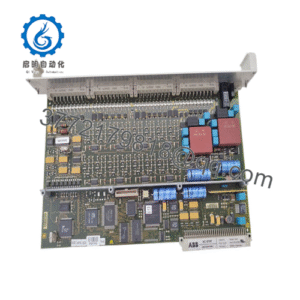
The GE DS200TCDAG1A is a digital input/output interface board in GE’s Mark V Speedtronic turbine control series, designed to condition and buffer discrete signals for the TMR (triple modular redundant) or simplex <R> core processors. It plugs into VMEbus racks alongside corelan boards, power supplies, and I/O concentrators, using ribbon cables or J-straps to connect field terminals for up to 24-32 points of isolated 24 VDC or 125 VDC inputs typical of turbine auxiliaries. Within the Mark V architecture, the GE DS200TCDAG1A sits at the field edge, debouncing contacts, applying optical isolation, and multiplexing states into serial IONet links that feed the voting logic for trip strings and run permissives. Integrators value its drop-in fit for retrofit kits, jumper-configurable thresholds, and compatibility with both simplex LM panels and full TMR GT setups, letting one board serve multiple frame sizes without panel redraws.
Field crews lean on the GE DS200TCDAG1A for its front-facing test points and bicolor LEDs per point, instantly showing input states or latch-ups during live troubleshooting—no need to kill power or haul a multimeter into the enclosure. Inputs group into isolated banks (often 12 points each) with selectable wetting voltage via jumpers, handling dry contacts up to 2 A inrush while rejecting 60 Hz pickup through RC filters and 1500 V optos. Outputs—if present on this variant—drive small relays or indicators at 24 VDC/1 A, but the focus stays on high-reliability input capture for critical chains like flame detection or seal pressure votes. Diagnostics latch faults like open wires or shorts, resettable via software commands, streamlining HMI-based clears.
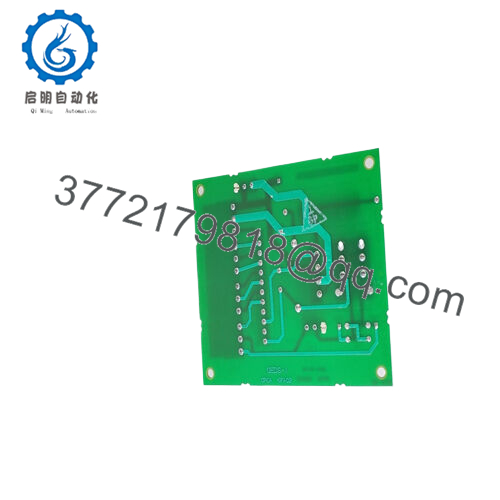
Hardware toughness defines the GE DS200TCDAG1A: conformal-coated multilayer PCB shrugs off 40+ years of heat-soak in IP54 cabinets, drawing fused ±15 V and +5 V rails (under 300 mA total) from the rack bus. It mounts via ejector handles in standard DS200 slots, with pluggable terminal strips for field swaps under 30 minutes, and shock/vibration ratings matching MIL-STD for seismic plants. Operating range hits -20 °C to 70 °C with natural convection, and no electrolytic caps boost MTBF past 100k hours in dusty environments.
Detailed Technical Specifications
| Parameter | Value |
|---|---|
| Model | GE DS200TCDAG1A |
| Brand | GE Energy / Speedtronic Mark V |
| Type | Digital I/O interface board (input-focused) |
| Input Points | 24-32 discrete (24/125 VDC, dry/wetted contacts) |
| Input Isolation | 1500 V optical per group |
| Output Capability | Limited 24 VDC/1 A relays (if equipped) |
| Wetting Voltage | Switchable 24 VDC/125 VDC via jumpers |
| Response Time | <10 ms debounce/filtered |
| Power Requirements | +5 VDC/±15 VDC, <300 mA from rack |
| Operating Temperature | -20 °C to 70 °C |
| Diagnostics | Per-point LEDs, fault latches, test points |
| Mounting | VME/DS200 rack slot, pluggable terminals |
| Environmental Protection | Conformal coated, vibration/shock qualified |
| Interfaces | Ribbon cables, IONet serial to core, J-straps |
| Cooling | Convection, rack airflow |

- DS200TCDAG1A
Related Modules or Compatible Units
DS200TCCAG1A – Corelan companion board that receives multiplexed I/O from GE DS200TCDAG1A.
DS200RTBAG1A – Terminal board for field wiring to the digital inputs/outputs.
DS200TCPAG1A – Processor board interfacing multiple I/O boards in TMR setups.
DS200SHRAG1A – Shunt relay board for output expansion from digital signals.
DS200DBRAG1A – Dynamic brake interface, pairs for turbine coast-down control.
Rack the GE DS200TCDAG1A mid-chassis away from high-power analog cards, verifying group commons match field polarity before powering—mismatched wetting fries optos. Torque terminal screws to 10 in-lbs on the RTBA daughterboard, route twisted pairs shielded single-grounded at the board, and ferrite every run near exciter noise. Commission with dry-contact loops first: force inputs via HMI, watch LEDs debounce cleanly, then baseline current draw (<350 mA) sans faults.
Quarterly patrols of the GE DS200TCDAG1A catch dim LEDs or latch spam signaling sticky contacts; clear via ToolboxST fault table and trend input churn for wear-out. Swap pluggables in humid sites pre-outage, vacuum coating dust from airflow paths, and simulate trip chains annually to prove voting integrity without turbine spin.