 WhatsApp: +86 16626708626
 Email:
  Phone: +86 16626708626
Description
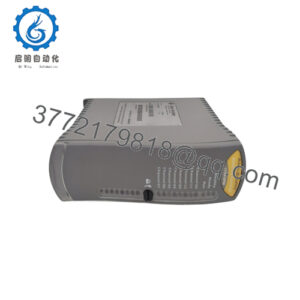
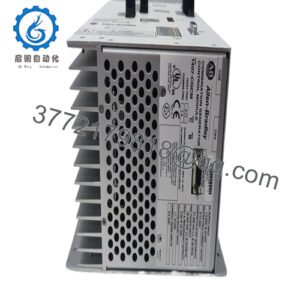
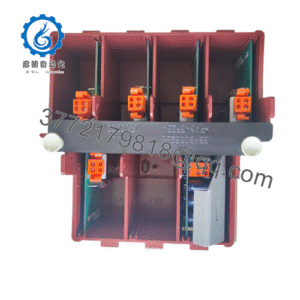
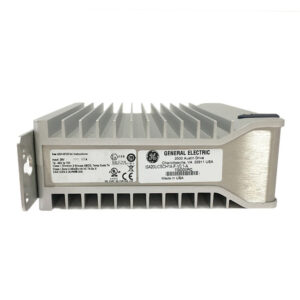
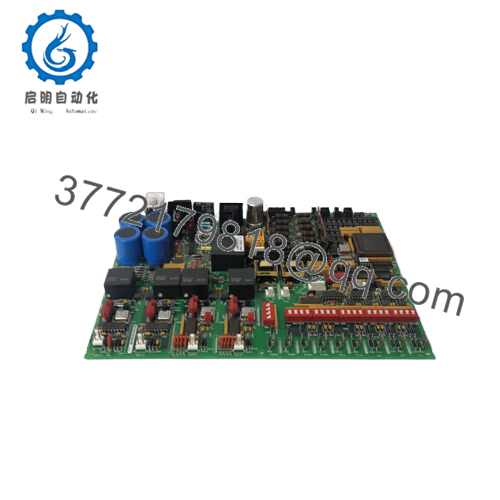
The GE DS3800NHVE1C1C is typically deployed in GE Speedtronic Mark IV turbine control systems wherever high-voltage signals must be handled safely and accurately inside the turbine control cabinet. It is commonly associated with gas and steam turbine installations in power plants, cogeneration units, and large industrial facilities that rely on mature GE legacy controls rather than fully migrating to newer platforms. In these environments, the GE DS3800NHVE1C1C is used in industrial automation to manage high-voltage interface functions that sit between field circuits and the lower-voltage logic and I/O layers applicable in control systems. Plants running base‑load or cycling turbines depend on this class of board to maintain clean high-voltage distribution and monitoring in the control system, which directly affects protection functions, breaker operations, and auxiliary equipment control.
Engineers and maintenance teams encounter the GE DS3800NHVE1C1C most often in retrofit projects, life‑extension programs, and spare‑parts planning for older GE turbine fleets. Rather than redesigning entire cabinets, they keep the proven Mark IV architecture and replace or refurbish critical boards like this high voltage board to sustain reliability. In real projects, that can mean ensuring that high-voltage sensing, isolation, and distribution within the cabinet are adequately controlled so that trips, alarms, and status signals remain dependable over the life of the turbine. Because the board is part of a modular control philosophy, it allows technicians to confine high-voltage functions to a defined hardware location, which simplifies troubleshooting, safety procedures, and documentation in demanding industrial environments
Product introduction and positioning
The GE DS3800NHVE1C1C is a high voltage board designed for use within General Electric’s DS3800 family, specifically supporting the Speedtronic Mark IV turbine control platform. Its primary role is to manage high-voltage functions—typically measurement, sensing, or distribution of higher-potential circuits—while providing a controlled interface to the rest of the low-voltage control system. Within the cabinet, the board plugs into a Mark IV rack or backplane as part of a structured hierarchy of cards that includes processors, I/O modules, excitation interfaces, and protection hardware. This modular design lets the GE DS3800NHVE1C1C focus on high-voltage tasks while other boards handle logic and standard I/O, keeping responsibilities clear and maintainable.
In system architecture terms, the GE DS3800NHVE1C1C sits at the intersection between field-level high-voltage signals and the protected circuitry of the turbine controller. It can be part of circuits associated with breaker control, high-voltage monitoring, or supervisory functions that require galvanic separation and robust insulation. For engineers, its value lies in preserving the safety and integrity of the control system while allowing the Mark IV platform to interact with higher-energy parts of the plant. Because it belongs to the broader DS3800 high‑reliability ecosystem, it integrates mechanically and electrically with existing racks, wiring, and documentation, which is attractive for operators that want to sustain an installed base rather than undertake a full DCS replacement.
Key technical features and functional benefits
A key functional strength of the GE DS3800NHVE1C1C is its ability to manage high-voltage control and monitoring tasks while maintaining stable, predictable behavior that is essential in turbine protection schemes. The board is designed so that high-voltage paths are carefully routed and insulated, allowing it to withstand the electrical stress typical of turbine auxiliaries, breaker circuits, or high-potential measurement points. By offloading these duties to a dedicated high voltage board, the overall control system benefits from cleaner segregation between high- and low-voltage domains, which helps reduce noise coupling and spurious trips in sensitive logic hardware.
From a hardware design perspective, the GE DS3800NHVE1C1C follows the DS3800 mechanical format, using a plug-in card that mates with a Mark IV backplane via edge connectors. This arrangement is well suited for frequent inspection and occasional replacement during planned outages: technicians can withdraw and insert the board without disturbing permanent cabinet wiring. The board layout is typically oriented to industrial environments, with adequate creepage and clearance distances, component spacing, and physical robustness to handle cabinet vibration, temperature variation, and long-term operation.
Compatibility is another important benefit. The GE DS3800NHVE1C1C is intended to work alongside other DS3800-series modules—such as processor boards, I/O cards, and excitation interfaces—within a unified GE Mark IV control cabinet. That family-level compatibility simplifies configuration, documentation, and spare‑parts management because a plant can maintain a coherent inventory of DS3800 hardware. For operators engaged in phased modernization, this board can remain in service while other parts of the system are upgraded, acting as a stable high-voltage interface layer during transitions
In terms of long-term reliability, the GE DS3800NHVE1C1C benefits from conservative design practices typical of original GE turbine control hardware. When installed in a properly conditioned cabinet—where temperature, humidity, and contamination are controlled—it can remain in continuous operation for many years. Its replaceable, modular nature also supports a straightforward maintenance philosophy: if diagnostic checks or visual inspection indicate degradation, a tested spare board can be installed with minimal system reconfiguration, reducing downtime and maintaining high availability for critical generation assets.
Detailed technical specifications
| Parameter | Value |
|---|---|
| Model | GE DS3800NHVE1C1C |
| Brand | General Electric |
| Product type | High voltage board for turbine control systems |
| System family | DS3800 series, used in GE Speedtronic Mark IV controls |
| Primary function | Management and interfacing of high-voltage circuits within the control cabine |
| Typical application | Gas and steam turbine control panels in industrial power and process plants |
| Power supply | Low-voltage control power provided via DS3800 backplane |
| Mounting | Plug-in circuit board, edge-connected to Mark IV rack/backplane |
| Interfaces | High-voltage signal paths interfacing to low-voltage measurement and protection circuits |
| Cooling | Convection cooling within enclosed turbine control cabinets |
| Operating environment | Controlled electrical enclosures subject to thermal and vibration stresses |
| Maintenance approach | Field-replaceable module, supported by spare-board swap strategy |
Related modules or compatible units
DS3800NHVE1C1A – Variant of the same high voltage board family, used in similar Mark IV cabinet locations with minor configuration differences.
DS3800DMEB1B1C – Gas turbine control board from the DS3800 family that can be installed in the same control racks and work alongside the high voltage board.
DS3800HMPK – Mark IV processor or main logic module that relies on boards like GE DS3800NHVE1C1C to interface with high-voltage circuits.
DS3800NEPB – Excitation-related board used in turbine and generator systems sharing the same DS3800 rack infrastructure.
DS3800NPMB – Power or interface board commonly referenced in DS3800-based control cabinets supporting system power and distribution.
DS200 series Mark V/Mark VIe modules – Later-generation GE boards that may appear in hybrid or transition projects while legacy DS3800 hardware, including GE DS3800NHVE1C1C, remains in place.

- DS3800NHVE1C1C
Installation notes and maintenance best practices
When installing the GE DS3800NHVE1C1C, engineers should verify that the specified rack slot, backplane connector, and high-voltage wiring assignments match plant drawings and the original Mark IV design. Because the board manages high-voltage circuits, cabinet grounding and bonding must be checked carefully to ensure that insulation, creepage distances, and shield connections meet site and OEM standards. It is important to confirm that clearances around the board are not obstructed by harnesses or cable bundles, both to maintain cooling airflow and to avoid mechanical stress that could fatigue solder joints over time. Prior to energizing, technicians should compare terminal designations, jumper positions (if any), and configuration notes with the outgoing board or documented configuration to ensure functional equivalence.
For ongoing maintenance, the GE DS3800NHVE1C1C should be inspected during scheduled outages for signs of overheating, discoloration, loose connectors, or contamination from dust and oil mist. Any indication of tracking or surface contamination on high-voltage areas warrants cleaning or board replacement, given the risk of partial discharge and intermittent faults. Periodic functional checks—such as confirming that high-voltage measurements and trip thresholds behave as expected in diagnostic tests—help verify that the board continues to perform within specification. Maintaining at least one tested spare GE DS3800NHVE1C1C in inventory, labeled with recent bench-test results, allows rapid swap-out if diagnostics or visual inspection indicate deterioration, thereby protecting turbine availability.