 WhatsApp: +86 16626708626
 Email:
  Phone: +86 16626708626
Description
The GE Fanuc IC698CPE010-EK (often denoted as IC698CPE010-EK, a specific revision or configuration of the IC698CPE010) addresses the need for high-performance, deterministic processing in demanding industrial automation and process control applications where legacy VME-based platforms must handle complex logic, large datasets, and integrated communications without compromising scan times or reliability. In mature RX7i PACSystems installations—common in facilities that invested heavily in GE/Emerson hardware years ago—engineers often encounter limitations with older CPUs: insufficient processing headroom for expanding I/O, slower execution of advanced function blocks, inadequate memory for growing programs, or limited Ethernet connectivity that hinders modern data integration, SCADA access, or peer-to-peer messaging.
GE Fanuc IC698CPE010-EK becomes essential when upgrading or sustaining RX7i racks that require robust computational power for real-time control of large-scale machines, continuous processes, or material handling systems. With its 300 MHz Intel Celeron processor, it delivers fast Boolean execution (typically around 0.1 ms/k instructions) and supports substantial user memory, making it suitable for applications involving extensive ladder logic, structured text, function block diagrams, or motion coordination. Built-in Ethernet (10/100 Mbps) enables direct network connectivity without add-on modules, while multiple serial ports handle legacy protocols. For engineers managing high reliability systems in industrial automation, GE Fanuc IC698CPE010-EK provides the processing muscle and connectivity to maintain tight control loops, reduce latency in data exchanges, and support future-proofing without a full platform migration—helping avoid obsolescence while preserving investment in VME backplanes and I/O.
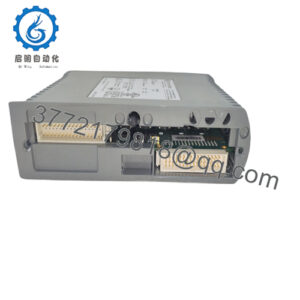
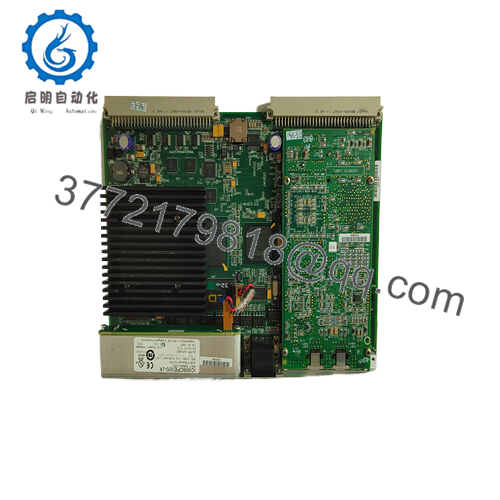
GE Fanuc IC698CPE010-EK serves as the central processing unit in Emerson’s (formerly GE Fanuc) PACSystems RX7i family, occupying a dedicated slot in a VME64 rack (e.g., IC698CHSxxx series) where it interfaces directly with the high-speed VMEbus backplane. This architecture allows seamless communication with a wide range of RX7i I/O modules, Genius I/O via bus controllers, and other specialty cards for analog, motion, or fieldbus integration. The CPU runs user programs stored in battery-backed RAM (with flash for non-volatile backup), executing logic deterministically while managing I/O scans, interrupt handling, and diagnostics.
Key to its system fit, GE Fanuc IC698CPE010-EK includes embedded dual Ethernet ports for redundant or segmented networking (supporting SRTP, EGD, Modbus TCP, and other protocols), plus three serial ports (two RS-232, one RS-485) for Modbus RTU, SNP, or station manager functions. It supports floating-point math, extensive program blocks (up to 512), and large I/O capacities (32K discrete/analog points). Positioned as the brain of the rack, it coordinates with power supplies (e.g., IC698PSA100), I/O carriers, and expansion racks via VME, ensuring synchronized data flow across the control layer. Diagnostics via LEDs (OK, Fault, etc.) and the embedded web server/station manager port provide visibility for troubleshooting, while the design emphasizes hot-swap compatibility in many setups and backward compatibility with earlier RX7i elements—making GE Fanuc IC698CPE010-EK a straightforward drop-in for performance upgrades in existing DCS-like or PLC-based architectures.

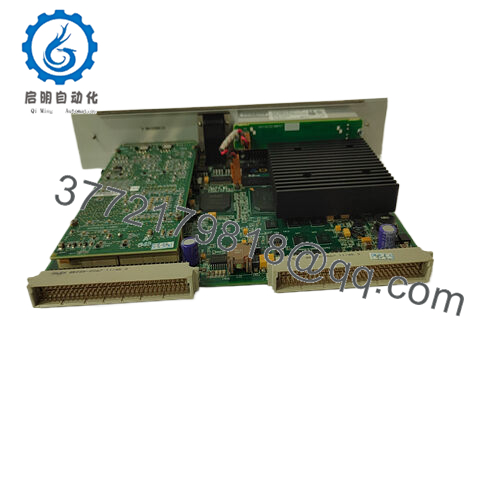
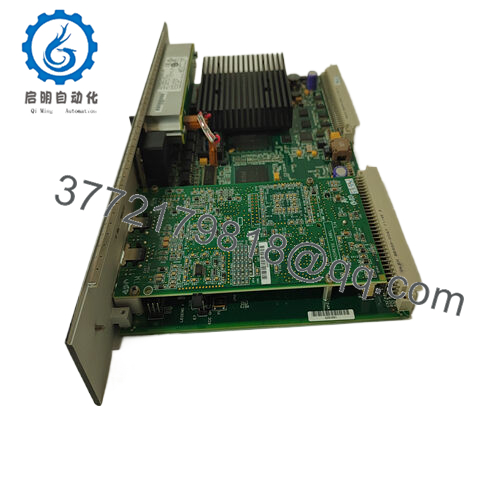
- IC698CPE010-EK
Here are the key technical highlights in a concise format:
| Specification | Details |
|---|---|
| Model Number | IC698CPE010-EK |
| Brand | GE Fanuc (now Emerson) |
| Type | Central Processing Unit (CPU) Module |
| Input Voltage | Powered via backplane (typically +5 VDC, +12 VDC, –12 VDC from rack PS) |
| Operating Temp Range | 0 to +60 °C |
| Mounting Style | VME64 rack slot (RX7i baseplate) |
| Dimensions | Standard RX7i single-width (approx. 233 mm H × 160 mm D × 30 mm W) |
| Weight | Approx. 1.0–1.2 kg |
| Interface/Bus | VME64 backplane; Embedded Ethernet 10/100 Mbps |
| Compliance | CE, UL, CSA, typical industrial standards |
| Supported Protocols | SRTP over Ethernet, EGD, Modbus TCP, Modbus RTU Slave, SNP, others via serial/Ethernet |
| Typical Power Draw | ~3.2 A @ +5 VDC, 0.042 A @ +12 VDC, 0.008 A @ –12 VDC (nominal) |
Selecting GE Fanuc IC698CPE010-EK yields significant gains in processing efficiency and system responsiveness for RX7i users. Engineered for demanding real-time control, its 300 MHz Celeron delivers consistent, low-latency execution of complex algorithms—ensuring tight regulation in PID loops, fast sequencing, or coordinated motion without the delays seen in slower legacy CPUs. The generous 10 MB battery-backed user RAM (plus 10 MB non-volatile flash) accommodates large programs and data logging, reducing the need for external historians or frequent optimizations while supporting expandable I/O counts without performance degradation.
In practice, GE Fanuc IC698CPE010-EK streamlines integration with built-in Ethernet, enabling direct SCADA/HMI connectivity, peer controller messaging, or remote access—cutting cabling costs and engineering time compared to add-on comms modules. Maintenance benefits from solid diagnostics, memory retention (up to 40 days on nominal power loss, longer with battery), and proven long-term reliability in harsh environments. For plants extending RX7i lifecycle, GE Fanuc IC698CPE010-EK minimizes migration risks, preserves existing field wiring and I/O investments, and delivers the performance headroom needed for incremental improvements or added functionality.
GE Fanuc IC698CPE010-EK finds strong use in industries requiring high-speed, high-capacity control in VME-based platforms. In oil & gas and petrochemical facilities, it’s deployed for compressor control, pipeline SCADA, or refinery processes—handling extensive analog inputs, safety logic, and Ethernet-based data exchange under continuous operation where critical system uptime is non-negotiable. Power generation plants rely on GE Fanuc IC698CPE010-EK for turbine sequencing, boiler management, or grid synchronization, leveraging its fast scan times and floating-point capabilities in harsh, vibration-prone environments. Manufacturing sectors—such as automotive, metals, or pulp/paper—use it for large machine lines, material handling, or batch systems demanding rapid logic execution and robust networking for MES integration.
Across these applications, GE Fanuc IC698CPE010-EK performs reliably in setups with high I/O density, noisy electrical conditions, or requirements for deterministic performance—keeping processes stable and responsive.
For related or alternative options within the RX7i family:
IC698CPE010 – Base/standard version (identical core specs; -EK typically a later hardware revision or firmware alignment).
IC698CPE020 – Higher-performance 700 MHz Pentium III variant for more compute-intensive applications.
IC698CRE020 – Redundant CPU counterpart to IC698CPE020 for high-availability setups.
IC698PSA100 – Matching power supply module for RX7i racks hosting IC698CPE010-EK.
IC698CHS017 – 17-slot VME rack baseplate commonly used with IC698CPE010-EK.
IC698CPE030 – Later 600 MHz model as an upgrade path with similar form factor.
IC695CPE400 – Modern RX3i equivalent (different platform) for migration from RX7i.
IC698ETM001 – Ethernet daughterboard (if additional ports needed beyond embedded).
Before installing GE Fanuc IC698CPE010-EK, confirm rack compatibility—it fits standard RX7i VME64 baseplates and requires a compatible power supply (e.g., IC698PSA100) providing the necessary +5/+12/–12 VDC rails. Verify total rack power budget and backplane slot availability; the CPU must occupy a designated CPU slot. Update firmware via Proficy Machine Edition (or later Emerson tools) to match your existing system revision—mismatches can cause boot failures or incompatibility. Connect Ethernet cables securely for network access, and install the battery if not pre-installed to ensure memory retention.
Ongoing maintenance involves monitoring front-panel LEDs (OK steady green for normal; Fault or other indicators prompt diagnostics via Station Manager port or software). Check battery voltage periodically (replace every 5 years typical), inspect air filters/vents for dust in fan-cooled racks, and run confidence tests or loopback diagnostics annually via programming software. Firmware updates should follow Emerson recommendations for bug fixes or enhancements, but test in a non-production environment first.