 WhatsApp: +86 16626708626
 Email:
  Phone: +86 16626708626
Description
The GE Fanuc IC698CRE020-FE (a specific revision, often denoted as IC698CRE020-FE, of the IC698CRE020) tackles the critical demand for uninterrupted, fault-tolerant processing in high-stakes industrial automation and process control environments where even brief CPU failures can lead to costly downtime, safety risks, or production losses. In RX7i PACSystems setups—especially those controlling large-scale continuous processes, turbines, or safety-critical sequences—single-point CPU failures have historically forced manual intervention, system restarts, or fallback to less precise modes, disrupting operations and requiring extensive recovery efforts.
GE Fanuc IC698CRE020-FE becomes indispensable when your application requires hot-standby redundancy: two synchronized CPUs operating in parallel, with automatic failover (typically sub-second switchover) if the primary detects a fault. This module is designed for mission-critical systems where high reliability and critical system uptime are paramount, such as those handling burner management, emergency shutdowns, or high-throughput manufacturing lines. Paired with a Redundancy Memory Xchange module (e.g., IC698RMX016), GE Fanuc IC698CRE020-FE enables seamless data synchronization between redundant units, ensuring logic execution, I/O updates, and state information remain consistent across failover—eliminating the need for manual resets and minimizing process deviation. For engineers evaluating upgrades or sustaining legacy RX7i racks, GE Fanuc IC698CRE020-FE provides the processing power and redundancy architecture to achieve near-zero unplanned interruptions while leveraging existing VME infrastructure.
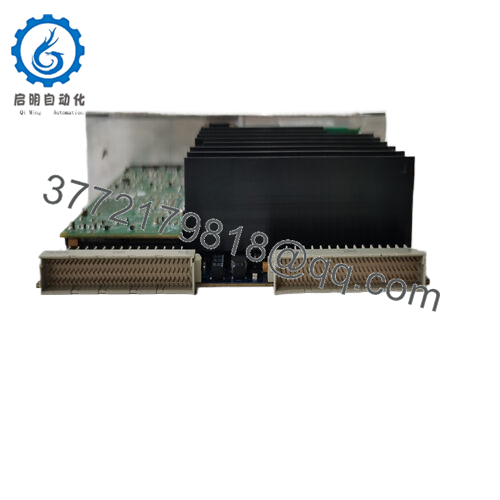
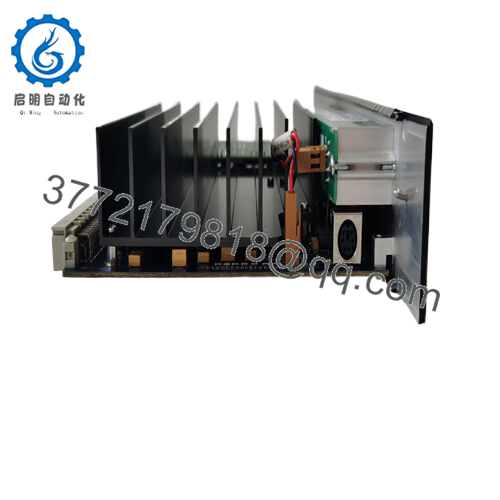
GE Fanuc IC698CRE020-FE functions as a high-availability central processing unit within Emerson’s (legacy GE Fanuc) PACSystems RX7i family, mounting in a dedicated CPU slot on a VME64 rack baseplate (e.g., IC698CHSxxx series). It features a 700 MHz Intel Pentium III processor for fast execution of complex control logic, supporting IEC 61131-3 languages and large program sizes. The key to redundancy lies in its integration with a paired IC698RMX016 module, which handles deterministic data exchange over a dedicated fiber link, synchronizing memory, I/O status, and timers between primary and secondary CPUs.
In the automation stack, GE Fanuc IC698CRE020-FE sits at the core of the rack, interfacing via the high-speed VMEbus to I/O modules, Genius bus controllers, and communication cards. It includes embedded dual Ethernet ports (10/100 Mbps) for SRTP, EGD, Modbus TCP, and web-based monitoring, plus three isolated serial ports (RS-232, RS-485, and station manager) for legacy protocols like SNP or Modbus RTU. The CPU manages up to 32K I/O points, floating-point operations, and extensive diagnostics reported via LEDs (OK, Fault, Active, etc.) and the embedded web server. In redundant configurations, only the primary drives outputs while the secondary tracks in hot standby; on fault detection (hardware, software, or communication), control transfers transparently. This setup ensures deterministic behavior across the control layer, making GE Fanuc IC698CRE020-FE ideal for extending RX7i lifecycle in DCS-style or PLC-heavy architectures demanding fault tolerance without platform migration.
Here are the key technical highlights in a concise format:
| Specification | Details |
|---|---|
| Model Number | IC698CRE020-FE (revision of IC698CRE020) |
| Brand | GE Fanuc (now Emerson) |
| Type | Redundant Central Processing Unit (CPU) Module |
| Input Voltage | Powered via backplane (typically +5 VDC, +12 VDC, –12 VDC from rack PS) |
| Operating Temp Range | 0 to +60 °C |
| Mounting Style | VME64 rack slot (RX7i baseplate) |
| Dimensions | Standard RX7i single-width (approx. 233 mm H × 160 mm D × 30 mm W) |
| Weight | Approx. 1.0–1.5 kg |
| Interface/Bus | VME64 backplane; Dual embedded Ethernet 10/100 Mbps |
| Compliance | CE, UL, CSA, typical industrial standards |
| Supported Protocols | SRTP over Ethernet, EGD, Modbus TCP, Modbus RTU Slave, SNP, others via serial/Ethernet |
| Typical Power Draw | ~4–5 A @ +5 VDC (higher than non-redundant due to redundancy features; consult rack PS) |

- IC698CRE020-FE
Opting for GE Fanuc IC698CRE020-FE delivers exceptional system resilience and operational continuity in demanding applications. Engineered for hot-standby redundancy, it ensures automatic failover without process disruption, maintaining tight control loops, consistent I/O response, and synchronized state—even during CPU hardware faults, power glitches, or software anomalies. This level of fault tolerance significantly reduces downtime risks in continuous processes, where restarts can cost hours or trigger regulatory issues, while the 700 MHz Pentium III provides ample headroom for complex logic, data handling, and fast scan times.
The built-in Ethernet and serial connectivity simplifies integration with SCADA, HMI, or peer devices, often eliminating extra modules and reducing panel complexity. Maintenance gains from comprehensive diagnostics, non-volatile flash for program storage, and battery-backed memory (typically 5-year retention at room temperature), allowing quick recovery or analysis post-event. For facilities committed to RX7i platforms, GE Fanuc IC698CRE020-FE extends asset life cost-effectively, preserving field wiring, I/O investments, and program familiarity while adding modern redundancy capabilities that align with safety and availability standards.
GE Fanuc IC698CRE020-FE is commonly deployed in industries where process interruption is unacceptable and redundancy is a design requirement. In power generation—thermal plants, combined-cycle units, or hydro facilities—it powers redundant control for turbine governors, boiler protection, or load-following logic, ensuring continuous uptime during critical transients or component faults. Oil & gas operations rely on GE Fanuc IC698CRE020-FE for offshore platforms, pipelines, or refineries, handling ESD systems, compressor sequencing, or custody transfer metering in harsh, remote environments with high vibration and electrical noise. Chemical and petrochemical plants use it for reactor control, distillation columns, or safety instrumented systems, where sub-second failover prevents hazardous deviations and supports SIL-rated applications.
In these scenarios, GE Fanuc IC698CRE020-FE excels under high I/O loads, noisy conditions, or stringent uptime demands—delivering reliable, synchronized execution across redundant pairs.
For related or alternative options within the RX7i family:
IC698CRE020 – Base/standard version (identical core specs; -FE denotes a hardware/firmware revision).
IC698CPE020 – Non-redundant 700 MHz counterpart for standard applications.
IC698CPE010 – Lower-speed 300 MHz non-redundant CPU for less demanding setups.
IC698RMX016 – Required Redundancy Memory Xchange module for pairing with IC698CRE020-FE.
IC698PSA100 – Matching rack power supply for RX7i systems with IC698CRE020-FE.
IC698CHS017 – 17-slot VME rack baseplate suitable for redundant CPU configurations.
IC698CPE030 – Later 600 MHz non-redundant model as a potential alternative or upgrade.
IC695CPE400 – Modern RX3i equivalent for full platform migration from RX7i redundancy.
Before installing GE Fanuc IC698CRE020-FE, ensure rack compatibility with RX7i VME64 baseplates and a suitable power supply (e.g., IC698PSA100) capable of handling the higher draw from redundancy features. Redundancy requires two IC698CRE020-FE units plus an IC698RMX016 module installed in the same rack—verify fiber link cabling and synchronization setup. Update firmware through Proficy Machine Edition (or Emerson equivalents) to the latest compatible revision for both units to prevent mismatch issues during sync. Configure redundancy parameters in the programming software, test failover in a safe environment, and confirm Ethernet/serial connections for monitoring.
Ongoing maintenance focuses on proactive checks: monitor LEDs (Active/Primary on one, Standby on the other; Fault indicates issues) and use the web interface or Station Manager for health status. Replace batteries every 5 years (or sooner in hot conditions) to preserve memory. Inspect RMX fiber connections annually for cleanliness or damage, run built-in diagnostics or sync tests periodically, and apply firmware patches only after validation. In redundant pairs, exercise manual switchover quarterly if procedures allow, ensuring seamless operation when needed.