 WhatsApp: +86 16626708626
 Email:
  Phone: +86 16626708626
Description
1. What This Product Solves
In the demanding world of industrial automation, maintaining precise power regulation is crucial for ensuring system stability and preventing costly disruptions. Engineers often face challenges where fluctuating input voltages can degrade I/O signal integrity, leading to erratic process control and potential turbine failures in high-stakes environments. The GE IC3600TPSF1 steps in as a reliable voltage converter board, specifically engineered to deliver stable output from variable sources, safeguarding against voltage drops or spikes that compromise high reliability operations. This becomes essential in legacy setups where modern upgrades aren’t feasible, allowing you to extend the life of existing infrastructure without sacrificing performance.
Consider a typical scenario in a power generation facility: gas turbines running continuous cycles under varying loads, where even minor power inconsistencies can cascade into alarms, shutdowns, or inefficient fuel use. Here, the GE IC3600TPSF1 addresses the core need for modular integration by converting and regulating power to feed critical I/O modules, ensuring signal reliability across the control loop. It’s particularly vital in process control environments where downtime equates to thousands in lost revenue per hour—think steam plants juggling peak demands or industrial compressors maintaining exact pressure thresholds. By focusing on the user’s goal of uninterrupted operation, this board minimizes engineering headaches associated with power conditioning, letting you prioritize optimization over firefighting.
Drawing from decades in Speedtronic systems, the GE IC3600TPSF1 embodies robust design for industrial automation challenges. It handles the grit of real-world deployments, from dusty turbine halls to vibration-heavy compressor bays, where environmental stressors test component limits. For decision-makers evaluating options, key essentials include its compatibility with Mark I and II architectures, which supports seamless retrofits in older plants still humming along after 40+ years. This isn’t just about fixing a problem; it’s about empowering stable, predictable control that scales with your operational demands, reducing the risk of unscheduled maintenance and enhancing overall system uptime in mission-critical applications.
2. How the Product Works & Fits into a System
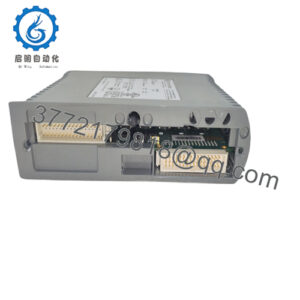
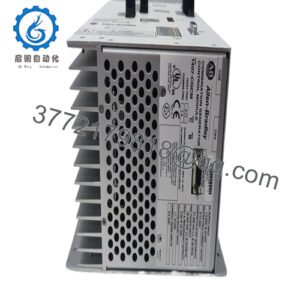
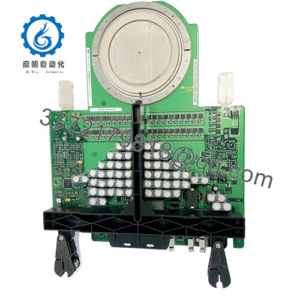
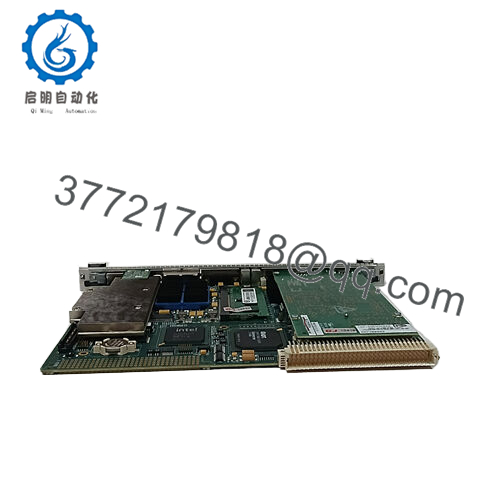
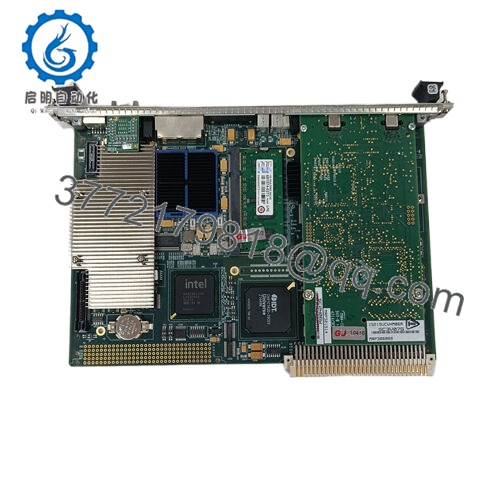
At its heart, the GE IC3600TPSF1 functions as a dedicated voltage converter, taking in standard industrial inputs and outputting a steady, conditioned supply to downstream components—think of it as the unsung stabilizer in your automation stack. It processes raw power through integrated circuitry, including a prominent power transistor paired with a heat sink for thermal management, ensuring clean conversion without introducing noise that could corrupt sensitive I/O signals. This board doesn’t operate in isolation; it slots directly into the backplane of GE’s Speedtronic Mark I and II control platforms, where it interfaces with core processors and field devices via right-angled pin connectors aligned to numbered slots for foolproof alignment.
In a broader system context, position the GE IC3600TPSF1 early in the power distribution chain, right after the main rectifier but before analog or digital I/O modules. It interacts seamlessly with adjacent cards—like relay drivers or sensor interfaces—by providing the regulated 5.3V at 2A needed for their operation, fostering a cohesive I/O architecture that supports redundancy in dual-channel setups. For instance, in a turbine control cabinet, it might feed power to speed-sensing circuits or flame detectors, where diagnostics are baked in through simple LED indicators for quick fault isolation. While it leans on proprietary GE protocols for handshaking, its design accommodates basic diagnostic loops, alerting to overcurrent or thermal events without needing external tools.
What makes it user-friendly in deployment is its plug-and-play ethos within legacy stacks—no custom firmware tweaks required, just verify slot compatibility during rack assembly. This fits neatly into modular backplane systems, allowing hot-swaps during brief outages if your setup includes bypass relays. Overall, the GE IC3600TPSF1 bridges the gap between raw utility power and precise control demands, enhancing the entire automation ecosystem’s resilience. Whether you’re scaling a single turbine loop or integrating into a multi-unit SCADA oversight, it ensures power flows predictably, letting higher-level logic focus on orchestration rather than compensation.
| Specification | Details |
|---|---|
| Model Number | IC3600TPSF1 |
| Brand | GE (General Electric) |
| Type | Voltage Converter Board |
| Input Voltage | 9V DC |
| Operating Temp Range | -40°C to +70°C |
| Mounting Style | Backplane/Rack Mount |
| Dimensions | 10.2 cm x 16.5 cm |
| Weight | 0.3 kg |
| Interface/Bus | Speedtronic Backplane |
| Compliance | CE, RoHS |
| Supported Protocols | GE Proprietary (Mark I/II) |
| Typical Power Draw | 2A at 5.3V Output |
4. Real-World Benefits
Opting for the GE IC3600TPSF1 means engineering for scenarios where power glitches aren’t an option, delivering the kind of steadfast regulation that keeps turbine sequences humming without a hitch. In practice, this translates to fewer false trips from voltage wander, where the board’s heat-sinked transistor design quietly dissipates excess energy, ensuring long-term performance even under sustained loads. You’re not just installing a converter; you’re embedding a layer of fault tolerance that reduces engineering overhead—technicians spend less time chasing intermittent faults and more on proactive tuning, cutting diagnostic cycles by up to half in legacy Mark systems.
Beyond stability, the real payoff shines in maintenance efficiency: its compact footprint and pin-based integration mean swaps happen in under an hour, minimizing panel downtime during routine overhauls. This ease ripples through your operations, where consistent output voltage preserves I/O signal fidelity, preventing the drift that erodes process accuracy over time. For teams managing aging infrastructure, it’s a smart hedge against obsolescence, ensuring your control loops maintain high reliability without a full system refresh. Engineered for the unforgiving pulse of industrial floors, it handles thermal cycling that would stress lesser components, promising years of uninterrupted service that aligns with your uptime SLAs.
Ultimately, choosing this board streamlines integration in mixed-vintage setups, where it dovetails with existing backplanes to boost overall system resilience. The result? Smoother scaling as demands grow—whether adding sensors or expanding to redundant paths—without the ripple effects of power instability. It’s the consultative pick for engineers who value proven durability over flashy specs, turning potential vulnerabilities into operational strengths that pay dividends in reliability and reduced lifecycle costs.

- IC3600TPSF1
- IC3600TPSF1
5. Typical Use Cases
The GE IC3600TPSF1 thrives in environments demanding unflinching power stability, like gas-fired power plants where turbines spin non-stop to meet grid loads. Here, it’s deployed in the core control cabinet to regulate feeds for speed and vibration monitors, ensuring critical system uptime amid fluctuating utility inputs—vital for avoiding blackouts during peak hours. In these process control environments, its ability to maintain clean 5.3V rails supports fast data cycles from field transducers, enabling precise fuel-air mixtures that optimize efficiency and cut emissions.
Shift to steam generation facilities, and the GE IC3600TPSF1 anchors boiler management loops, converting power for valve actuators and pressure sensors in setups battered by heat and humidity. Operators rely on it for continuous uptime in co-gen plants, where a single voltage sag could halt steam export, costing dearly in opportunity. Its rugged build suits harsh conditions, from coastal humidity to inland dust, delivering high reliability that aligns with ISO standards for power reliability.
For industrial compressors in oil and gas processing, the board powers I/O for sequential start-stop logic, handling the vibration and thermal swings of 24/7 cycles. In these applications, it ensures signal reliability for SCADA integration, supporting remote diagnostics that flag issues before they escalate. Across these sectors—power plants, steam systems, and extraction—the GE IC3600TPSF1 proves indispensable, bolstering process control where every volt counts toward seamless, resilient automation.
6. Compatible or Alternative Products
IC3600TPSF1A – Enhanced variant with additional filtering for noise-prone turbine halls
IC3600EPSS1 – Companion regulator card for expanded power distribution in Mark II setups
IC3600SVSF1 – Speed sensor interface that pairs for integrated turbine monitoring
IC3600TPAB1A – Analog input module for downstream signal processing after conversion
IC3600LCDA1 – Logic control add-on for extending I/O in legacy backplanes
IC3600EPSM1E – Redundant power supply option for high-availability dual paths
IC3600SOTD1 – Over-temperature protection card to complement thermal management
7. Setup Notes & Maintenance Insights
Before sliding the GE IC3600TPSF1 into your rack, double-check backplane slot numbering—Mark I systems use increments of 10, so misalignment can short circuits right out of the gate. Verify input cabling matches 9V DC specs, and leave at least 2 cm clearance around the heat sink for airflow; cramped panels invite thermal buildup that shortens component life. If your firmware dates back a decade, run a compatibility scan via GE’s legacy tools to confirm no handshake glitches—better safe than debugging mid-commissioning. Ground everything per plant codes to sidestep EMI, especially near high-vibe turbines.
Once in service, maintenance boils down to quarterly visual sweeps: inspect pins for oxidation and reseat if needed, as loose connections amplify noise in I/O chains. Monitor the onboard LED for steady green—flickers signal voltage creep, prompting a trim pot tweak with a multimeter to recalibrate output. Annually, pull it for a bench test under load, checking for cap drift with an ESR meter; electrolytic types like C1-C3 age predictably in hot spots. Dust off the heat sink with compressed air, avoiding abrasives that could nick fins. If diagnostics flag irregularities, log waveforms from adjacent modules to trace ripples back to the source—proactive logging saves hours during outages. This approach keeps the GE IC3600TPSF1 as a set-it-and-forget-it workhorse, with minimal intrusion into your runbook.