 WhatsApp: +86 16626708626
 Email:
  Phone: +86 16626708626
Description
In legacy Series Six PLC systems—once a cornerstone of industrial automation, process control, power generation, and heavy machinery controls—the reliable management of I/O scanning, addressing, and data exchange between the CPU and field modules is non-negotiable for maintaining deterministic performance. As these systems age, common pain points include degraded backplane communication, intermittent faults from worn PCBs, or limited diagnostics that delay troubleshooting during high-stakes operations like turbine sequencing, conveyor synchronization, or batch processing. In brownfield plants where full migration to modern platforms remains cost-prohibitive or disruptive, engineers need a proven I/O control module that restores or sustains seamless rack-level coordination, supports high I/O density, and integrates without extensive rewiring or custom adapters to preserve critical system uptime and minimize production losses.
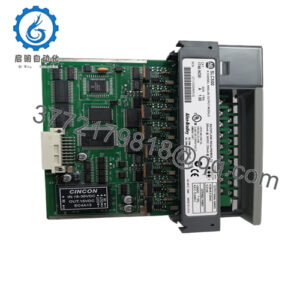
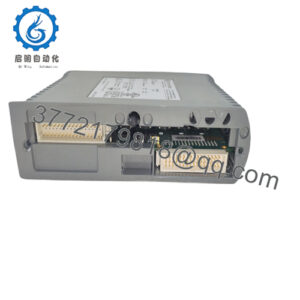
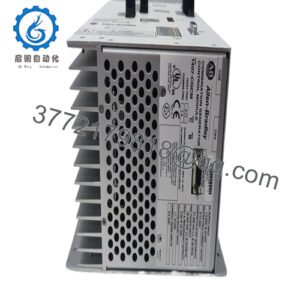
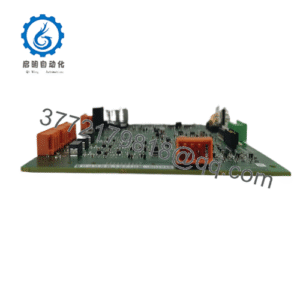
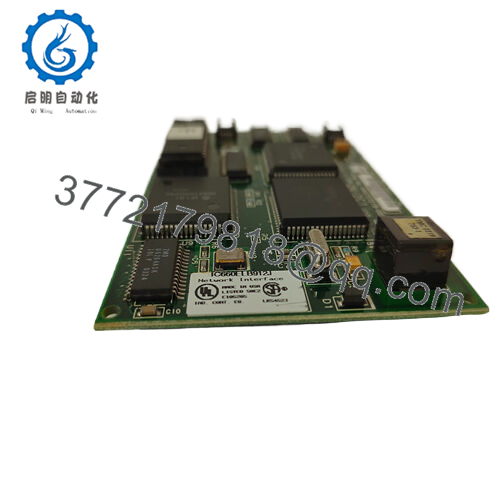
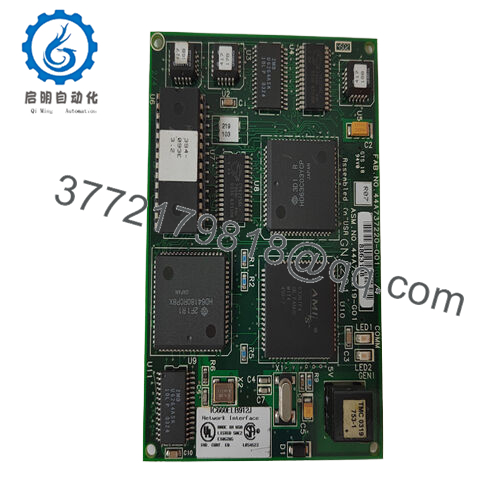
The GE IC600CB527M serves this exact purpose as the I/O Control Module (often labeled “IN/OUT Control” or similar in documentation) within GE Fanuc’s Series Six family. This single-slot board acts as the central interface for coordinating input/output operations across the rack, handling addressing, timing, and data buffering between the CPU (e.g., via logic control modules) and discrete/analog I/O cards. It becomes indispensable in sustaining or repairing Series Six installations—particularly during module replacements, rack expansions, or when addressing intermittent scan faults in continuous processes. By providing robust backplane arbitration and fault isolation, GE IC600CB527M helps eliminate common I/O-related stalls, reduces diagnostic downtime, and extends the service life of these durable legacy systems in environments demanding high reliability under vibration, temperature cycling, or electrical noise.
In the Series Six rack architecture, the GE IC600CB527M mounts in a dedicated slot (typically in the main CPU/local I/O rack), interfacing directly with the parallel backplane to manage I/O polling cycles, interrupt handling, and data transfer to/from field modules. It works in tandem with the logic control board (e.g., IC600CB515 series) and power supply, routing commands and responses while supporting Genius or local I/O configurations via compatible bus controllers. The module includes diagnostic LEDs for status indication (power, faults, activity) and circuitry for error detection in I/O addressing or communication.
This design enables reliable operation in simplex or limited-redundant setups common to Series Six, with straightforward replacement in live racks (power down recommended). Positioned as the I/O traffic manager in the control hierarchy, GE IC600CB527M ensures consistent scan times and data integrity, allowing focus on application logic rather than chasing backplane or addressing issues.
| Specification | Details |
|---|---|
| Model Number | IC600CB527M |
| Brand | GE Fanuc (Series Six) |
| Type | I/O Control Module (IN/OUT Control) |
| Input Voltage | Backplane supplied (typically 5 V logic) |
| Operating Temp Range | 0°C to +60°C (typical Series Six) |
| Mounting Style | Rack slot (Series Six main rack) |
| Dimensions | Standard Series Six single-board form factor |
| Weight | Approx. 0.5–1 kg |
| Interface/Bus | Series Six parallel backplane |
| Compliance | Legacy industrial standards |
| Supported Protocols | Backplane-level I/O coordination (no direct field protocol) |
| Typical Power Draw | Low (approx. <5 W) |

- IC600CB527M
Deploying the GE IC600CB527M restores dependable I/O coordination that keeps scan cycles predictable and data fresh, directly supporting stable process loops, fewer spurious alarms, and higher availability in aging systems. Its role in fault isolation and addressing management cuts troubleshooting time—often from hours to minutes—when I/O faults arise, allowing maintenance teams to address root causes rather than symptoms.
The module’s rugged PCB construction withstands the rigors of plant floors, including vibration and thermal stress, contributing to extended MTBF in legacy racks. For facilities committed to Series Six lifecycle extension, GE IC600CB527M standardizes repairs, simplifies spares stocking, and provides a cost-effective bridge to eventual migration while preserving field wiring and I/O investments.
In power generation plants with Series Six turbine or boiler controls, the GE IC600CB527M ensures reliable I/O handling for discrete permissives, analog monitoring, and sequencing, maintaining synchronization during startups or load changes where continuous uptime is critical. Heavy industrial applications—such as steel mills, mining conveyors, or chemical batch processes—rely on it for coordinating large I/O counts in noisy, high-vibration environments.
Legacy manufacturing lines and utility systems also use GE IC600CB527M to sustain deterministic performance in discrete or hybrid control, underscoring its value in harsh settings requiring proven backplane reliability.
For compatible or alternative options within the Series Six family, consider:
IC600CB527 (earlier/base revisions) – Functionally similar, often interchangeable
IC600CB527L – Prior revision variant commonly field-swapped
IC600CB500 series – Related control PCBs for logic or power functions
IC600CB515 – Logic control module that pairs closely with I/O control
IC600CB536 – Type 2 communication control for expanded networking
IC600BF series – Bus or interface modules for I/O expansion IC600YB series – Memory or instruction modules in the same rack family
IC600CHS racks – Chassis that host this module in legacy setups
Before installing the GE IC600CB527M, power down the rack and verify slot assignment—typically dedicated for I/O control to avoid bus conflicts. Confirm backplane compatibility with other Series Six modules, inspect for dust or corrosion on edge connectors, and reseat firmly after insertion. Power up and monitor LEDs for normal status (power OK, no faults); run system diagnostics via the programmer to validate I/O scan and addressing.
Ongoing maintenance includes periodic visual checks of LEDs and connectors during outages, cleaning edge contacts if oxidation appears, and reviewing CPU logs for I/O-related faults. Battery or power supply health indirectly affects module stability—test annually. Failures are rare but often trace to backplane wear, power transients, or age-related component degradation; keep spares on hand for rapid replacement in critical racks.