 WhatsApp: +86 16626708626
 Email:
  Phone: +86 16626708626
Description
| Specification | Details |
|---|---|
| Model Number | IC660BBA021N |
| Brand | GE |
| Type | 6-Channel RTD Input Block |
| Input Voltage | 24/48 V DC (external power) |
| Operating Temp Range | 0 to 60 °C |
| Mounting Style | Field mount / DIN-rail adaptable |
| Dimensions | 12 x 5 x 3 in (305 x 127 x 76 mm) |
| Weight | 4 lb (1.81 kg) |
| Interface/Bus | Genius Twisted-Pair Bus |
| Compliance | CE, cULus, NEMA 4X, RoHS |
| Supported Protocols | Genius Bus (153.6 kbps) |
| Typical Power Draw | 200 mA @ 24 V DC |
These inconsistencies flare up routinely in sustainment-heavy environments: retrofitting legacy Genius buses for finer granularity in heat exchangers, where generic analogs falter on RTD alphas or wiring asymmetries, or in hazardous zones demanding isolated groups to isolate a single probe failure without global resets. The GE IC660BBA021N emerges as indispensable here, daisy-chaining via twisted-pair bus up to 1 km from Series 90-30 or 90-70 controllers, with configurable filters (50-500 ms) to reject noise while reporting in °C, °F, ohms, or counts. In automation environments geared for predictive oversight—such as trending kiln profiles for element wear—it offloads CPU polling with bus-wide diagnostics, enabling circuit-level alarms that pinpoint issues without full-system scans. For field engineers contending with brownfields, its NEMA 4X enclosure and plug-in terminals preserve existing drops, minimizing hot-cut risks and aligning with IIoT retrofits via bus taps. This block transcends basic sensing; it’s the thermal unifier that ensures I/O signals from probes coalesce into coherent insights, empowering setpoint optimizations over symptom chasing in vibration-prone or corrosive process control workflows.

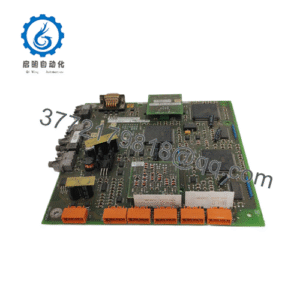
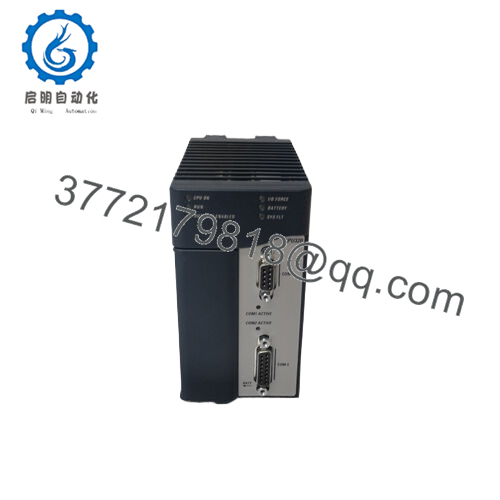
- IC660BBA021N
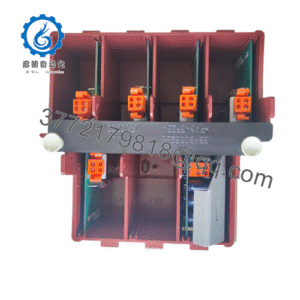
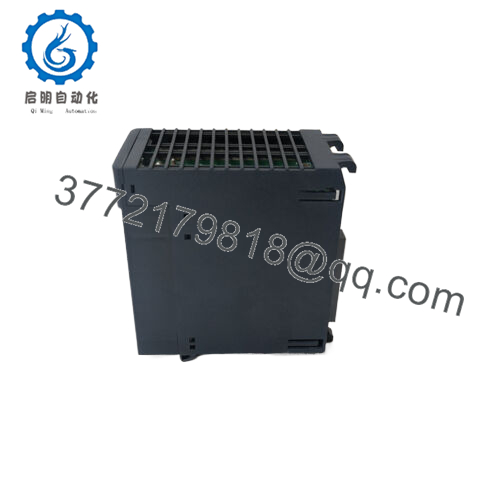
- IC660BBA021N
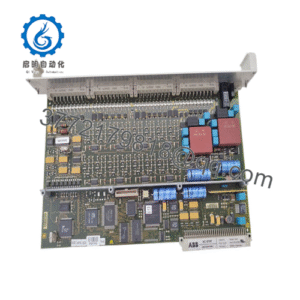
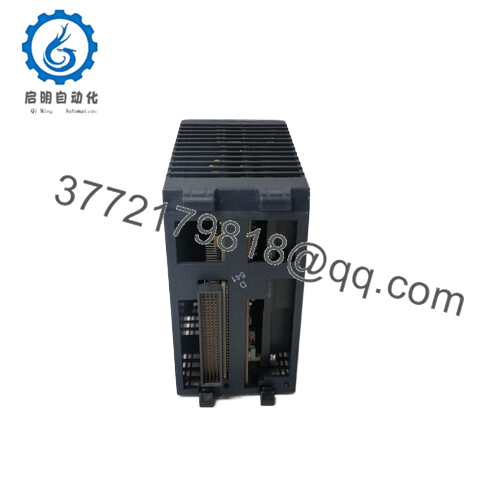
- IC660BBA021N
Engineers value its self-sufficiency: the GE IC660BBA021N auto-linearizes inputs per channel, sparing ladder bloat for custom curves. In distributed architectures, it thrives as a bus node, fostering modular growth that scales without centralized chokepoints.
Anchored as a remote sentinel in Genius I/O networks, the GE IC660BBA021N mounts standalone or in panels, linking to the bus controller (like IC697BEM731) over shielded twisted-pair for deterministic token-passing at 153.6 kbps, while sourcing 24/48 VDC externally to power its six inputs grouped in threes for 300 V isolation. Probes wire to spring-clamp terminals—two-wire for basic runs, three/four-wire for lead compensation—feeding into per-channel sigma-delta ADCs that sample at 100 ms rates, applying alpha-specific curves (e.g., Pt 3851) before buffering data in 16-bit registers for CPU fetches. In the automation stack, it layers at the field edge, upstream of the PLC’s I/O map and downstream of sensors—raw resistances convert to engineering units, fault bits (%S equivalents) flag excursions, and configurable thresholds trigger bus-wide alerts, all without dedicated polling cycles.
Interaction via handheld monitor or software sets filters, alphas, and reporting modes, with onboard EEPROM retaining configs against power loss. Diagnostics embed deeply: group LEDs signal health (green OK, red fault), while circuit-level reporting (enabled/disabled per input) escalates opens or shorts to the host for HMI overlays. For redundancy, it auto-switches to backup buses on primary loss, preserving data flow in <100 ms, and scales to 32 nodes per segment. This positions it fluidly in I/O architecture: probe ohms traverse the bus serialized, linearize locally, then multicast to SCADA for profiling, enhancing process control in washdown-rated or explosive-proof enclosures sans the latency of wired analogs or the sprawl of wireless relays.