
 WhatsApp: +86 16626708626
 Email:
  Phone: +86 16626708626
Description
In distributed industrial automation systems, particularly legacy installations using the Genius I/O bus, controlling a variety of field devices like contactors, motor starters, solenoids, or indicator lamps often requires isolated dry-contact outputs that can handle mixed AC and DC loads without dedicated power supplies per channel. Centralized discrete modules may not suffice in remote or hazardous locations where cable runs are long, and adding solid-state outputs risks leakage currents or limited voltage flexibility. This challenge grows in process control environments needing high reliability for non-powered fail-safe states, where normally open contacts ensure devices remain off during faults or power loss.
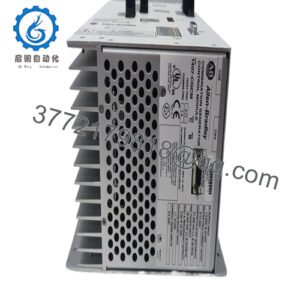
The GE IC660BBR101M provides a robust solution as a normally open relay output block in the Genius I/O family, delivering 16 independent dry-contact outputs rated for up to 2A each. It’s particularly essential in situations demanding galvanic isolation, broad voltage compatibility (5-250 VAC or 5-220 VDC), and distributed placement directly near loads to minimize wiring costs and complexity. Engineers commonly deploy the GE IC660BBR101M—a later revision of the IC660BBR101—in upgrades or maintenance of existing Genius networks for industrial automation applications, supporting features like configurable hold-last-state, output defaults, and built-in diagnostics over the bus. This ensures signal reliability and system stability in continuous operations, especially where electronic fusing or advanced feedback isn’t required but mechanical relay durability is key.
The GE IC660BBR101M operates as a self-contained I/O block on the Genius bus, communicating directly with host controllers like Series 90-70, RX3i, or compatible PACSystems via a bus controller. It mounts remotely on panels or in enclosures, drawing control power from the field load supplies rather than a separate backplane, positioning it ideally at the periphery of the automation stack for distributed discrete control.
Configured via Hand-held Monitor (HHM) or host software, it groups the 16 normally open relay outputs into four isolated sets of four, each group powered independently by AC or DC sources for flexible mixing of load types. The block reports output status, faults (e.g., open load or overload), and supports redundancy setups with Bus Switching Modules. Diagnostics include individual LEDs for unit status and circuit faults, plus bus-level reporting for overloads or undervoltage.
In the I/O architecture, the GE IC660BBR101M enables peer-to-peer communication across the Genius network, allowing scalable additions without central rack constraints. It fits legacy systems requiring robust mechanical switching over solid-state alternatives, providing clean dry contacts with no leakage and high surge tolerance.

- IC660BBR101M
| Specification | Details |
|---|---|
| Model Number | IC660BBR101M |
| Brand | GE (Emerson) |
| Type | Normally Open Relay Output Block |
| Input Voltage | Derived from field (93-132 VAC or 185-265 VAC nominal; no separate supply) |
| Operating Temp Range | 0 °C to +60 °C |
| Mounting Style | Panel mount (direct to surface) |
| Dimensions | Approx. 216 x 90 x 130 mm |
| Weight | Approx. 1.8 kg |
| Interface/Bus | Genius I/O bus (serial) |
| Compliance | CE, UL, Class I Div 2 (typical for series) |
| Supported Protocols | Genius bus protocol |
| Typical Power Draw | ~15 VA (quiescent) + load dependent |
The GE IC660BBR101M is engineered for enduring performance in mixed-load environments, with its sealed relays offering mechanical life far exceeding solid-state counterparts in inductive switching applications. The isolated groups reduce crosstalk risks and allow segmented power sources, contributing to consistent operation over years despite voltage fluctuations or noisy power.
Maintenance efficiency improves through electronic monitoring—no manual fuse replacements needed—and the block’s fault reporting speeds isolation of issues like stuck contacts or wiring faults. Integration remains straightforward in existing Genius networks, often requiring only bus address configuration, which lowers engineering overhead during retrofits.
In practice, this results in reliable device actuation with true isolation, minimizing arc flash risks on high-voltage loads and supporting critical system uptime where fail-safe de-energized states are mandatory. The GE IC660BBR101M forms a dependable layer for discrete outputs, extending the life of legacy distributed control setups.
The GE IC660BBR101M finds frequent use in water/wastewater facilities, driving pump starters and valve actuators in harsh conditions that demand vibration-resistant mechanical relays and critical system uptime.
Power plants rely on it for auxiliary control like damper positioning or alarm annunciation in process control environments, benefiting from broad voltage tolerance and remote placement. Manufacturing lines in automotive or material handling deploy the GE IC660BBR101M for conveyor interlocks and machine safety circuits, supporting fast response and easy expansion in distributed panels.
IC660BBR100 – Normally closed relay version for fail-closed applications
IC660BBR101 – Earlier revision of the same normally open block
IC660BBS102 – Isolated relay I/O block with failed switch diagnostics
IC660BBS103 – 115/125V isolated version without failed switch diagnostic
IC660BBD110 – Discrete input block for complementary sensing
IC660BBA025 – Current-source analog output for proportional control
IC660BBD020 – 24/48VDC source output block for lower voltage loads
Before installing the GE IC660BBR101M, verify Genius bus termination and baud rate consistency across the network, along with proper grounding of the chassis to avoid communication errors. Plan spacing—at least 3 inches above/below for cooling—and confirm load voltages align with group isolation ratings. Check HHM compatibility for configuration and prepare snubber networks for inductive loads to extend relay life.
Ongoing maintenance centers on visual LED checks during rounds for fault indications, periodic contact cleaning in dusty environments, and bus health monitoring via the host. Test outputs annually with pulse commands if low-cycle, and inspect terminals for tightness in high-vibration sites. Keep a spare electronics assembly handy for quick swaps, as the block separates into terminal and electronics sections.