 WhatsApp: +86 16626708626
 Email:
  Phone: +86 16626708626
Description
Engineers and OEMs use the GE IC693331-CC in real-world applications where distributed I/O, legacy plant assets, and reliable fieldbus networking still matter for production uptime. It is commonly deployed in brownfield manufacturing plants, process skids, and utilities where GE Series 90-30 controllers are already in place and need to exchange data with remote racks, third-party devices, or Genius bus-based field I/O. Typical environments include material handling systems, packaging lines, water and wastewater facilities, and mid-size process units where deterministic control, robust diagnostics, and simple maintenance are more important than chasing the latest protocol trend. In these systems, the GE IC693331-CC helps link controllers to distributed I/O drops, motor starters, and intelligent devices so that signals from the field are brought back into the PLC logic with predictable timing and transparent status feedback.
Because it is used in industrial automation and applicable in control systems, the module often sits at the heart of modernization projects where plants want to extend the life of installed Series 90-30 hardware while still improving visibility and reliability. Integrators rely on the GE IC693331-CC to add or reconfigure I/O segments without rewriting entire programs or replacing proven control cabinets. Its role in coordinating control data between the PLC and Genius I/O or similar bus-based networks means it is often chosen for systems that must remain online during changeovers, recipe adjustments, or incremental expansions. By acting as the communication bridge, the module supports tasks such as remote valve and drive control, analog signal acquisition from transmitters, and interlocking between panels or MCCs spread across a plant. For operations teams, this translates into fewer wiring errors, faster troubleshooting, and stable long-term performance in harsh, electrically noisy industrial environments.
Product introduction and positioning
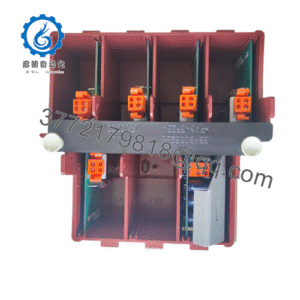
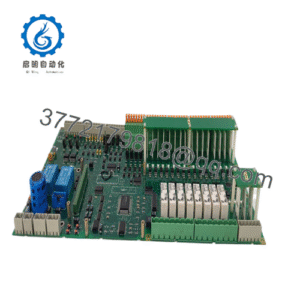
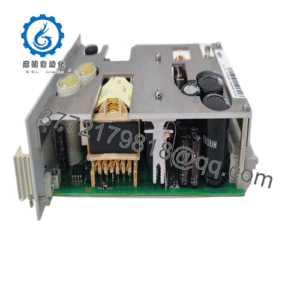
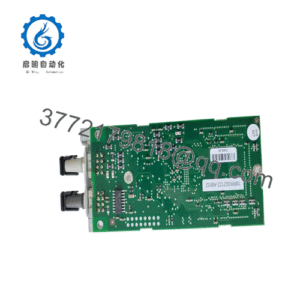
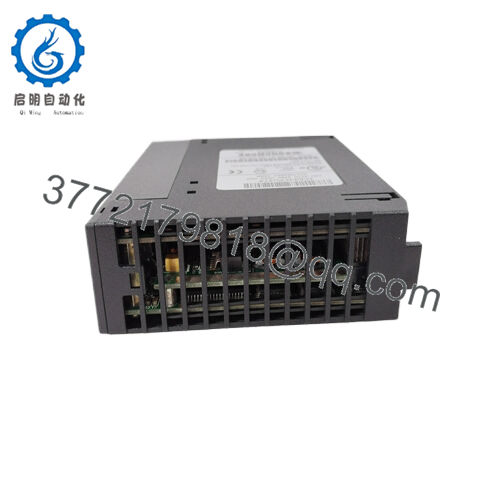
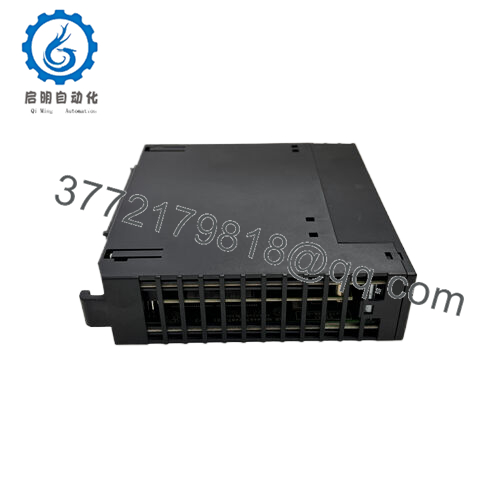
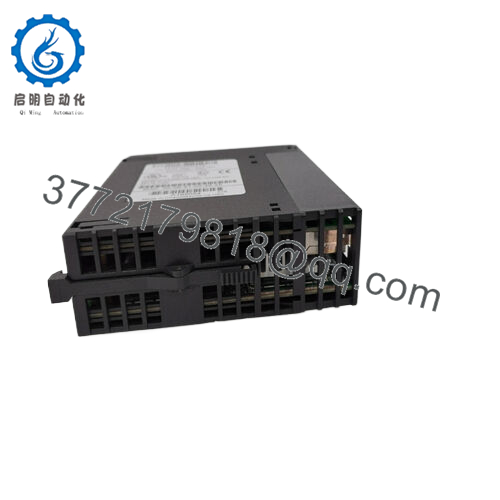
The GE IC693331-CC is a communication and interface module designed for the GE Fanuc Series 90-30 family, providing a dedicated link between the PLC backplane and bus-based remote I/O networks such as Genius I/O. Within a control architecture, it mounts in the 90-30 rack and operates as a network interface that sends and receives blocks of control data between the CPU and distributed devices. This positions the GE IC693331-CC as an essential component when building segmented control architectures that rely on remote I/O drops rather than heavily wired, point-to-point architectures. Engineers value this approach because it simplifies panel layouts, reduces field wiring, and enables flexible expansion as processes change or new equipment is added.
The module is fully aligned with the Series 90-30 platform concept, sharing the same mechanical format, backplane connection, and configuration philosophy as other GE I/O and communication modules. In a typical configuration, the CPU executes the control logic while the GE IC693331-CC handles the exchange of data with the fieldbus, mapping remote inputs and outputs into the PLC memory space so they can be used like any other I/O points. For system integrators, this clear role reduces engineering time and lowers integration risk, especially in projects that must tie together existing Genius I/O segments with newer controls. By combining familiar hardware with proven networking concepts, the GE IC693331-CC offers a practical, field-tested solution for plants that need reliable communication without redesigning the entire system around a new platform.
Key technical features and functional benefits
A core strength of the GE IC693331-CC is its ability to send and receive sizable blocks of deterministic control data over the bus while maintaining predictable update times for the PLC application. This matters in systems with many discrete signals or mixed analog and digital I/O, where the network must keep pace with interlocks, sequencing, and safety-related logic. By supporting structured data exchange, the module helps keep scan times stable and ensures that devices such as valves, starters, and actuators respond consistently to commands. In practice, the result is more reliable machine performance and fewer unexplained process disturbances, even as the I/O base grows over time.
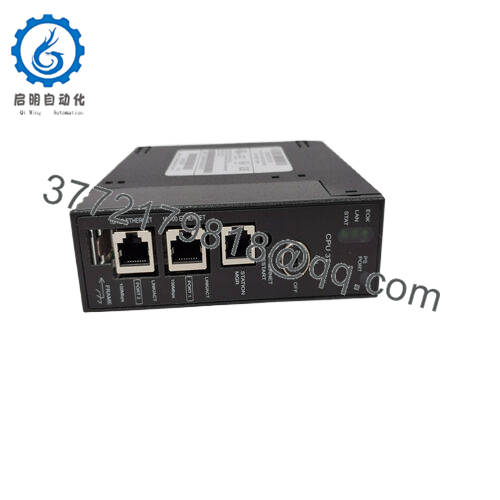
From a hardware perspective, the GE IC693331-CC follows the ruggedized design philosophy of the Series 90-30 ecosystem, with a compact front profile, clear status indicators, and a field-proven connector scheme suited for control cabinets in industrial environments. Its form factor allows it to fit into standard 90-30 racks without special accessories, making it well-suited for both new panels and retrofits into existing enclosures. LEDs on the front help technicians quickly determine network and module status, which speeds up commissioning and daily troubleshooting. Combined with a passive cooling, convection-friendly design, the module is well adapted to cabinets where temperature and airflow must be managed without complicated cooling hardware.
Compatibility is another major advantage. The GE IC693331-CC is designed to work within the Series 90-30 architecture and to interface with Genius I/O and related devices, giving engineers a straightforward path to integrate legacy or existing field segments with central controllers. This is especially useful when plants prefer to replace only controllers or single racks instead of entire field I/O infrastructures. The module’s ability to coexist with other communication modules in the same rack supports more complex topologies that include multiple remote networks or layered control architectures. Over the long term, this interoperability extends the useful life of installed equipment and protects investment in existing wiring and devices.
Reliability and lifecycle performance are critical in any plant that runs equipment around the clock, and the GE IC693331-CC is built to operate within the thermal and environmental ranges typical for industrial control cabinets. Combined with conservative loading guidelines, standard Series 90-30 power distribution, and mature firmware, this leads to a stable communication platform that requires little day-to-day attention once commissioned. By reducing the need for frequent interventions and limiting unexpected network failures, the module supports higher overall system availability and lowers the cost of ownership across the life of the installation.

- IC693331-CC
Detailed technical specifications
| Parameter | Value |
|---|---|
| Model | GE IC693331-CC |
| Brand | GE Fanuc / Emerson Industrial |
| Product type | Bus interface / communication module |
| System platform | GE Series 90-30 PLC |
| Supported I/O network | Genius I/O serial bus |
| Control data capacity | Up to 128 bytes send/receive per scan. |
| Power supply source | From Series 90-30 backplane |
| Typical operating temperature | 0 to 60 degrees Celsius (cabinet rated) |
| Mounting method | Rack-mounted in 90-30 baseplate |
| Cooling method | Natural convection within control panel |
| Front indicators | Status LEDs for module and network |
| Typical applications | Distributed I/O in industrial automation and control systems |
Related modules or compatible units
IC693CPU363 – Common Series 90-30 CPU used with the GE IC693331-CC for mid-range control applications in distributed I/O systems.
IC693PWR330 – Rack power supply typically installed in the same baseplate to provide backplane power for the GE IC693331-CC and other modules.
IC693BEM331 – Related Genius bus interface module from the same platform family, often referenced alongside the GE IC693331-CC in modernization projects.
IC693CHS397 – 90-30 rack/baseplate that houses the GE IC693331-CC and other I/O and communication modules in a control cabinet.
IC660BBD025 – Genius I/O block that can be addressed over the bus by systems using the GE IC693331-CC, providing remote discrete I/O in the field.
IC660TBA020 – Terminal block hardware for Genius I/O that complements deployments where the GE IC693331-CC serves as the primary network interface.
IC693ALG221 – Analog input module that can coexist in the same rack as the GE IC693331-CC, enabling mixed local and remote I/O strategies.
Installation notes and maintenance best practices
Before installing the GE IC693331-CC, engineers should verify that the selected Series 90-30 rack has adequate space, power budget, and thermal headroom for the full set of modules, including the communication interface. Cabinet layout should allow sufficient vertical clearance for airflow and easy access to front connectors and status LEDs, especially where multiple networks or remote I/O segments converge in the same panel. Proper grounding of the rack, shielding of network cabling, and adherence to segregation practices between power and signal wiring are important to maintain bus reliability in electrically noisy environments. It is also good practice to document node addresses, segment topology, and termination points during installation to simplify future troubleshooting.
Once in service, the GE IC693331-CC benefits from a preventative maintenance routine focused on visual inspection and basic network health checks rather than intrusive mechanical work. Periodic reviews should include verification of front-panel status indicators, inspection of connectors for looseness or corrosion, and confirmation that cabinet temperatures remain within recommended limits. Many plants schedule regular communication diagnostics or error log checks through the PLC or engineering tools to detect intermittent bus issues before they affect production. When firmware updates are available and approved for the site, they should be applied during planned outages following backup and validation procedures so that the module continues to operate with the latest stability and compatibility improvements.