 WhatsApp: +86 16626708626
 Email:
  Phone: +86 16626708626
Description
GE IC693352-CE is typically selected for demanding machine control, motion, or high-speed coordination tasks where deterministic behavior, compact hardware, and long-term availability matter more than flashy features. Engineers deploy this module in sectors such as packaging machinery, material handling, printing, and specialized assembly lines where axes must move in sync with sensors, drives, and safety logic used in industrial automation. In many brownfield plants, it is part of upgrade or expansion projects on existing GE Series 90-30 platforms, giving integrators a way to add advanced motion or high‑performance control without rewriting the entire architecture.
On an actual production line, GE IC693352-CE is applicable in control systems that coordinate servo drives, stepper drives, or indexing mechanisms, where precise position, velocity, and acceleration profiles must be followed. It is often tied to tasks like synchronized conveyor tracking, multi‑axis pick‑and‑place, flying shear control, or registration alignment in print and packaging. OEMs value it because it offloads the motion or specialty control logic from the main CPU, improving scan times and keeping machine behavior predictable when recipe changes or data logging loads increase.
For end users and maintenance teams, GE IC693352-CE helps reduce downtime by providing consistent, repeatable control behavior that does not drift when environmental conditions change or when other I/O cards are added to the rack. Its integration with the Series 90-30 ecosystem makes it straightforward to combine discrete I/O, analog I/O, and motion control in one chassis, with familiar configuration tools and wiring practices. In short, this module is used where you need tightly coordinated movement or high-performance logic in an existing GE PLC infrastructure, without sacrificing reliability or serviceability.
GE IC693352-CE is a specialty control module designed for the GE Fanuc / Emerson Series 90-30 PLC family, positioned as a high-performance unit for motion or advanced machine control within the backplane. It operates as a plug‑in module that exchanges data with the main CPU over the rack bus, handling time‑critical calculations and sequencing while remaining fully integrated into the standard logic program. From an architecture perspective, it sits alongside discrete, analog, communication, and power modules in the same base, but its role is to manage more complex control tasks that would otherwise burden the CPU scan.
Within a control system based on the Series 90-30 platform, GE IC693352-CE typically appears in the main baseplate or a key remote rack that houses motion drives and high-speed devices. Engineers map its parameters and status bits into the PLC’s memory, allowing HMI systems, SCADA, and higher-level controllers to monitor performance and issue commands without special gateways. Because it is built for this ecosystem, it supports the usual engineering workflows: configuration through standard software tools, integration with ladder or structured programming, and diagnostics that maintenance teams already understand.
For system integrators and machine builders, GE IC693352-CE offers a way to position their machines as more accurate and responsive without changing the underlying PLC brand. It fits naturally into modernization strategies where existing GE installations must be enhanced with better speed control, tighter synchronization, or new axes. This makes the module attractive not only in new machines, but also in retrofit projects where risk, downtime, and training must be minimized.
One of the major strengths of GE IC693352-CE lies in its functional performance. It is engineered to handle frequent position updates, tight speed regulation, and fast response to external triggers, which is crucial when sensors, encoders, and drives must work in unison. By processing motion or complex control routines locally on the module, it helps keep the overall PLC scan time consistent, even when additional I/O or communication traffic is added to the system. This translates into more stable control loops and fewer surprises when recipes or operator setpoints are changed during production.
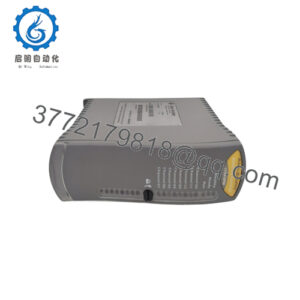
From a hardware design standpoint, GE IC693352-CE follows the proven Series 90-30 module form factor, giving it a compact footprint with front‑accessible connectors and indicators. DIN‑rail or panel-mounted baseplates host the module in the same way as standard I/O, which helps cabinet designers conserve space and streamline wiring. The enclosure is intended for industrial environments, with robust connectors and faceplate labeling that make it suitable for installation in typical control panels exposed to vibration, electrical noise, and continuous operation.
Compatibility is another reason engineers choose GE IC693352-CE. As a member of the Series 90-30 family, it communicates over the standard backplane interface and uses familiar configuration concepts, so it integrates smoothly with GE CPUs, power supplies, and remote I/O systems. This allows the module to exchange data with drives, HMI, and supervisory systems through whatever communication options the CPU already offers, such as Ethernet, serial, or fieldbus adapters. The result is a coherent system architecture that avoids “one-off” specialty boxes and supports long-term maintainability.
In terms of long‑term reliability, GE IC693352-CE is intended for continuous operation in industrial control cabinets, with thermal design and component selection geared toward extended service life. Properly installed, it delivers consistent performance across the specified temperature range and under typical plant humidity and vibration. Its reliance on mature Series 90-30 technology also means spare parts, service knowledge, and replacement strategies are well understood in many plants worldwide, making it a low‑risk choice for projects that must run for years with predictable support.
| Parameter | Value |
|---|---|
| Model | GE IC693352-CE |
| Brand | GE Fanuc / Emerson Industrial Automation |
| Product Type | Specialty control / motion controller module |
| System Platform | GE Series 90-30 programmable logic controller |
| Power Supply Requirement | Supplied via Series 90-30 backplane |
| Operating Temperature | 0 °C to 60 °C (typical control cabinet range) |
| Storage Temperature | -20 °C to 70 °C |
| Mounting | Plug‑in module on Series 90-30 baseplate |
| Dimensions | Approx. 5.6 × 1.3 × 5.1 in (H × W × D, standard) |
| Weight | Approx. 0.9 lb (standard module class) |
| Interfaces | Series 90-30 backplane bus; front field connector |
| Compliance | Designed for CE, UL, CSA industrial use |
| Cooling | Natural convection in ventilated control cabinet |
| Environmental Rating | For use in enclosed industrial control panels |

- IC693352-CE
GE IC693CSE340 – CPU module from the same Series 90-30 family, often used as the main controller that coordinates logic while GE IC693352-CE handles advanced or motion-related tasks.
GE IC693ALG392-CG – Analog output module that can be paired with GE IC693352-CE to drive actuators, valves, or speed reference inputs in coordinated motion applications.
GE IC693PWR330 – High‑capacity power supply for Series 90-30 racks, ensuring stable backplane power when GE IC693352-CE and multiple I/O or communication modules are installed.
GE IC693PWR321 – Standard power supply option for smaller racks where GE IC693352-CE is used with a moderate number of modules and limited auxiliary loads.
GE IC693ACC310 – Accessory or terminal hardware that can be used in racks containing GE IC693352-CE, simplifying field wiring and panel integration.
GE IC695HSC304 – High‑speed counter module from a related GE platform that can complement the functions of GE IC693352-CE in systems where encoder or pulse counting is critical.
GE IC695CPE305 – CPU from a newer GE RX3i line, often considered when migrating systems that currently use GE IC693352-CE and other Series 90-30 modules toward a modern architecture.
When planning installation of GE IC693352-CE, engineers should first confirm that the target Series 90-30 baseplate has adequate power budget and the correct slot assignment, especially if the module must reside in a specific position for backplane communication. Panel designers must provide sufficient vertical and horizontal clearance for airflow, wiring, and access to status LEDs and connectors. Proper grounding of the control cabinet and segregation of signal wiring from high‑voltage or high‑frequency cables help maintain signal integrity and avoid nuisance faults. It is also good practice to label all field connections clearly and document the module address mapping in the project drawings to support future maintenance.
Ongoing maintenance of GE IC693352-CE is generally light but should be systematic. Technicians should periodically perform visual inspections for loose connectors, damaged wiring, or dust buildup around the module and ensure that cabinet temperatures stay within specification. Diagnostic data available via the PLC—such as fault bits, status words, or communication counters—should be reviewed during scheduled shutdowns to catch emerging issues early. When firmware updates are provided as part of a broader system maintenance plan, they should be applied using approved tools and procedures, with full backups taken beforehand so that machine behavior remains predictable after the update.