 WhatsApp: +86 16626708626
 Email:
  Phone: +86 16626708626
Description
When you need both analog inputs and outputs on the same card in a Series 90-30 system, the usual compromise is either sacrificing channel count, giving up isolation, or accepting mediocre accuracy that drifts the moment the panel temperature swings a few degrees. In real plants, that translates into control valves that hunt, temperature loops that won’t settle, or level readings that mysteriously shift after a drive starts up nearby. The problem gets worse when you’re tight on rack space or trying to keep an older 90-30 platform alive without adding expansion bases.
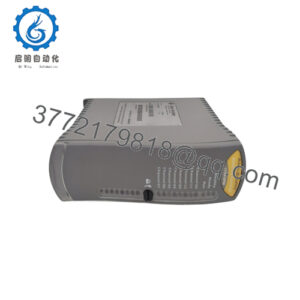
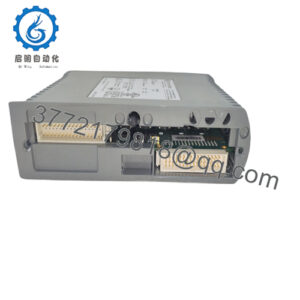
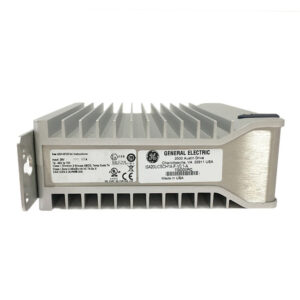
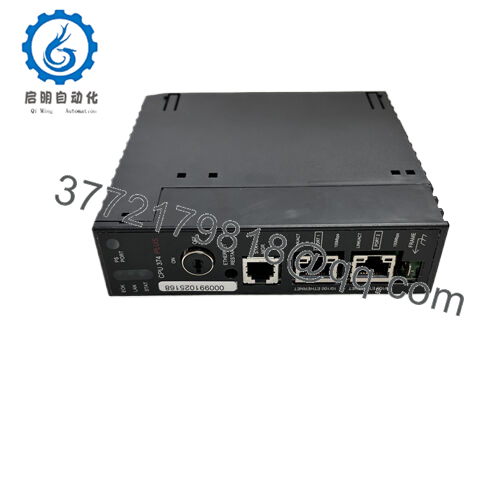
The GE IC693ALG442 solves this exact dilemma by combining four differential current/voltage inputs and two current/voltage outputs in a single slot with full 1500 V isolation and better-than-class 0.1 % accuracy that actually stays put across the entire 0–60 °C range. It’s the module engineers reach for when they need precise 4–20 mA or 0–10 V signals in both directions without burning two slots or introducing noise-coupling headaches. Whether you’re closing a pressure control loop, driving a positioner from the PLC, or reading a mixture of transmitter types, the GE IC693ALG442 delivers clean, trustworthy data and rock-solid outputs in high-reliability industrial automation environments that simply can’t tolerate drift or downtime.
How the Product Works & Fits into a System
The GE IC693ALG442 drops into any I/O slot of a Series 90-30 baseplate and talks native backplane protocol—no special function blocks or gateways required. The four inputs are individually configurable for 4–20 mA, 0–20 mA, ±10 V, or 0–10 V with 16-bit resolution and true differential architecture, while the two outputs are jumper-selectable for the same current or voltage ranges at 12–16 bit resolution depending on mode. Conversion time is roughly 2 ms for the inputs and 1 ms settling for the outputs, fast enough for virtually all process control loops.
Diagnostics are per-channel: open-wire detect on current inputs, over/under-range flags, and loss-of-user-power alarms all show up as individual bits in the %AI and %AQ status words and light the corresponding front-panel LEDs. Because the module is fully isolated channel-to-channel and to the backplane, you can mix grounded and floating transmitters on the same card without creating ground loops. In redundant CPU or Genius I/O setups it behaves exactly like any other analog card—values hold last state or go to configured safe values during switchover.

- IC693ALG442
- IC693ALG442
| Specification | Details |
|---|---|
| Model Number | GE IC693ALG442 |
| Brand | GE (General Electric) |
| Type | 4-In / 2-Out Analog Current/Voltage Combo |
| Input Voltage | 24 VDC loop power (user supplied) |
| Operating Temp Range | 0 °C to 60 °C |
| Mounting Style | Series 90-30 baseplate (any slot) |
| Dimensions | 130 mm × 37 mm × 130 mm |
| Weight | 0.38 kg |
| Interface/Bus | Series 90-30 parallel backplane |
| Compliance | CE, UL, CSA, FM Class I Div 2 |
| Supported Protocols | Native 90-30 analog |
| Typical Power Draw | 95 mA @ 5 V + 130 mA @ 24 V (full load) |
Real-World Benefits
The real payoff of the GE IC693ALG442 shows up when you’re retrofitting or expanding a panel that’s already full. Instead of adding another baseplate and running new backplane cables, you free up a slot and still get both measurement and control on the same card. The isolation and differential inputs mean your 4–20 mA readings stay clean even when the card is sitting right next to a 460 VAC drive, and the outputs drive valves or indicators without the ground-shift problems that plague non-isolated cards.
Maintenance is dramatically easier because a single module failure affects only six channels instead of ten or twelve if you had used separate input and output cards. Diagnostics are specific enough that a technician can tell instantly whether the problem is a broken wire, a failed transmitter, or a lost 24 V loop supply—no more swapping cards to isolate the fault. Plants running these modules routinely go ten to fifteen years between recalibrations, and when budget finally allows migration to RX3i or PAC8000, the field wiring stays exactly the same.
Typical Use Cases
You’ll see the GE IC693ALG442 on boiler combustion control skids where two channels read fuel and air pressure while the outputs reposition dampers, on pump skids that monitor suction/discharge pressure and stroke a VFD or control valve, and on small batch reactors where it handles pH, temperature, level, and the dosing valve all from one card. Water treatment plants use it for filter backwash sequences—reading turbidity and flow while driving modulating valves. Anywhere panel space is expensive and you need tight, stable analog control loops in noisy environments, the GE IC693ALG442 is still the go-to combination module.
Compatible or Alternative Products
GE IC693ALG220 – 4-channel voltage-only inputs when you don’t need current
GE IC693ALG392 – 8-channel current/voltage outputs for higher density control
GE IC693ALG222 – 16-channel high-density voltage inputs
GE IC694ALG442 – Direct RX3i drop-in replacement with identical terminal layout
GE IC693ALG223 – 16-channel single-ended current inputs for monitoring only
GE IC693MDL730 – 12–24 VDC outputs often paired for discrete control
GE IC693ACC302 – Extended front panel for easier wiring in tight cabinets
Setup Notes & Maintenance Insights
Before you power up, set the four jumpers on top of the module for voltage or current mode on the outputs (inputs auto-detect). Make sure user-side 24 VDC is present and fused at 3 A if you’re powering loops from the rack supply. Use the removable terminal blocks to pre-wire offline—label every wire because the layout is tight. Torque to 0.5–0.7 Nm and tug-test each one; loose screws are the number-one reason for intermittent readings.
In operation, a quick glance at the six channel LEDs tells the story: steady green = happy, flashing red = open wire or out-of-range. Once a year, pull the terminal blocks and inspect for corrosion or loosened strands—especially in chemical plants. Keep one configured spare on the shelf; swap-out takes under two minutes and the new card picks up the existing I/O map automatically. If a channel starts drifting, swap the terminal block first—90 % of “bad card” calls turn out to be a cracked solder joint in the block itself.