 WhatsApp: +86 16626708626
 Email:
  Phone: +86 16626708626
Description
The GE IC693APU300 high‑speed counter module is typically found wherever a Series 90‑30 PLC needs to keep up with fast, pulse‑based signals that a normal input card would miss—things like turbine flowmeters, high‑speed conveyors, rotary encoders, or meter‑proving skids in oil and gas and chemical plants. In these systems, pulses can reach tens of kilohertz or higher, and relying on the CPU scan alone can lead to under‑counting, lost pulses, or jitter in speed and position calculations used in industrial automation. Engineers deploy the GE IC693APU300 in packaging machines to track product counts and reject timing, in material handling to synchronize conveyor speeds and accumulation zones, and in motion applications to follow encoder feedback for positioning or velocity control. It is equally at home in process control where flow totalization, batching accuracy, and custody‑transfer‑grade metering depend on accurate high‑frequency pulse capture.
Unlike standard discrete input modules that depend heavily on the PLC sweep, the GE IC693APU300 directly processes incoming pulses, counts, and drives outputs at the module level, offloading the CPU and maintaining determinism even when program logic grows complex. This makes it particularly valuable in brownfield sites where an existing Series 90‑30 rack is being pushed to add faster lines or more precise metering without upgrading the entire controller platform. Integrators appreciate that the GE IC693APU300 can be dropped into an available rack slot and configured for different counter types—single, dual, or quad—so the same module can serve turbine flowmeters on one project and encoder‑based motion on another. In real‑world terms, it is the piece that lets a legacy GE system behave like a much newer platform when it comes to fast counting, giving plant engineers a way to extend capability without rewriting the architecture of their control systems.
Product introduction and positioning
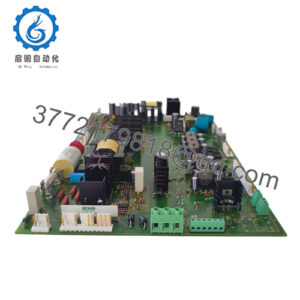
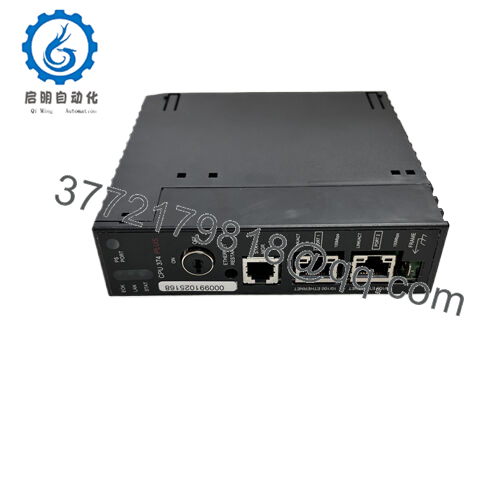
The GE IC693APU300 is a high‑speed counter module for the GE Fanuc Series 90‑30 PLC family, designed specifically to handle rapid pulse inputs that exceed the response limits of conventional input cards and CPU scan logic. It provides twelve positive‑logic (source) inputs and four positive‑logic outputs and can be configured as one, two, or four independent counters depending on the application’s complexity. Within the control system, the GE IC693APU300 occupies a single slot in any Series 90‑30 baseplate and connects to the PLC memory through dedicated input and output word areas, but handles the actual counting and reaction to thresholds internally. That internal processing means the module can sense inputs, accumulate counts, and switch outputs without waiting for the CPU, dramatically improving responsiveness for speed, position, and totalization tasks.
Positioned as a specialty performance module, the GE IC693APU300 sits alongside standard discrete and analog I/O but solves a very specific problem: precise counting at high frequency with minimal CPU load. It integrates with existing Series 90‑30 engineering tools, so configuration and diagnostics are performed through familiar interfaces such as the handheld programmer, Logicmaster 90‑30/20, or later software packages. That keeps adoption straightforward for plants already invested in GE standards, while giving them a bridge into applications traditionally served by dedicated motion or flow computers. For system integrators, the GE IC693APU300 offers a flexible platform that can be tailored to turbine meters, quadrature encoders, or generic pulse counting through selectable counter types and operating modes.
Key technical features and functional benefits
A defining feature of the GE IC693APU300 is its ability to process high‑frequency pulse signals directly, supporting count rates up to roughly 80 kHz in standard configurations and even higher (up to around the MHz range) in enhanced variants and oscillator modes, depending on how it is set up. This allows it to keep up with fast turbine flowmeters, encoder wheels, and sensor outputs that switch too quickly for typical PLC inputs, ensuring that every pulse is captured for accurate speed, distance, or volume calculations in industrial automation. The module can be configured to provide one complex 32‑bit counter, two bidirectional 32‑bit counters, or four simpler 16‑bit counters, covering a spectrum from straightforward up/down counting to differential and motion‑control style applications. In each case, it can count up, down, both directions, or the difference between two changing values, and it supports input formats such as Up/Down, Pulse/Direction, and A Quad B for encoder interfacing.
From a hardware perspective, the GE IC693APU300 offers twelve source inputs with selectable threshold voltage so it can accept either 5 VDC signals or 10–30 VDC signals, chosen via a simple jumper arrangement on the terminal board. This flexibility lets engineers connect a wide variety of field devices—low‑voltage encoders, prox sensors, and standard 24 VDC pulse sources—without extra signal conditioning. The four positive‑logic outputs can drive loads such as indicator lights, small solenoids, and interposing relays, with current ratings around 500 mA at 10–30 VDC or lower‑current 5 VDC outputs for logic‑level devices. Each counter output has independently programmable ON and OFF presets, so the module can, for example, energize a relay at a target count and drop it again automatically without any CPU ladder scans in between.
Functionally, the GE IC693APU300 includes an internal oscillator that can be routed as a count source, giving a built‑in timebase for calibration or for applications like rate measurement where a stable clock is needed. Selectable input filters (high‑frequency around 2.5 ms and low‑frequency around 12.5 ms) allow tuning of the input response to reject noise or to maximize speed, depending on the quality of field wiring and the nature of the pulse source. Direct processing means the module reads its inputs, updates accumulators, and changes outputs independently, only exchanging summarized information with the CPU via mapped input and output words once per sweep. This offloads processing from the PLC, improves determinism, and preserves CPU bandwidth for other logic, communications, or HMI tasks, while still giving the application program full access to counter values and configuration.
Compatibility and diagnostics also stand out. The GE IC693APU300 uses Series 90‑30 standard memory mapping, consuming a fixed block of discrete (%I and %Q) and analog (%AI) style words to expose counts, status bits, and configuration data. It can be configured and monitored entirely from software—no board‑level jumpers beyond the voltage threshold selection—simplifying field changes and reducing the chance of mis‑set hardware. Front‑panel LEDs indicate module health, configuration OK status, and activity, giving technicians a quick view of whether the counter is live and correctly set without needing a laptop. Together, these features make the GE IC693APU300 a robust, application‑driven expansion card that significantly extends what a Series 90‑30 rack can do in high‑speed domains.

- IC693APU300
Detailed technical specifications
| Parameter | Value |
|---|---|
| Model | GE IC693APU300 |
| Brand | GE Fanuc / GE‑Emerson Series 90‑30 |
| Product Type | High‑speed counter module for Series 90‑30 PLC |
| Number of Inputs | Twelve positive‑logic (source) inputs |
| Input Voltage Ranges | Selectable: 5 VDC or 10–30 VDC threshold via terminal jumper |
| Number of Outputs | Four positive‑logic (source) outputs |
| Output Ratings | 10–30 VDC at up to 500 mA; approximately 4.75–6 VDC at around 20 mA for logic‑level loads |
| Maximum Count Rate | Up to about 80 kHz with high‑frequency filtering; lower with low‑frequency filter |
| Counter Configurations | 4 × 16‑bit simple counters, or 2 × 32‑bit bidirectional counters, or 1 × 32‑bit complex counter |
| Supported Input Modes | Up/Down, Pulse/Direction, A Quad B encoder signals |
| Internal Oscillator | Built‑in square‑wave oscillator, default 1 kHz, configurable frequency |
| PLC Memory Usage | Uses 16 bits of discrete input (%I), 16 bits of discrete output (%Q), and about 15 words of analog (%AI) data |
| Mounting | Single‑slot plug‑in module for any Series 90‑30 baseplate |
| Configuration Tools | Series 90‑30 Hand‑Held Programmer, Logicmaster 90‑30/20, VersaPro or equivalent |
Related modules or compatible units
IC693APU301 – Enhanced high‑speed counter variant used when higher input frequencies or additional features are required beyond what GE IC693APU300 offers.
IC693CPU3xx series – Series 90‑30 CPUs that read the accumulated counts and status words supplied by the GE IC693APU300 for control and monitoring logic
IC693MDL330 – Standard discrete input module often used alongside the GE IC693APU300 to handle slower on/off signals in the same rack.
IC693ALG220/221 – Analog input modules that complement the GE IC693APU300 by bringing process values into the same Series 90‑30 system
IC693PWR321 – Power supply module that provides the backplane power required by high‑speed modules like the GE IC693APU300.
IC693CMM321 – Communication module for linking a Series 90‑30 rack containing GE IC693APU300 cards to supervisory or SCADA networks.
IC694APU300 – Related counter module for newer PACSystems RX3i platforms, used when migrating applications originally developed with GE IC693APU300.
Installation notes and maintenance best practices
When installing the GE IC693APU300, begin by confirming that the Series 90‑30 baseplate has sufficient backplane power and that field wiring practices support high‑frequency pulse integrity. Place the module away from high‑noise devices such as VFDs, contactors, and large relays, and route encoder or sensor cables in segregated, shielded cable trays to minimize induced noise on high‑speed inputs. Select the correct input voltage threshold (5 VDC or 10–30 VDC) using the terminal‑board jumper and verify that all connected devices match this level to avoid marginal triggering. For encoder and turbine‑meter applications, use shielded twisted‑pair conductors and terminate shields at one end only—typically at the panel—to prevent ground loops while still providing effective noise rejection.
Maintenance of the GE IC693APU300 focuses on signal integrity and configuration consistency rather than frequent hardware service. Periodically inspect terminal connections for looseness or corrosion, especially on high‑vibration machinery, and verify LED status to catch configuration or module‑health issues early. During planned outages, cross‑check the configured counter type, scaling, and preset values in the engineering software against current process requirements, since changes to field devices (for example, different pulse per‑revolution encoders or meters) may require parameter updates. If unexplained miscounts occur, use a portable counter or oscilloscope to compare actual pulse trains with the count values reported by the GE IC693APU300, which quickly highlights whether issues stem from wiring, sensor output quality, or module configuration.