 WhatsApp: +86 16626708626
 Email:
  Phone: +86 16626708626
Description
In many industrial automation setups using GE Series 90-30 PLCs, achieving precise, coordinated motion across two axes without overburdening the CPU or requiring separate motion controllers remains a significant hurdle. Engineers often grapple with issues like position drift, synchronization delays in master-slave setups, or excessive programming effort when blending high-performance servo control with standard ladder logic—leading to longer commissioning times, inconsistent cycle performance, and challenges scaling for multi-axis applications. This is especially pronounced in environments needing tight velocity control, electronic gearing, or rapid response to position commands in continuous operations. The GE IC693APU302F addresses these directly as a fully programmable two-axis Motion Mate Axis Positioning Module (APM), integrating advanced motion capabilities into the Series 90-30 architecture for high-reliability industrial automation.
The GE IC693APU302F becomes essential when you require deterministic, sub-millisecond servo loop updates alongside PLC logic solving, such as in synchronized conveyor systems or when retrofitting legacy installations for enhanced precision without full system replacement. It supports both standard mode for standalone profiling and follower mode for high-performance electronic gearing, ensuring signal reliability and system stability in demanding process control scenarios. Ideal for extending the life of Series 90-30 bases in industrial automation, the GE IC693APU302F offloads motion tasks from the CPU, allowing up to 10 stored programs and automatic data exchange for seamless integration.
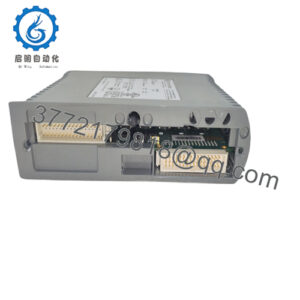
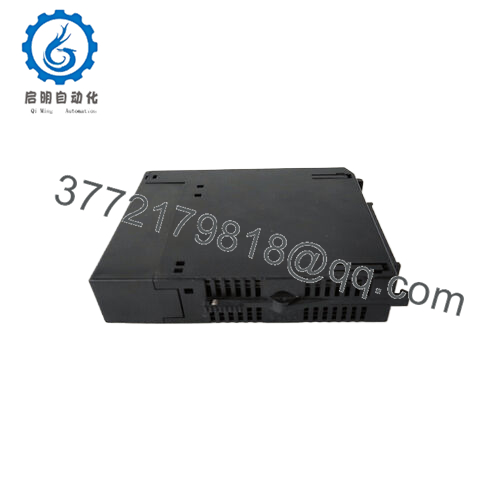
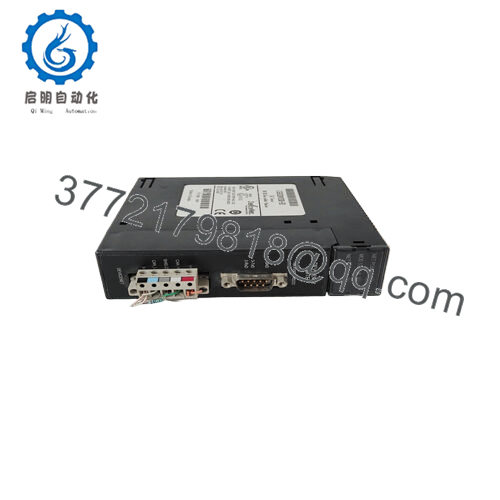
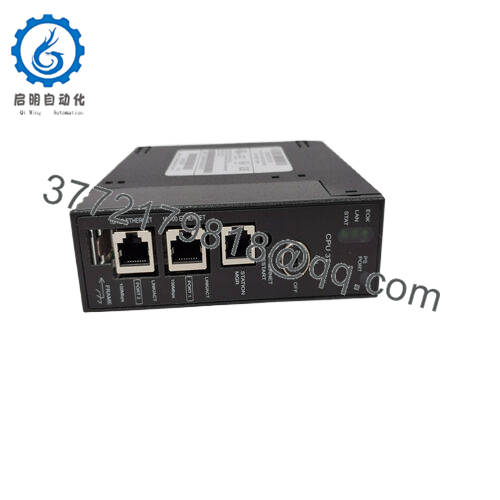
The GE IC693APU302F functions as an intelligent coprocessor in the Series 90-30 backplane, occupying a single slot in CPU, expansion, or remote racks and managing two independent servo axes with direct connections to drives via high-density 24-pin connectors.
It handles all motion profiling, velocity feedforward, and position error integration onboard, exchanging parameters, status, and commands with the PLC CPU through %AI/%AQ references and discrete flags—no custom protocol stacks needed. Positioned in the motion control layer of the automation stack, it supports standard mode for absolute/incremental moves or follower mode for ratio-based gearing to a master encoder. Configuration via Logicmaster or CIMPLICITY Machine Edition software enables program storage in flash, with diagnostics available through module LEDs and PLC fault tables. The GE IC693APU302F integrates reliably with compatible servo amplifiers, providing low-latency updates suitable for real-time coordination in process control environments.
| Specification | Details |
|---|---|
| Model Number | IC693APU302F |
| Brand | GE (Emerson) |
| Type | Two-Axis Positioning Module (APM) |
| Input Voltage | 5V DC (from backplane) |
| Operating Temp Range | 0°C to +60°C |
| Mounting Style | Series 90-30 Baseplate Slot |
| Dimensions | Standard 90-30 Module (approx. 6.5″ x 5.5″ faceplate) |
| Weight | Approx. 0.8 lb |
| Interface/Bus | Backplane, Two 24-Pin High-Density Connectors |
| Compliance | CE, UL, RoHS |
| Supported Protocols | Direct Servo Command (Analog/Pulse) |
| Typical Power Draw | 800 mA at 5V DC |

- IC693APU302F
Choosing the GE IC693APU302F provides engineered precision for dual-axis applications, where dedicated onboard processing ensures consistent trajectory execution and minimal following error, delivering long-term performance stability across varying loads.
This separation of motion logic reduces CPU scan overhead, enabling tighter overall cycle times and more responsive system behavior. In operation, features like stored programs and automatic parameter transfer simplify maintenance by allowing quick mode switches or tuning adjustments without ladder rewrites. The GE IC693APU302F also enhances integration ease through its high-density connectors and software tools, lowering engineering overhead during setup or expansion.
Overall, its follower mode gearing and flash-based program retention contribute to sustained reliability, reducing downtime risks in coordinated motion setups and extending the value of installed Series 90-30 platforms.
The GE IC693APU302F is frequently used in packaging machinery, where it synchronizes two axes for pick-and-place or sealing operations under fast cycle times and requiring precise registration in noisy environments for critical system uptime.
In material handling systems like conveyors or web processing, it provides electronic gearing for slave axes tracking a master, ensuring continuous operation amid load variations in process control settings. Assembly lines in automotive or electronics rely on it for coordinated robot arm or gantry motion, supporting high-accuracy positioning in demanding conditions with vibration and EMI.
IC693APU301 – Single-axis version for simpler or cost-sensitive applications
IC693DSM302 – Digital servo module alternative for GE Fanuc digital drives
IC693APU300 – Earlier single-axis high-performance variant
IC693ACC318 – Connector kit accessory for custom cabling
IC693CBL330 – Terminal block quick-connect cable pair
IC693APU302G – Similar revision with potential firmware updates
IC693CPU363 – Compatible CPU with enhanced processing for multi-APM systems
Before installing the GE IC693APU302F, confirm rack power budget accommodates the 800 mA draw and slot availability—up to three per baseplate in most configurations—and verify servo amplifier compatibility with command types (analog velocity/torque or pulse/direction). Prepare high-density cables or faceplate converters, ensure configuration software version supports APM programming, and check CPU model for maximum module count.
For maintenance, regularly monitor module status LEDs for faults or enable signals, review PLC tables for position errors or alarms, and inspect connector seating in vibratory setups. Periodic backup of stored motion programs and validation of tuning parameters against reference moves help preserve accuracy, while keeping spare cables aids rapid troubleshooting.