 WhatsApp: +86 16626708626
 Email:
  Phone: +86 16626708626
Description
In industrial automation systems requiring standardized fieldbus communication for distributed I/O, integrating remote devices like field control stations or generic FIP-enabled equipment often involves proprietary hurdles, noise susceptibility, or limited scalability that can compromise data exchange reliability and fault reporting. Legacy networks may lack modern redundancy or diagnostics, leading to higher engineering efforts for configuration storage and troubleshooting in expansive process control environments. The GE IC693BEM340 addresses these precisely as a dedicated FIP (WorldFIP/Factory Instrumentation Protocol) Bus Controller, offering high reliability for I/O signals by interfacing Series 90-30 PLCs with FIP networks at speeds up to 1 MHz for deterministic performance.
Engineers specify the GE IC693BEM340 in European-origin installations or specific sectors like transportation and energy where WorldFIP remains prevalent, enabling connection to field control stations, remote I/O drops, or generic devices without external scanners. It supports centralized configuration storage and fault reporting, essential for system stability in modular integration scenarios. In process control applications demanding robust signal integrity over serial buses, the GE IC693BEM340 ensures seamless data flow, reducing overhead from mismatched protocols while maintaining high reliability in industrial automation setups focused on standardized, noise-immune networking.
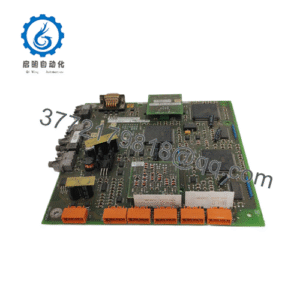
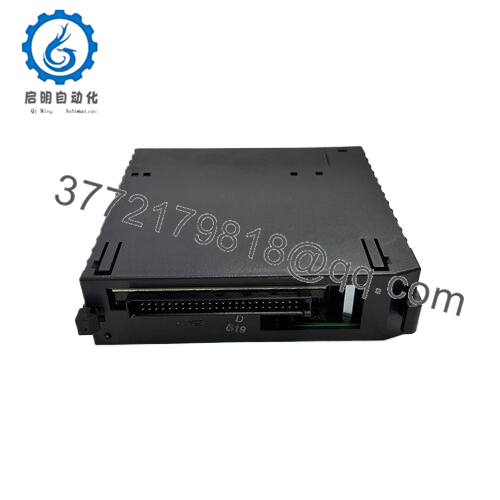
The GE IC693BEM340 operates as the master controller on a WorldFIP network, mounting in any I/O slot of a Series 90-30 backplane and connecting via dual redundant or single FIP bus ports to slave devices. It handles cyclic I/O exchange, configuration downloads, and diagnostic messaging, mapping data directly to the PLC’s reference tables for logic processing.
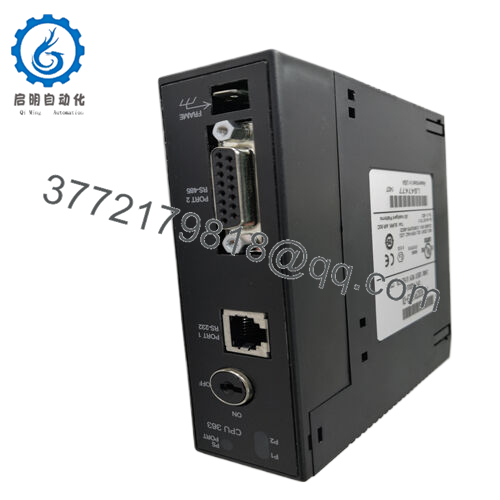
In the automation stack, the GE IC693BEM340 resides at the fieldbus master layer, bridging the 90-30 CPU to FIP-compatible remotes like BIU-equipped Field Control stations or scanner-based drops. Configuration uses external tools via its RS-485 port or Proficy software, with no onboard switches for simplicity. The module provides six LEDs for status monitoring—module OK, communication activity, and bus faults—reporting details to the CPU for alarm integration.
It supports topologies with interchangeable bus connectors for redundancy, offering noise immunity suited to long-distance industrial runs. Multiple units can operate in one rack for segmented networks. This integration complements standard backplane I/O architecture, ideal for legacy FIP migrations or targeted expansions in process control where protocol fidelity is critical.
| Specification | Details |
|---|---|
| Model Number | IC693BEM340 |
| Brand | GE (Emerson) |
| Type | FIP (WorldFIP) Bus Controller Module |
| Input Voltage | 5V DC (Backplane) |
| Operating Temp Range | 0°C to 60°C |
| Mounting Style | Series 90-30 Rack Slot |
| Dimensions | Standard 90-30 Module (Approx. 130 x 50 x 130 mm) |
| Weight | Approx. 0.5 kg |
| Interface/Bus | WorldFIP Serial (Dual Ports) + RS-485 Config |
| Compliance | CE, RoHS |
| Supported Protocols | WorldFIP (Factory Instrumentation Protocol) |
| Typical Power Draw | Approx. 1.2A @ 5V DC |

- IC693BEM340
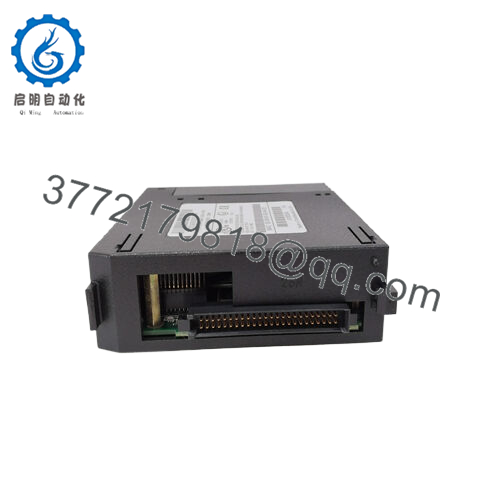
Implementing the GE IC693BEM340 equips systems with a module engineered for enduring operation in standardized fieldbus environments, where consistent protocol handling ensures long-term performance amid electrical noise or extended cabling.
Its built-in diagnostics and configuration capabilities reduce engineering overhead by centralizing fault data and device setups, enabling proactive maintenance rather than reactive fixes. In practice, the deterministic exchange supports tight control loops, contributing to performance consistency that minimizes variability in distributed processes.
The GE IC693BEM340 delivers broader value through simplified scaling of FIP networks, providing reliable interfacing that extends legacy investments while aligning with international standards for industrial automation reliability.
The GE IC693BEM340 is deployed in rail signaling and infrastructure systems leveraging WorldFIP for distributed control in harsh, extended environments requiring critical system uptime and fault-tolerant communication.
In energy distribution or manufacturing lines with European FIP heritage, it interfaces remote I/O for monitoring and actuation, supporting fast data cycles amid EMI challenges. Process industries like chemicals use it for connecting field devices in process control environments demanding standardized networking and configuration persistence.
These applications underscore the GE IC693BEM340‘s strength in high-reliability scenarios similar to power plants but tailored to FIP ecosystems.
IC693BEM330 – WorldFIP Remote I/O Scanner for slave-side remote drops
IC693BEM331 – Genius Bus Controller as common distributed I/O alternative
IC694BEM331 – RX3i Genius Bus Controller for migration paths
IC693CMM321 – Ethernet interface for modern TCP/IP expansions
IC693BEM321 – Fanuc I/O Link Master for machine-level discrete networking
IC695CMM002 – RX3i serial communications alternative
IC693PCM300 – Programmable Coprocessor for custom protocol handling
Before deploying the GE IC693BEM340, ensure an open slot in your 90-30 baseplate and adequate backplane power budget for its draw. Plan FIP cabling with proper shielding and termination, verifying compatibility with slave devices’ BIUs or scanners.
Insert the module firmly, connect bus ports (using both for redundancy if needed), and attach the RS-485 config cable only during setup. Initial configuration requires an external tool for bus parameters and device mapping.
For maintenance, monitor the six front LEDs for operational status and bus health, cross-referencing CPU fault tables for detailed errors. Inspect bus connectors periodically for secure connections in dusty settings, and log diagnostic reports routinely. Annual network validation tests, like checking response from all slaves, help identify cable degradation early. Hot-swap is possible in de-energized racks following grounding precautions.