 WhatsApp: +86 16626708626
 Email:
  Phone: +86 16626708626
Description
Many products have not yet been launched, please contact us for more product information.
We have 16 shared warehouses worldwide, so please understand that sometimes it may take several hours to accurately respond to you. Of course, we will reply to your question as soon as possible.
On many legacy and mid-life process lines, plants still depend on GE Series 90-30 PLCs to link machines, HMIs, and higher-level SCADA or MES systems over Ethernet rather than serial-only links. In these environments, the GE IC693CCM321 (more commonly referenced in current documentation as IC693CMM321) is typically the module that turns an isolated rack into a networked node, enabling everything from remote programming to real-time data collection. It is used in industrial automation for packaging, material handling, water and wastewater, and general manufacturing where older 90-30 systems need to communicate with newer PCs, operator stations, and supervisory systems on a plant LAN. By providing an Ethernet interface that is applicable in control systems, this module lets engineers centralize historian logging, alarm management, and recipe downloads without replacing the entire PLC platform.
In a typical setup, the GE IC693CCM321 lives in a baseplate alongside the CPU and I/O modules, connecting the Series 90-30 PLC to an Ethernet network via an external transceiver. This allows plant teams to access PLC data from SCADA workstations, maintenance laptops, or engineering servers, using standard TCP/IP-based protocols. It’s frequently deployed when OEM equipment with embedded 90-30 hardware must be integrated into a site-wide Ethernet infrastructure or when a plant chooses to phase out point-to-point serial links in favor of structured Ethernet topologies. For system integrators dealing with brownfield upgrades, adding an Ethernet interface like the GE IC693CCM321 often becomes the first step in enabling remote diagnostics and centralized control without touching established I/O or field wiring.
Product introduction & positioning
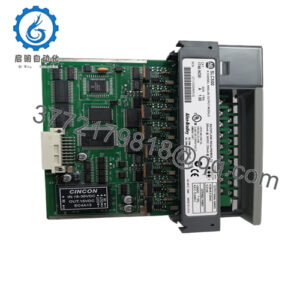
The GE IC693CCM321 is an Ethernet Interface Module for the GE Fanuc Series 90‑30 PLC family, designed to provide a TCP/IP connection between the PLC and an Ethernet local area network. Installed as an option module in a standard 90‑30 baseplate, it acts as a dedicated communication processor, offloading Ethernet tasks from the CPU and presenting the PLC as a network node that can exchange data with hosts, HMIs, and other PLCs. Functionally, it sits at the communications layer of the control system architecture, bridging the PLC’s internal backplane to external Ethernet segments through an Attachment Unit Interface (AAUI) connection and an external transceiver.
Within a control system design, the GE IC693CCM321 is positioned as the main path for peer‑to‑peer PLC communications and for programmer/HMI/SCADA access over Ethernet. It supports both client and server roles, which means it can initiate communications to other Ethernet‑enabled devices or respond to requests from supervisory systems. Engineers typically configure and drive data exchanges using ladder logic via COMMREQ function blocks, integrating network transfers directly into the PLC program. This makes the GE IC693CCM321 valuable to integrators who want modern Ethernet connectivity while still leveraging the stable, well-understood Series 90‑30 hardware platform.
Key technical features & functional benefits
A key functional strength of the GE IC693CCM321 is its dual client/server capability on Ethernet TCP/IP networks. Acting as a client, it can initiate data transfers to other PLCs or network devices, which is ideal for synchronized machine-to-machine coordination or for pushing process data to centralized logging servers. As a server, it listens for incoming requests and responds with current process values, status bits, or configuration information, enabling SCADA systems and HMIs to read and write data as needed. This flexibility lets engineers design both push and pull data architectures around the same module.
Hardware-wise, the GE IC693CCM321 uses an AAUI connector for attachment to an external Ethernet transceiver, which allows the choice of physical media such as 10Base‑T twisted pair or 10Base‑FL fiber depending on site requirements. This modular physical interface helps when upgrading networks or when long runs and high electrical noise demand fiber rather than copper. The module is built in the standard Series 90‑30 form factor and installs into a single rack slot, so it fits easily into existing systems without mechanical modifications.
On the performance side, the GE IC693CCM321 supports simultaneous communications with multiple devices, typically up to 16 server connections at once, which is sufficient for many mid-size plants running several HMIs and engineering stations. Using COMMREQ instructions, the ladder logic can structure transactions so that data blocks are read or written cyclically or on event, depending on process needs. This approach allows tight integration of communications with control logic, aiding diagnostics and enabling selective bandwidth use in busy networks.
Reliability and maintainability are enhanced by built‑in diagnostics and a multi-function restart button. The front-panel button can be used not only to restart the interface, but also to run LED tests and enter maintenance utility modes, helping technicians verify operation and troubleshoot issues without removing the module from the rack. Status LEDs give immediate feedback on module health and communication state, reducing guesswork during commissioning or faultfinding. For long-term support, the module has well-documented firmware requirements and compatibility notes with Series 90‑30 CPUs, which helps avoid surprises during system upgrades or replacements
Detailed technical specifications
| Parameter | Value |
|---|---|
| Model | IC693CCM321 (Ethernet Interface Module) |
| Brand | GE Fanuc (Emerson / GE Intelligent Platforms) |
| Product Type | Ethernet Interface TCP/IP Module for Series 90‑30 PLC |
| Supported PLC Series | GE Fanuc Series 90‑30 Programmable Logic Controllers |
| Network Protocol | Ethernet TCP/IP over 10 Mbit/s Ethernet |
| Physical Ethernet Interface | AAUI port requiring external Ethernet transceiver (e.g., 10Base‑T) |
| Functional Roles | Client and server communications via COMMREQ blocks |
| Typical Max Server Connections | Up to 16 simultaneous server connections |
| Module Mounting | Single-slot plug-in module for 90‑30 baseplate |
| Configuration Method | Via PLC ladder logic and programming software using COMMREQ |
| Front Panel Controls | Restart button with LED test and maintenance modes |
| Status Indications | Front-panel LEDs for module and communication status |
| Compatibility Notes | Firmware revision requirements when used with CPUs like IC693CPU364 |

- IC693CCM321
Related modules or compatible units
IC693CPU364 – Series 90‑30 CPU with embedded Ethernet that may be used alongside or instead of the IC693CCM321 for Ethernet connectivity, subject to firmware compatibility.
IC693PWR321 – Standard AC/DC power supply for Series 90‑30 racks that power the IC693CCM321 and associated modules.
IC693CHS391 – 10-slot baseplate commonly used in Series 90‑30 systems where the IC693CCM321 is installed.
IC693CMM321 – Alternate designation/variant of the Ethernet Interface module itself as referenced in current manuals and datasheets.
IC693NIU300 – Network Interface Unit used for remote I/O configurations where Ethernet interfaces like IC693CCM321 may participate in larger networked systems.
IC693CPU363/IC693CPU374 – Other Series 90‑30 CPUs that can use the IC693CCM321 as an external Ethernet module when embedded Ethernet is not present or additional ports are required.
Installation notes & maintenance best practices
Before installing the IC693CCM321, it is important to verify that the chosen baseplate has adequate slot and power capacity and that the CPU firmware revision is compatible with the module’s firmware level. The module should be mounted in a suitable slot per GE guidelines, and the AAUI connector must be properly mated to an approved external transceiver that matches the desired physical medium (such as 10Base‑T). Careful routing of Ethernet cabling and proper grounding practices help minimize electrical noise and improve communication reliability in industrial environments. System designers should also allocate IP addresses and network settings in coordination with site IT policies to avoid conflicts on shared networks.
For maintenance, technicians should periodically inspect the IC693CCM321 for secure seating in the baseplate, check the external transceiver connections, and confirm that front-panel LEDs show the expected status patterns during operation. The restart button can be used during troubleshooting to reset the interface or invoke diagnostic modes, but such actions should be coordinated with operations personnel because they can briefly interrupt communications. Firmware levels should be reviewed during major upgrades, ensuring that the module meets recommended revision requirements for the installed CPU models. Regularly verifying network performance and error logs on the SCADA or engineering workstation side further helps catch emerging issues before they impact control functions.