 WhatsApp: +86 16626708626
 Email:
  Phone: +86 16626708626
Description
In industrial automation environments where DeviceNet networks integrate drives, valves, sensors, and other field devices with a central controller, achieving reliable, deterministic communication amid noise, varying cable lengths, or mixed vendor equipment often proves difficult. Latency, configuration complexity, or limited slave support can lead to inconsistent data exchange, diagnostic gaps, or scalability constraints in process control systems. This challenge intensifies when leveraging open standards like DeviceNet for cost-effective distributed I/O without proprietary lock-in. The GE IC693DNM200 tackles these as a robust DeviceNet Master Module, enabling Series 90-30 PLCs to manage up to 63 slaves with high reliability for I/O signals and explicit messaging.
Engineers frequently choose the GE IC693DNM200 for building or expanding DeviceNet networks in legacy upgrades, hybrid architectures, or applications needing modular integration of third-party devices. It supports poll, strobe, cyclic, and change-of-state connections, plus UCMM for flexible explicit commands, ensuring system stability in industrial automation setups. Common scenarios include connecting variable frequency drives, remote I/O blocks, or actuators where signal integrity and fault reporting are critical. By handling automatic data polling and custom messaging, the GE IC693DNM200 minimizes engineering overhead for network setup and maintenance, making it essential for process control environments prioritizing high reliability, deterministic performance, and seamless scaling of DeviceNet-based distributed control.
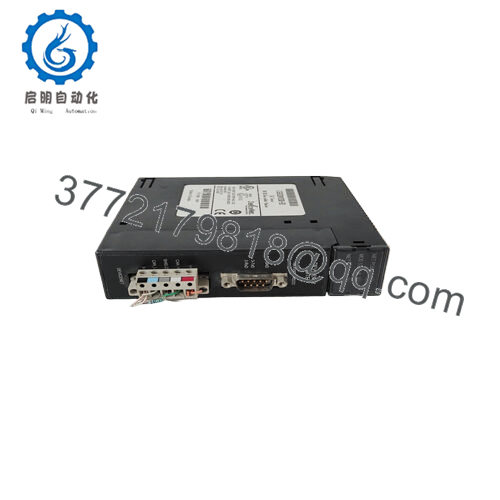
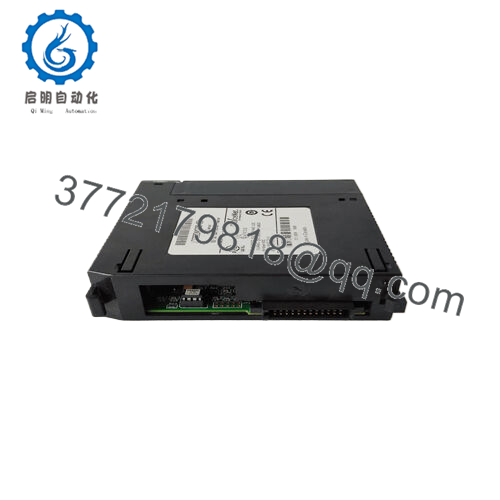
The GE IC693DNM200 serves as the master interface in DeviceNet networks, occupying a single slot in the Series 90-30 main rack backplane and connecting via a phoenix-style terminal to the bus. It polls slaves for inputs, sends outputs, and manages explicit messages, mapping data directly to %I/%Q or analog references in the CPU for straightforward logic integration.
In the automation stack, the GE IC693DNM200 sits at the fieldbus master layer, bridging the PLC to DeviceNet slaves like drives, valves, or I/O terminals. Configuration via Proficy Machine Edition defines slave parameters, connection types, and scan rates, with an RS-232 service port for firmware updates or handheld tools. The module provides LED diagnostics for network status, module health, and faults, reporting details to the CPU for alarms.
It supports standard baud rates (125K, 250K, 500K) and topologies with proper termination, offering noise immunity for industrial runs. When a higher-level host exists, it can act as a slave simultaneously. This placement complements backplane I/O architecture, suiting migrations or expansions where DeviceNet interoperability enhances process control without full system overhauls.

- IC693DNM200
| Specification | Details |
|---|---|
| Model Number | IC693DNM200 |
| Brand | GE (Emerson) |
| Type | DeviceNet Master Module |
| Input Voltage | 5V DC (Backplane) |
| Operating Temp Range | 0°C to 60°C |
| Mounting Style | Series 90-30 Rack Slot (Main Rack Only) |
| Dimensions | Standard 90-30 Module (Approx. 130 x 50 x 130 mm) |
| Weight | Approx. 0.5 kg |
| Interface/Bus | DeviceNet (Phoenix Terminal) + RS-232 Service Port |
| Compliance | CE, RoHS |
| Supported Protocols | DeviceNet (125/250/500 kbaud) |
| Typical Power Draw | 450 mA @ 5V DC (Backplane); ~50-80 mA @ 24V DC (Network) |
Deploying the GE IC693DNM200 equips your system with a module engineered for sustained operation in DeviceNet ecosystems, where consistent master control ensures long-term performance despite electrical noise or network changes.
Its support for multiple connection types and explicit messaging reduces engineering overhead by simplifying integration of diverse slaves, allowing quicker commissioning and easier additions. Diagnostics through LEDs and CPU tables enable proactive fault isolation, contributing to higher uptime and performance consistency in distributed setups.
The GE IC693DNM200 provides value by extending open-standard networking to legacy 90-30 platforms, delivering reliable data exchange that aligns with modern interoperability needs while lowering maintenance demands.
The GE IC693DNM200 performs well in automotive manufacturing lines controlling robotic arms and conveyors via DeviceNet drives, handling fast cycles in noisy, vibration-prone conditions for critical system uptime.
In water treatment plants, it manages remote pumps and valves across extended networks, supporting harsh outdoor exposures and deterministic response. Food processing facilities use it for integrating packaging equipment in process control environments requiring washdown tolerance and fault isolation.
These applications highlight the GE IC693DNM200‘s robustness in power plants or similar high-demand industrial automation scenarios.
IC693DNS201 – DeviceNet Slave Module for remote 90-30 drops on the network
IC694DNM200 – RX3i-series DeviceNet Master for platform migrations
IC693BEM331 – Genius Bus Controller as alternative distributed fieldbus
IC693CMM321 – Ethernet interface for TCP/IP-based expansions
IC693BEM341 – FIP Bus Controller for other fieldbus options
IC695CMM002 – RX3i serial communications module complement
IC693PCM301 – Programmable coprocessor for custom messaging
Before installing the GE IC693DNM200, place it only in the main CPU rack (not expansion/remote), verify backplane power budget for its draw, and select baud rate matching your slaves. Use proper DeviceNet thick/thin cable with termination resistors at ends, and ground shields correctly.
Insert firmly, connect the phoenix terminal securely, and configure via software—adding slaves, mapping data, and setting connections—before runtime. For maintenance, monitor module and network LEDs for status, review CPU fault tables for errors, and inspect cabling periodically in dusty or vibrating areas.
Annual network scans or firmware checks via the RS-232 port help maintain integrity. Hot-swap is supported with rack powered, but power down for cable changes to avoid bus disruptions.