 WhatsApp: +86 16626708626
 Email:
  Phone: +86 16626708626
Description
In modern industrial automation systems, keeping AC-powered equipment synchronized with your control logic can become a real headache when voltage levels don’t match. Many plants still run large numbers of 120/240 V AC motors, pumps, valves, and lighting circuits, yet most PLCs and distributed I/O systems speak only 24 V DC or low-level signals. The result is either a rack full of interposing relays that add failure points, wiring complexity, and panel space, or the risk of directly switching high-voltage loads with undersized modules that burn out prematurely. When you need clean, reliable control of 120 V or 240 V AC loads directly from a Series 90-30 rack without external relay boards, the GE IC693MDL330 120/240 VAC 2 A output module solves that problem in the most straightforward way possible.
Engineers typically reach for the GE IC693MDL330 in retrofit projects or mixed-voltage greenfield designs where running separate contactor panels would blow the budget or timeline. It becomes essential in environments that demand high reliability yet cannot justify moving to an all-DC architecture—think older manufacturing lines, water/wastewater plants, or commercial facilities with extensive AC lighting and HVAC loads. With eight independent 2-amp outputs capable of handling inductive loads directly, the GE IC693MDL330 eliminates dozens of mechanical relays, reduces troubleshooting time, and keeps the I/O count inside a single compact Series 90-30 chassis. The module’s built-in fusing and optical isolation also mean that a single fault on one circuit rarely propagates to the rest of the system—critical when uptime is measured in dollars per minute.
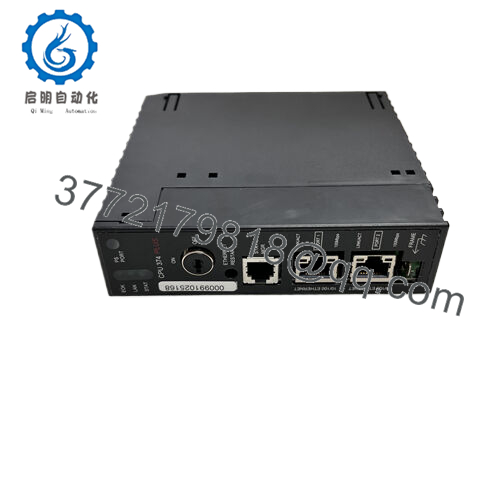
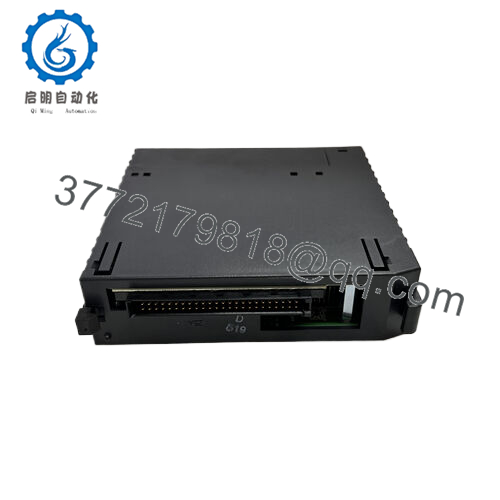
The GE IC693MDL330 is a standard 8-point discrete output module that plugs directly into any I/O slot of a Series 90-30 baseplate (5-slot or 10-slot, CPU or remote). It converts 5–24 V DC logic signals from the backplane into eight individually isolated 120/240 V AC switching outputs, each rated for 2 A continuous and suitable for resistive or moderately inductive loads. The module sits in the classic Series 90-30 I/O architecture: the CPU or network adapter writes to backplane to GE IC693MDL330 to field devices. No special programming is required beyond assigning the %Q references; the module reports basic diagnostics (blown fuse, loss of field power) back to the PLC so you can catch problems from the HMI instead of opening the panel.
It supports the same Proficy Machine Edition (formerly Logicmaster or VersaPro) configuration workflow you already use for the rest of the rack. LED indicators on the front show both logic state and fuse status per point, while removable terminal blocks make wiring changes or module swaps fast during outages. For systems that already run Genius, DeviceNet, or Profibus remote I/O, the GE IC693MDL330 works seamlessly in remote racks as well—no special configuration needed.
| Specification | Details |
|---|---|
| Model Number | IC693MDL330 |
| Brand | GE (now Emerson) |
| Type | 120/240 VAC 8-Point Output Module |
| Input Voltage | 120/240 VAC (85–264 VAC range) |
| Operating Temp Range | 0 °C to 60 °C |
| Mounting Style | Series 90-30 rack, any I/O slot |
| Dimensions | 147 mm × 133 mm × 40 mm (standard 90-30 size) |
| Weight | ≈ 400 g |
| Interface/Bus | Series 90-30 parallel backplane |
| Compliance | CE, UL, CSA, RoHS |
| Supported Protocols | Native Series 90-30 (Genius, Ethernet, etc.) |
| Typical Power Draw | 70 mA @ 5 VDC from backplane |
Choosing the GE IC693MDL330 means you stop wasting engineering hours on relay selection, mounting, and wiring. Each output is individually fused and optically isolated to 1500 V, so a short on one motor starter won’t take down the whole card or backplane. The 2 A rating is real-world continuous—plenty for most pilot devices, small motors, or solenoid valves—while the triac-based switching ensures long-term performance with virtually no arcing or contact wear. Plants that have standardized on Series 90-30 over the past two decades keep these modules in stock because they reduce engineering overhead on every panel revision and make field expansions almost plug-and-play.
Maintenance teams appreciate that fuse status is visible from the front of the rack, so a blown fuse is diagnosed in seconds instead of hours of ring-out testing. The module’s design also tolerates the occasional overcurrent event without damage to the triacs, giving you a graceful failure mode rather than catastrophic output destruction. In short, the GE IC693MDL330 delivers the kind of predictable, long-life performance that keeps legacy Series 90-30 systems running profitably long after many platforms have been ripped out.
You’ll find the GE IC693MDL330 doing heavy lifting in water treatment plants switching 240 V pump motors and chemical dosing valves, in automotive assembly lines controlling conveyor zone brakes and part present sensors powered from 120 V circuits, and in large commercial buildings managing rooftop HVAC units and lighting contactors. It excels anywhere mixed AC voltages coexist with PLC control and critical system uptime cannot tolerate relay failures. The module’s ability to handle moderate inrush (up to 20 A for 10 ms) makes it particularly useful with solenoid loads common in packaging and materials handling. In power plants and substations, it often switches indicating lamps and auxiliary relays directly from the DCS I/O rack.

- IC693MDL330
- IC693MDL330
GE IC693MDL940 – 16-point 120/240 VAC output version for higher density
GE IC693MDL340 – Same family but 0.5 A per point (lighter loads)
GE IC693MDL930 – Isolated 4 A AC output module for heavier inductive loads
GE IC693MDL310 – 12-point 120 VAC 0.5 A output (older generation)
GE IC693MDL390 – 5-point isolated 2 A 120/240 VAC outputs higher isolation
GE IC693MAR590 – Mixed 120 VAC input / relay output module
GE IC694MDL330 – RX3i version of the same module (for migration)
Before sliding the GE IC693MDL330 into the rack, confirm that your baseplate is a standard 90-30 AC-powered base (IC693CHSxxx series) and that field power (L1/L2/N) is present at the correct voltage. Check that the total backplane current budget hasn’t been exceeded—70 mA is modest but adds up in full racks. Use 14–22 AWG wire on the removable terminal block and leave at least one slot spacing if you’re running heavy inductive loads to help with heat dissipation. Firmware is handled automatically by the CPU, so no separate update is needed.
In service, glance at the green LEDs for logic state and the red fuse LEDs once per shift or during PM walks. A blown fuse is replaced in under two minutes with a common 3 A Littelfuse 217 series—no soldering required. Every couple of years, torque the terminal block screws to spec (7–9 in-lb) and verify no discoloration on the connectors. The module itself rarely fails; most “bad” modules turn out to be external wiring issues or blown fuses.