 WhatsApp: +86 16626708626
 Email:
  Phone: +86 16626708626
Description
The GE Fanuc IC693MDL350 (often referenced with suffix variations like -EK in certain revisions or batches) tackles a persistent challenge in many legacy industrial automation setups: safely and reliably driving AC-powered loads from a compact PLC while maintaining electrical isolation between channels and the logic side. In process control environments—especially where 120/240 VAC solenoids, contactors, valves, heaters, or indicator lights dominate the field wiring—engineers frequently encounter issues like ground loops, cross-talk between outputs, or noise-induced false triggers that compromise system stability. Without proper isolation, a fault on one output can propagate, potentially causing unintended actuation or safety risks in continuous operations. IC693MDL350 becomes essential when you need to control multiple independent AC loads without sharing commons, in applications where high signal reliability is critical and where retrofits or expansions can’t tolerate custom interposing relays or external isolation barriers. This module delivers 16 individually isolated outputs in a single slot, reducing panel space, wiring complexity, and cost compared to fragmented solutions. It’s particularly valuable in brownfield Series 90-30 systems that remain in service due to proven performance and installed base, where replacing the entire rack isn’t feasible but output integrity must match modern expectations for uptime and noise immunity.
IC693MDL350 functions as a discrete AC output module within GE Fanuc’s Series 90-30 PLC architecture, slotting directly into any standard 5- or 10-slot baseplate alongside the CPU and other I/O. Each of its 16 points operates independently with full galvanic isolation (typically 1500 VAC field-to-logic and between groups/points), allowing you to connect loads to separate power sources or phases without risk of interaction. It interfaces via the backplane’s parallel bus for fast, deterministic data exchange with the CPU—scan times remain tight even with full I/O populations. Outputs drive resistive or inductive loads up to 2 A per point (with appropriate derating for temperature), sourced from external 120/240 VAC supplies; the module itself draws minimal logic power from the rack. A detachable terminal block (compatible with IC693TBSx32 or similar) simplifies field wiring and module replacement without disturbing connections—LEDs indicate block presence (green = connected, red = removed) and per-point status. While it lacks advanced diagnostics like channel-level short detection, the high noise immunity minimizes external snubber needs, and the isolation supports clean integration in mixed-voltage cabinets. In a typical system, IC693MDL350 sits in the I/O layer, receiving commands from ladder logic or function blocks in the CPU (e.g., IC693CPU350 series), and directly energizes field devices, ensuring reliable actuation in process control loops.
| Specification | Details |
|---|---|
| Model Number | IC693MDL350 (e.g., -EK revision) |
| Brand | GE Fanuc (now Emerson) |
| Type | 16-Point Isolated AC Output Module |
| Input Voltage | N/A (field side 120/240 VAC for loads) |
| Operating Temp Range | 0°C to +60°C (derate current at higher temps) |
| Mounting Style | Series 90-30 rack/baseplate slot |
| Dimensions | Standard Series 90-30 single slot (approx. 5.6″ H x 1.3″ W x 4.4″ D) |
| Weight | Approx. 0.66 lbs (0.3 kg) |
| Interface/Bus | Series 90-30 backplane bus |
| Compliance | CE, UL, typical industrial certifications |
| Supported Protocols | N/A (discrete I/O module) |
| Typical Power Draw | Low (logic side only, <100 mA typical) |

- IC693MDL350
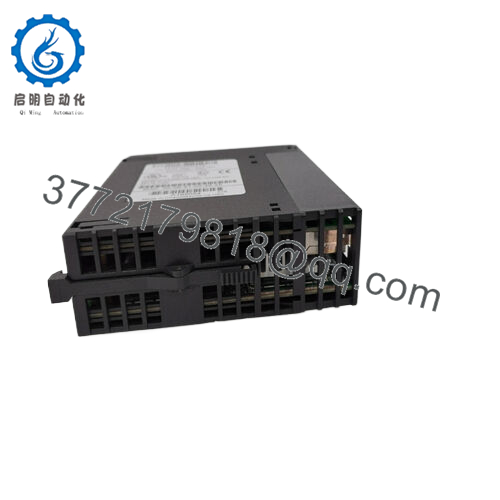
Choosing IC693MDL350 delivers rock-solid isolation that protects both the PLC logic and adjacent channels from voltage transients or faults common in AC-heavy environments. This isolation translates to fewer nuisance trips, extended contactor life, and consistent performance over years—even in electrically noisy settings like motor control centers or packaging lines. The per-point independence reduces engineering time spent on custom wiring or relay panels, letting you standardize output handling across the machine or plant. Maintenance crews benefit from the visible LED feedback and quick-swap terminal block, cutting downtime during repairs or expansions. Because it’s native to the Series 90-30 ecosystem, IC693MDL350 ensures predictable behavior in scan-critical applications, avoiding the integration surprises that arise with third-party modules. Overall, it supports the long-term reliability that legacy systems demand, keeping production running smoothly without forcing premature migration to newer platforms.
IC693MDL350 sees heavy use in manufacturing and process industries where critical system uptime hinges on dependable AC load control under demanding conditions. In automotive assembly or material handling, it drives solenoid valves, pneumatic actuators, and conveyor motors in 120/240 VAC setups, handling vibration, dust, and electrical noise from nearby drives. Food & beverage packaging lines deploy IC693MDL350 for controlling heaters, diverters, and labeling equipment in washdown-adjacent areas, where isolation prevents ground issues from compromising hygiene-critical sequences. In discrete parts manufacturing or legacy machine tools, it manages indicator lamps, alarms, and interlocks in continuous-shift operations that require fast, noise-immune response without external conditioning. These scenarios prioritize high reliability in harsh electrical environments, modular I/O density, and minimal intervention to sustain throughput.
Here are some related or alternative products within the GE Fanuc Series 90-30 family:
IC693MDL340 – 16-point 120 VAC output module (non-isolated) for cost-sensitive applications with shared commons
IC693MDL390 – 5-point isolated 120/240 VAC output for lower channel count but high-current needs
IC693MDL330 – 8-point 120/240 VAC output with different grouping for space-constrained racks
IC693MDL645 – 16-point 24 VDC input module, common pairing for mixed AC/DC I/O slices
IC693MDL740 – 16-point 12/24 VDC output module as DC counterpart in hybrid systems
IC693MDL753 – 32-point high-density 12/24 VDC output for expansion when AC isolation isn’t required
IC693MDL916 – Isolated relay output module for dry-contact or higher-voltage switching
IC694MDL350 – Modern RX3i equivalent (120/240 VAC isolated output) for migration paths from Series 90-30
Before installing IC693MDL350, confirm your Series 90-30 baseplate has an available slot and that the power supply can handle the cumulative logic draw (though minimal here). Verify external AC supply fusing per point or group to protect against shorts—use fast-acting fuses matched to load current. Check that the detachable terminal block matches (e.g., IC693TBSx32 style) and is securely latched; mismatched blocks trigger the red LED fault indication. Review grounding practices to maximize noise immunity, especially with long cable runs. For ongoing maintenance, inspect terminals annually for tightness and corrosion (torque to spec if loose), clean dust from the module vents, and monitor output LEDs during operation for unexpected patterns that might indicate field-side issues. Replace the module proactively if frequent transient faults appear in logs, and keep spares on hand—hot-swap is supported but power down the rack if possible to avoid backplane stress. This routine keeps the output layer dependable without excessive intervention.