 WhatsApp: +86 16626708626
 Email:
  Phone: +86 16626708626
Description
| Specification | Details |
|---|---|
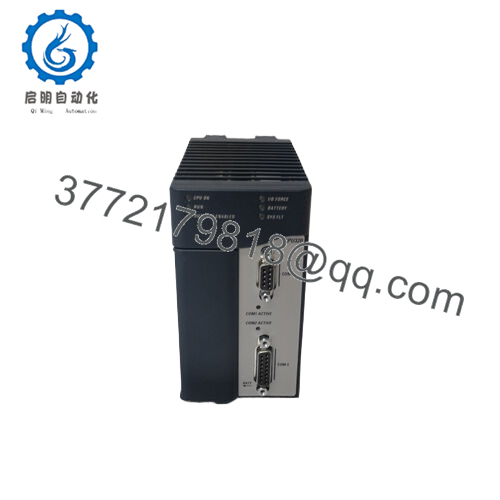
| Model Number | IC695ALG626 |
| Brand | GE (Emerson) |
| Type | 16/8-Channel Analog Input Module with HART |
| Input Voltage | 5 V DC / 3.3 V DC (backplane) |
| Operating Temp Range | -40 to +85 °C |
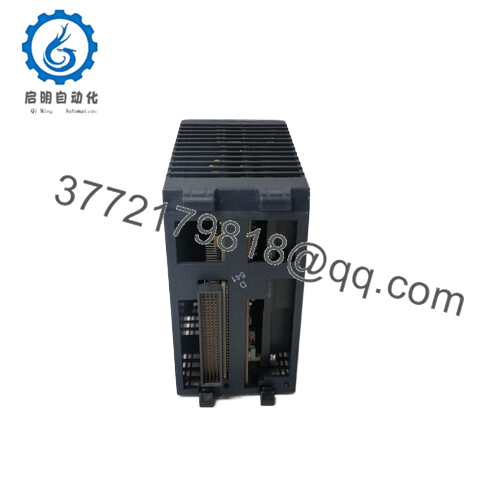
| Mounting Style | RX3i Universal Backplane |
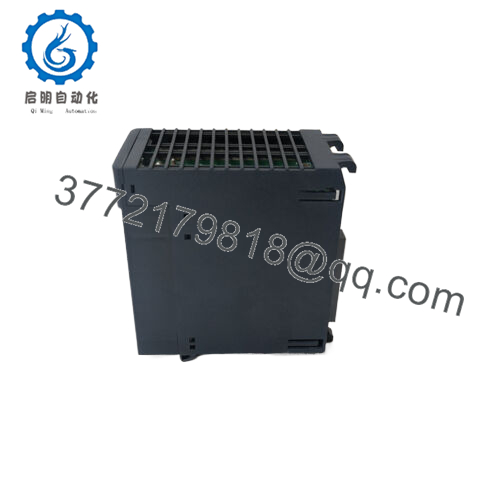
| Dimensions | 14.4 x 6.7 x 12.0 cm (W x H x D) |
| Weight | 0.25 kg |
| Interface/Bus | Backplane Serial Bus |
| Compliance | CE, cULus, RoHS |
| Supported Protocols | HART 5.0 |
| Typical Power Draw | 3 W (600 mA @ 3.3V, 450 mA @ 5V) |
In the high-stakes realm of industrial automation, where process control demands unflinching accuracy in capturing field signals, the GE IC695ALG626 emerges as a cornerstone for engineers tackling the chaos of variable measurements. Picture a sprawling manufacturing floor or a remote oil rig: sensors tracking pressure, flow, or temperature transmit vital data via analog loops, but noise, drift, or communication gaps can turn reliable insights into unreliable guesses. This leads to erratic control actions—overcorrections in PID loops, delayed fault detection, or outright process halts that erode margins and safety. The GE IC695ALG626, a PACSystems RX3i analog input module, directly confronts these pain points by delivering high reliability for I/O signal acquisition, ensuring every reading reflects reality without the fog of interference.
Typical scenarios cry out for its intervention: in continuous batching operations, where slight deviations in level sensing cascade into off-spec yields, or in distributed setups with long cable runs prone to ground loops and electromagnetic interference. Without a module like the GE IC695ALG626, you’d wrestle with frequent recalibrations, fragmented diagnostics, or the overhead of mixing voltage and current inputs across incompatible hardware. It steps in to unify these under one roof, supporting both single-ended and differential configurations for flexible field integration. In automation environments pushing for IIoT connectivity, its embedded HART capabilities overlay digital intelligence on those 4-20 mA lines, enabling remote device tuning without halting production. This isn’t just about data collection; it’s about fortifying system stability, so your control strategies respond with precision rather than guesswork.
Engineers deploying it often note how it aligns with broader goals like predictive analytics—clean, timestamped signals feed directly into SCADA or MES layers for trend analysis, spotting wear before it bites. In retrofit projects, it bridges legacy transmitters to modern controllers, minimizing downtime during upgrades. Ultimately, the GE IC695ALG626 transforms potential vulnerabilities into strengths, letting you focus on optimization over firefighting in process control workflows.

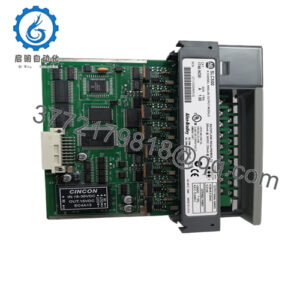
- IC695ALG626
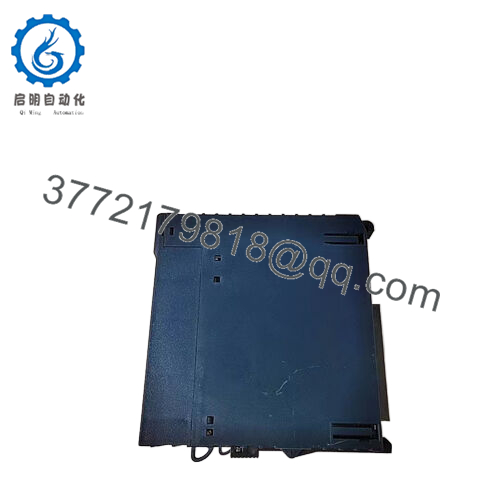
- IC695ALG626
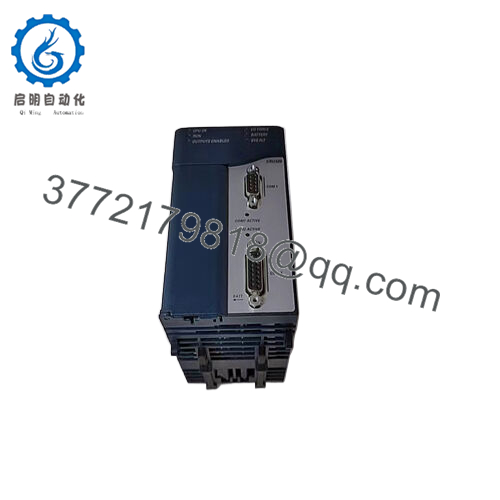
At its core, the GE IC695ALG626 serves as the sensory gateway in your RX3i PACSystems setup, translating analog field phenomena into crisp digital values for the CPU to act on. It mounts seamlessly into the universal backplane, occupying a single slot and drawing power from the rack’s 5V and 3.3V rails—no external supplies needed. Each of its 16 channels (or 8 in differential mode) independently samples voltage or current, leveraging a 24-bit ADC for resolution that captures nuances other modules gloss over. This positions it squarely in the I/O layer of the automation stack, buffering field devices from the core logic to prevent noise propagation while enabling scalable clustering—add more for hundreds of points without redesigning your architecture.
Interaction-wise, it hooks into the backplane’s serial bus for deterministic data exchange with the RX3i CPU, supporting cyclic reads at rates up to 10 ms per channel. HART 5.0 shines here: four internal modems multiplex across channels, polling devices for status, calibration data, or alarms over the same wiring, which feeds into Proficy Machine Edition or Toolbox software for configuration. Diagnostics run deep—self-tests on startup flag open circuits or overranges, with status bits relayed to the controller for proactive alerts. Pair it with a terminal block adapter for field terminations, and it integrates with redundancy schemes via high-availability CPUs, ensuring failover without signal loss.
Non-isolated by design, it thrives in grounded systems where cost trumps galvanic separation, yet its differential options reject common-mode noise effectively. In a full system view, imagine it upstream of motion controllers or downstream of safety PLCs: raw inputs from thermocouples or transducers arrive, get conditioned and validated, then stream to HMIs for operator oversight. This modular fit reduces wiring complexity and engineering hours, making it a natural extension for expanding I/O architecture in evolving plants.