 WhatsApp: +86 16626708626
 Email:
  Phone: +86 16626708626
Description
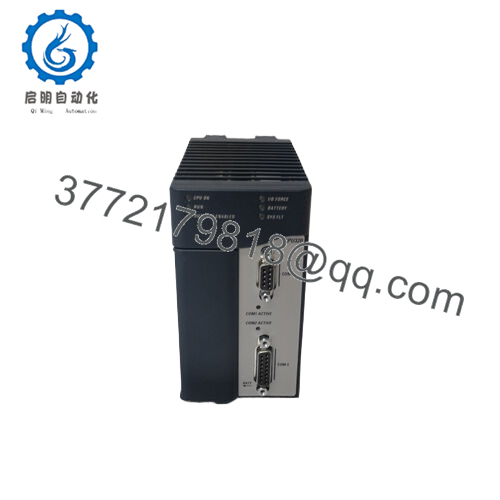
In the relentless pace of automotive paint shops, where robotic arms must sync flawlessly across bays to avoid overspray and rework, the GE IC695CPE310ABA steps up as the nerve center for mid-tier control demands. Engineers in Southeast Asian electronics factories deploy it amid high-volume SMT lines, coordinating vision systems and pick-and-place robots under tight cycle times—any hiccup means scrapped boards. Used in industrial automation for discrete manufacturing or batch processing, it tackles latency in data-heavy environments like chemical mixing plants, where recipes shift dynamically across shifts. Over in Midwest water treatment facilities, the GE IC695CPE310ABA orchestrates pump stations and valve arrays over multiple racks, ensuring compliance amid fluctuating flows without false trips. Applicable in control systems for utilities or packaging, it processes 32K discrete points and analog words, freeing operators from constant tweaks during peak loads.
Consider European wind turbine farms, where remote SCADA links demand rock-solid Ethernet handshakes over noisy grids—the GE IC695CPE310ABA delivers, bridging legacy I/O to modern PROFINET without forklift upgrades. In food extrusion plants battling steam and vibration, it maintains scan times under 1 ms/k for Boolean logic, preventing dough inconsistencies. Steel slab casters lean on its embedded serial ports for Modbus handoffs to third-party drives, sidestepping custom gateways. This real-world grit defines its essence: a PACSystems RX3i single-slot CPU from GE Vernova, blending 1.1 GHz processing power with battery-less user memory retention for seamless runtime data protection.
Product Introduction & Positioning
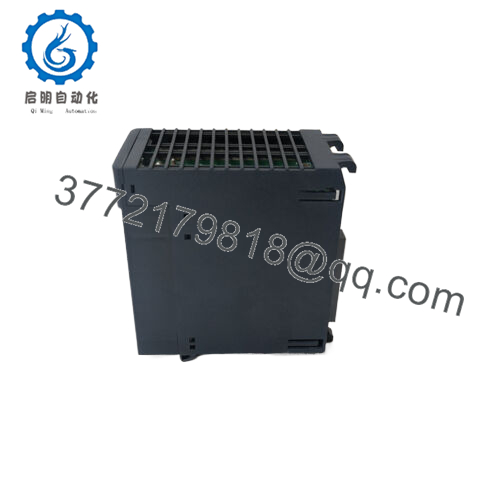
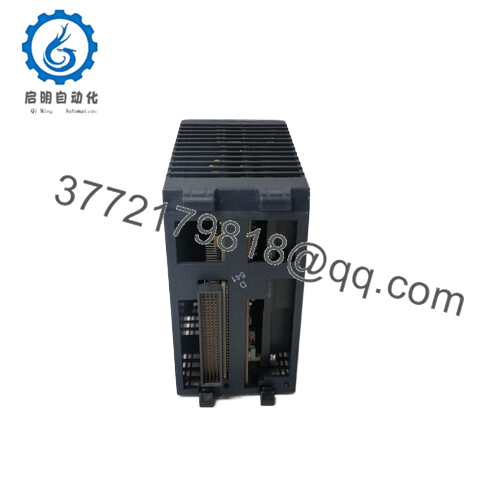
The GE IC695CPE310ABA serves as a mid-range programmable automation controller in the RX3i PACsystems lineup, packing a 1.1 GHz Atom processor into a compact, 2-slot footprint for rack-based systems. Drop it into a universal backplane, and it drives logic execution, I/O handling, and communications across up to eight local racks, supporting ladder logic, structured text, or C code via Proficy Machine Edition. Its architecture shines in hybrid setups, where embedded Ethernet (10/100 Mbps SRTP/Modbus TCP) pairs with dual serial ports—one RS-232, one RS-485—for SNP, Modbus RTU, or raw I/O drivers.
For integrators eyeing scalability, the GE IC695CPE310ABA offers 10 MB flash user memory alongside configurable SRAM, holding 32K bits discrete (%I/%Q) and 32K words analog (%AI/%AQ) without external packs. USB master port simplifies app uploads from thumb drives, while energy pack compatibility safeguards data on power loss. It slots neatly between entry-level CPE305 and high-end CPE400, ideal for upgrading Series 90-30 sites while retaining module compatibility—think fewer change orders, faster commissioning.
Key Technical Features & Functional Benefits
At its core, the GE IC695CPE310ABA cranks through Boolean scans at 0.72 ms/k, fueled by 10 MB user logic and non-volatile flash that holds programs indefinitely, no battery fuss. Floating-point math flows smoothly for PID loops in extrusion dies, while auto-located symbolic variables flex across memory pools, easing complex recipes without fixed addressing headaches. Hot-swap support keeps lines alive during module swaps, a boon for 24/7 cement kilns.
Built tough for panels, the GE IC695CPE310ABA sips 1A at 5V/3.3V and 0.5A at 24V, with passive cooling via backplane airflow handling 0-60°C swings. Ethernet auto-negotiates dual programmer links, and serial ports daisy-chain to RTUs over kilometers—perfect for oilfield pumpjacks. Diagnostics flag rack faults early, cutting MTTR in remote solar farms.
Protocol stack covers EGD, PROFINET, and Genius, meshing with CMX reflective memory for synchronized motion. Engineers praise its 512-block program limit (128 KB max each) for modular code in multi-silo grain handling, delivering years of uptime with firmware flashes over USB.
Detailed Technical Specifications
| Parameter | Value |
|---|---|
| Model | GE IC695CPE310ABA |
| Brand | GE Vernova (Emerson Automation) |
| Type | PACSystems RX3i CPU Controller |
| Processor Speed | 1.1 GHz Atom |
| User Memory | 10 MB SRAM + 10 MB Flash |
| I/O Memory | 32K bits Discrete; 32K words Analog |
| Power Supply | 1A @ 5V/3.3V DC; 0.5A @ 24V DC |
| Operating Temperature | 0 to 60°C (32 to 140°F) |
| Mounting | RX3i Universal Backplane (2 slots) |
| Dimensions | Approx. 14.5 x 7 cm (W x H) |
| Weight | Approx. 0.5 kg (1.1 lbs) |
| Interfaces | 1x Ethernet (10/100 Mbps); 1x RS-232; 1x RS-485; 1x USB-A |
| Certifications | CE, UL, cUL, RoHS |
| Cooling | Passive (backplane airflow) |
| Environmental Rating | IP20 (panel mount) |

- IC695CPE310ABA
Related Modules or Compatible Units
IC695CPE305 – Compact sibling with single serial port, suited for space-constrained legacy retrofits.
IC695CPU315 – Higher-end CPU with expanded memory for data-logging heavy lifts.
IC695CMX128 – Reflective memory partner for fiber-synced multi-node motion control.
IC695ALG600 – HART-enabled analog I/O module feeding process variables directly.
IC695PNS001 – PROFINET scanner extending fieldbus reach in factory floors.
IC695NIU001 – Ethernet interface unit for EGD/Modbus TCP backbone integration.
IC694ACC300 – Energy pack kit ensuring data writes on power glitches.
Installation Notes & Maintenance Best Practices
Rack the GE IC695CPE310ABA into RX3i universals post-firmware check—version 7.0+ sidesteps Ethernet quirks. Secure 10 cm clearance around serial/Ethernet ports; bond grounds to chassis per local codes, routing cables away from welders to dodge noise. Cycle power with USB inserted for initial Proficy sync, verifying rack LEDs cycle green before loading apps. For daisy-chained racks, limit to eight locals, testing ping times under load.
Quarterly peeks catch amber faults: probe serial loops with loopback plugs, log Ethernet stats via PME for CRC spikes. Firmware bumps roll out over Ethernet, no downtime—swap Energy Packs yearly in humid zones. Vibration-prone sites like presses benefit from DIN rail dampers; expect 8-10 years if dust filters trap fines, always pulling fuses first for inspections.