 WhatsApp: +86 16626708626
 Email:
  Phone: +86 16626708626
Description
In aging Series 90-70 PLC installations—still prevalent in industrial automation, process control, power generation, and legacy turbine or generator monitoring—the precise, noise-resistant capture of multiple analog signals from field transmitters remains essential for accurate closed-loop regulation, data logging, and protective alarming. Extended cable distances, interference from adjacent power equipment, ground differentials, and the requirement for high-resolution digitization without significant crosstalk or thermal drift frequently cause measurement errors, false trips, or process instability. In brownfield sites committed to sustaining these systems, a dependable analog input base module that offers expandable channels, factory-calibrated performance, and integrated fault detection is vital to preserve loop integrity and avoid premature platform replacement.
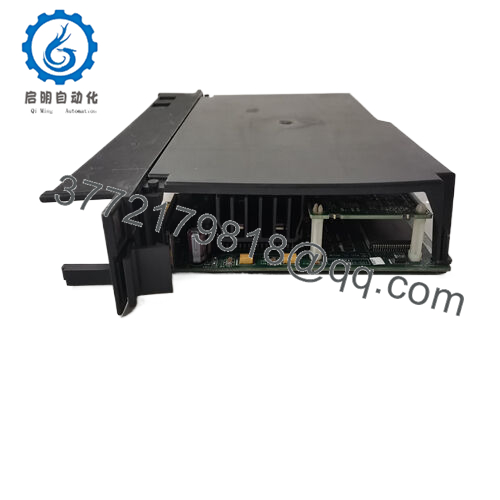
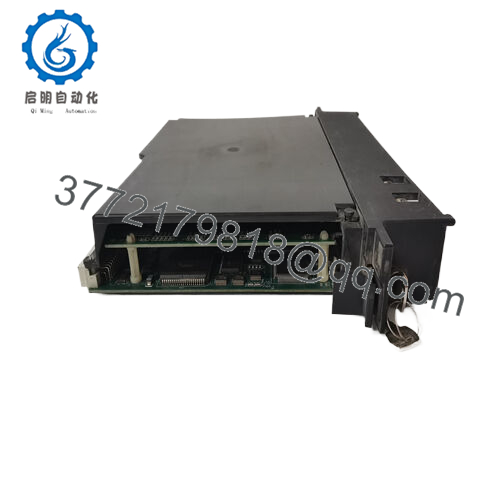
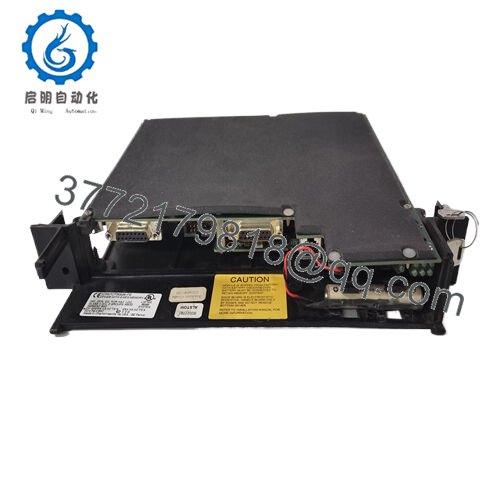
The GE IC697ALG230F (a later revision in the IC697ALG230 series) fulfills this need as the Base Converter Module for high-level analog inputs in GE Fanuc’s Series 90-70 family. This single-slot unit provides eight differential inputs configurable for bipolar/unipolar voltage (±10 V) or current (4–20 mA) ranges, digitizing signals at high resolution for CPU access or backplane-sharing controllers. It becomes indispensable when paired with expander modules (e.g., IC697ALG390 for current or IC697ALG391 for voltage) to scale up to 16 channels, delivering individual scaling, oversampling for improved effective resolution, and comprehensive diagnostics in applications like turbine auxiliaries, boiler feedback, or process variable monitoring. By maintaining robust differential isolation, fast conversion (2.4–2.8 ms update), and fault reporting (open wire, underrange/overrange), GE IC697ALG230F ensures clean, trustworthy analog data in electrically noisy environments, minimizes calibration drift over time, and extends the operational life of Series 90-70 racks with proven high reliability.
In the Series 90-70 rack architecture, the GE IC697ALG230F mounts in any I/O slot, connecting to the backplane for rapid data transfer to the CPU (e.g., CPX935 or equivalent). Field signals wire in via removable terminals, with the module handling multiplexing, A/D conversion, and scaling through onboard circuitry—no DIP switches required, as configuration occurs via software (Logicmaster 90 or VersaPro). It supports simultaneous channel sampling when synchronized with expanders and routes digitized values, status flags, and diagnostics to ladder logic or HMIs.
Expansion via ribbon-cabled expander modules adds channels without additional rack space, forming a cohesive subsystem for mixed voltage/current inputs with low crosstalk. Fault detection activates dedicated ladder bits for alarming or interlocks, while the design minimizes drift across temperature and long-term use. This placement enables modular, scalable analog front-ends—often in expansion racks for shorter field cables and superior noise rejection—keeping focus on application development rather than custom conditioning.
| Specification | Details |
|---|---|
| Model Number | IC697ALG230F |
| Brand | GE Fanuc (now Emerson Automation) |
| Type | Base Converter Module (High-Level Analog Input) |
| Input Voltage | ±10 V (bipolar/unipolar) or 4–20 mA |
| Operating Temp Range | 0°C to +60°C (typical Series 90-70) |
| Mounting Style | Rack slot (Series 90-70) |
| Dimensions | Standard single-slot Series 90-70 form factor |
| Weight | Approx. 0.8–1 kg |
| Interface/Bus | Series 90-70 backplane; Genius/Field Control compatible |
| Compliance | Legacy industrial standards (CE where applicable) |
| Supported Protocols | Backplane data exchange |
| Typical Power Draw | Approx. 1–2 A at 5 V (backplane) |

- IC697ALG230F
Selecting the GE IC697ALG230F yields dependable analog fidelity that tightens control loops, improves data accuracy for trending/alarming, and cuts spurious faults from noise or drift—key to sustaining production rates and avoiding unnecessary shutdowns in continuous processes. Differential inputs and oversampling effectively combat common-mode interference over long runs, often eliminating external isolators while providing per-channel diagnostics for swift issue resolution.
The expandable architecture optimizes rack density and eases scaling from basic to multi-point monitoring, ideal for retrofits where wiring changes must be minimal. In legacy Series 90-70 environments, GE IC697ALG230F safeguards existing investments, delivers repeatable performance across revisions, and streamlines spares inventory for plants maintaining these platforms.
In power generation sites with Series 90-70 turbine or boiler controls, the GE IC697ALG230F acquires accurate signals from pressure, temperature, and flow transmitters for fuel regulation and exhaust monitoring, ensuring stable operation during load swings. Industrial process control applications—chemical, refining, or pulp & paper—leverage it for multi-variable inputs in continuous or batch processes, where high reliability and noise rejection prevent quality excursions in EMI-intensive settings.
Legacy discrete manufacturing or utility systems also use GE IC697ALG230F for analog feedback in sequencing or environmental controls, supporting critical system uptime in vibration-heavy or electrically noisy installations.
For compatible or alternative options within the Series 90-70 analog input family, consider:
IC697ALG230 – Base or earlier revision, interchangeable in most setups IC697ALG390 – Current expander (adds 8 channels for 16 total with base)
IC697ALG391 – Voltage expander for additional high-level voltage channels
IC697ALG440 – Low-level input module for thermocouples/RTDs (alternative family)
IC697ALG320 – Analog output module for complementary actuation
IC697ALG441 – Isolated low-level variant for superior noise performance
IC697CHS750 – Common rack chassis hosting this module
IC697BEM731 – Genius bus controller for distributed I/O expansion
Before installing the GE IC697ALG230F, verify rack power availability and slot assignment—no address conflicts with adjacent modules. Configure input ranges/scaling in software (no hardware switches), employ shielded twisted-pair cabling grounded at one point, and secure terminals to spec. Run initial calibration with traceable sources and download config to the CPU to confirm channel detection.
Routine maintenance entails annual terminal inspections for corrosion/looseness (prevalent in humid or corrosive areas), LED status checks (power/fault), and software diagnostics for range/open faults during planned outages. Validate loops periodically with known inputs to detect drift. Failures are infrequent—usually external (wiring transients, moisture) rather than module internals; hold spares for essential analog functions in legacy systems.