 WhatsApp: +86 16626708626
 Email:
  Phone: +86 16626708626
Description
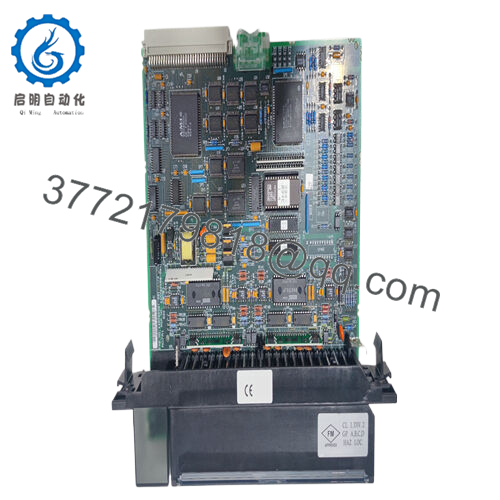
The GE IC697ALG230F tackles a foundational need in legacy high-performance PLC systems: providing accurate, high-resolution analog-to-digital conversion for multiple differential input signals in demanding industrial automation and process control environments where precision, noise rejection, and expandability matter most. In Series 90-70 racks—often found in large-scale manufacturing, utilities, or heavy process applications—engineers frequently face limitations with lower-resolution modules, insufficient channel density for mixed voltage/current signals, or vulnerability to common-mode noise from long field wiring runs. These can result in measurement errors, reduced loop stability, slower scan times due to excessive filtering, or the need for additional signal conditioners that increase panel complexity and points of failure.
The GE IC697ALG230F becomes essential when your Series 90-70 CPU requires a base converter module capable of handling up to 8 differential analog inputs natively (expandable to 16 with an expander like IC697ALG390) while delivering 16-bit effective resolution through oversampling and averaging techniques. It’s particularly valuable in retrofits of older VME-based systems, expansions in chemical plants, power stations, or discrete lines processing temperature, pressure, flow, or level transmitters that output 4-20 mA or ±10 V signals. By serving as the core A/D conversion stage with built-in multiplexing, calibration, and user scaling, GE IC697ALG230F ensures high reliability in I/O signal acquisition, minimizes drift or noise-induced inaccuracies, and supports fast update rates without overburdening the CPU—critical for maintaining tight control loops and critical system uptime in facilities where analog data directly drives PID regulation, alarming, or sequencing.
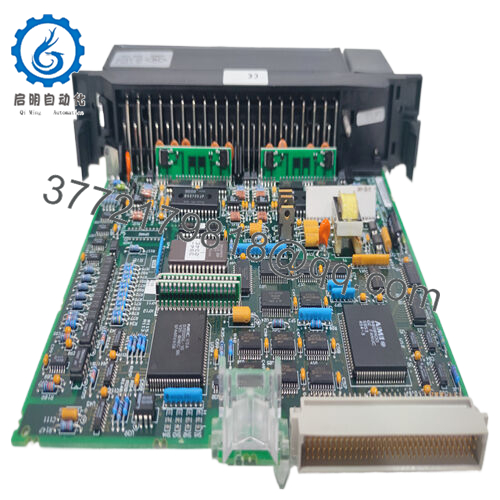
The GE IC697ALG230F operates as a Base Converter Module in the Series 90-70 family, acting as the primary analog-to-digital interface that digitizes incoming signals for the PLC backplane. It accepts differential inputs via a companion expander (if used) or directly, multiplexing them to a high-resolution A/D converter that employs oversampling and averaging to achieve effective 16-bit performance from a base 14-bit converter. The module handles voltage or current ranges with factory calibration and user-configurable scaling per channel, then presents converted data to the CPU over the VME bus for logic use or peer-to-peer access.
In a typical industrial automation stack, the GE IC697ALG230F mounts in the main Series 90-70 rack slot, connecting field signals through shielded twisted-pair wiring to the expander or terminal block assembly. It interfaces with the CPU (e.g., CPU780 or later) for configuration via Logic Developer software, supporting diagnostics like underrange/overrange detection, open-wire faults (on current loops), and module health reporting. While it lacks active protocol support itself, it enables precise, low-latency analog processing in distributed or centralized architectures—ideal for applications needing high common-mode rejection (±60 V tolerance) and consistent accuracy across varying environmental conditions. Engineers value its expandability and robustness in legacy VME systems where replacing the entire rack isn’t feasible.
| Specification | Details |
|---|---|
| Model Number | IC697ALG230F |
| Brand | GE Fanuc (now Emerson Automation) |
| Type | Series 90-70 Analog Input Base Converter Module |
| Input Voltage | Backplane-powered (from rack supply) |
| Operating Temp Range | 0 to 60 °C (32 to 140 °F) |
| Mounting Style | Series 90-70 rack slot |
| Dimensions | Standard 90-70 module form (approx. single-slot VME) |
| Weight | Approx. 0.8–1 kg (including expander considerations) |
| Interface/Bus | VME backplane; connects to expander for field inputs |
| Compliance | CE, UL, industrial standards |
| Supported Protocols | Internal Series 90-70 bus |
| Typical Power Draw | Approx. 1–2 A (module + expander dependent) |
Opting for the GE IC697ALG230F delivers dependable, high-precision analog handling in established Series 90-70 deployments. Engineered with differential inputs and strong common-mode rejection, it maintains signal integrity even over extended cable runs in noisy environments, while the oversampling technique provides effective 16-bit resolution for fine control adjustments—reducing quantization errors in loops where small changes matter, such as flow or pressure regulation.
Maintenance efficiency improves through per-channel scaling, fault diagnostics reported to the CPU, and modular design that allows expander swaps or module replacement without full system rewiring. Its factory calibration (±2 mV at 10 V) and user adjustments minimize field tuning, and the robust VME construction withstands vibration and temperature swings common in heavy industry. In aging plants, GE IC697ALG230F extends platform life cost-effectively, preserving investment in high-channel-count analog processing while supporting reliable process control without migration pressure.
The GE IC697ALG230F is commonly deployed in legacy Series 90-70 systems across industries requiring robust, multi-channel analog input. In power generation and utilities, it’s used for monitoring turbine parameters, boiler levels, or substation signals where precise ±10 V or 4-20 mA inputs ensure accurate feedback for regulation and protection. Chemical and petrochemical facilities rely on it for process variables like pH, temperature, or flow in reactor or distillation controls, handling differential signals in electrically noisy areas with high reliability.
Heavy manufacturing—metals, pulp/paper, or automotive—also integrates this module for machine monitoring or quality loops, supporting critical system uptime in continuous operations with expandable channels for dense I/O needs. Across these, the GE IC697ALG230F shines when legacy VME architecture demands accurate, expandable analog conversion without modern Ethernet overhead.
Here are some compatible or related products in the GE Series 90-70 and analog families:
- IC697ALG230 – Base or earlier revision (functionally equivalent; F denotes a later production release)
- IC697ALG390 – Analog expander module that pairs with GE IC697ALG230F to add 8 more channels (total 16)
- IC697ALG440 – Current/voltage analog input module (alternative for non-expandable needs)
- IC697CPU series (e.g., IC697CPU780) – CPUs that host this module in the rack
- IC697ALG320 – Similar high-level analog input variant with different range/resolution focus
- IC697CHS series – Series 90-70 rack chassis that accommodates the module
- IC697BEM series – Bus expansion modules for remote racks with analog I/O
- VersaMax or RX3i equivalents – Modern migration paths (e.g., IC695ALG series) for Series 90-70 upgrades
Before installing the GE IC697ALG230F, verify rack slot availability (universal VME backplane) and confirm expander (if used) matches for channel expansion. Ensure field wiring uses shielded twisted-pair with proper grounding to maximize noise rejection, and calibrate per-channel scaling in Logic Developer software matching input ranges (default ±10 V or 4-20 mA). Pre-test module diagnostics and basic conversions in a powered rack before field integration, checking for underrange/overrange flags or open-wire detection on current loops.
Ongoing maintenance involves periodic LED/status checks via CPU diagnostics—monitor for faults like conversion errors or power issues—and cleaning connectors annually to prevent corrosion in humid or dusty settings. Review analog trends in the PLC for drift, and perform loop verification during outages using calibrated sources. As a solid-state module with no moving parts, failures are rare, but spares support quick swaps to avoid extended downtime in analog-dependent processes.