 WhatsApp: +86 16626708626
 Email:
  Phone: +86 16626708626
Description
In aging Series 90-70 PLC installations—common in industrial automation, process control, power generation, and legacy turbine or generator monitoring—the accurate, noise-immune acquisition of multiple analog signals from transmitters (pressure, temperature, flow, level) remains foundational for stable loop control, trending, and alarming. Long cable runs, electrical interference from drives or switchgear, ground potential differences, and the need for high-resolution conversion without excessive channel crosstalk or drift often lead to measurement inaccuracies, spurious alarms, or degraded process performance. In brownfield environments where full system replacement isn’t immediate, engineers require a reliable, expandable analog input subsystem that delivers consistent 16-bit resolution, flexible voltage/current scaling, and fault detection to maintain high reliability and minimize unplanned interventions.
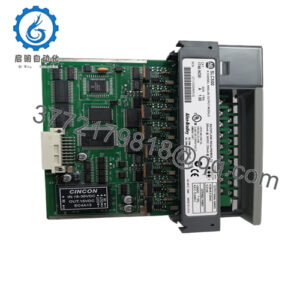
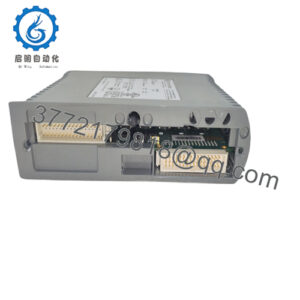
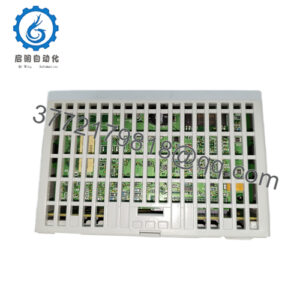
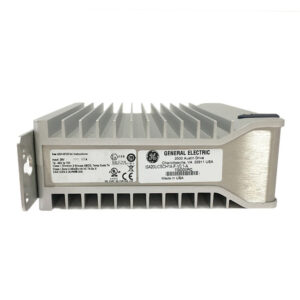
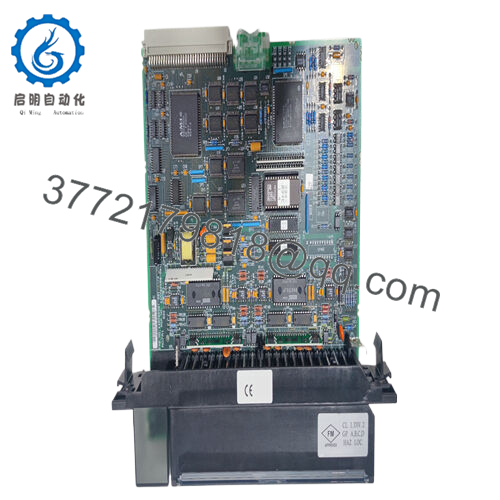
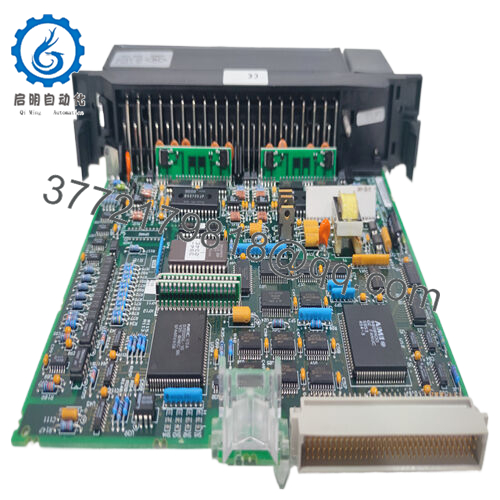
The GE IC697ALG230L (a revision of the base IC697ALG230 analog input module) addresses these demands as the Base Converter Module in GE Fanuc’s Series 90-70 high-level analog input subsystem. This single-slot module provides eight differential inputs configurable for bipolar/unipolar voltage (±10 V) or current (4–20 mA) signals, serving as the core converter that digitizes field data at high resolution for the CPU or other backplane-accessible controllers. It becomes essential in applications needing precise, multi-channel analog monitoring—such as turbine auxiliaries, boiler controls, or process skids—where pairing with expander modules (e.g., IC697ALG390 for current or IC697ALG391 for voltage) scales to 16 or more channels while preserving individual user scaling and fault reporting. By offering factory-calibrated accuracy, oversampling for enhanced effective resolution, and built-in diagnostics, GE IC697ALG230L ensures clean signal paths in noisy plants, reduces engineering tweaks for calibration, and extends the service life of Series 90-70 racks without compromising process control integrity.
In the Series 90-70 rack architecture, the GE IC697ALG230L installs in any available I/O slot, interfacing directly with the backplane for high-speed data transfer to the CPU (e.g., CPX935 or similar). It accepts field wiring via removable terminal blocks or direct connections, applying individual channel scaling, linearization (if configured), and conversion using 14-bit base resolution boosted by oversampling/averaging techniques to approach 16-bit effective performance. The module supports simultaneous sampling across channels (with expander sync) and feeds digitized values, status, and fault flags (open wire, underrange/overrange) to ladder logic or HMI via the Genius or Field Control networks.
When expanded with compatible expander modules plugged adjacent or via ribbon cables, it forms a complete analog front-end capable of handling mixed voltage/current inputs with minimal crosstalk. Diagnostics—detecting faults like open circuits or out-of-range conditions—activate ladder contacts for alarming or permissive logic, while the design ensures low drift over temperature and time. This positioning keeps analog processing modular and scalable, allowing distributed placement in expansion racks for shorter field runs and better noise rejection, without custom signal conditioning hardware.
| Specification | Details |
|---|---|
| Model Number | IC697ALG230L |
| Brand | GE Fanuc (now Emerson Automation) |
| Type | Base Converter Module (High-Level Analog Input) |
| Input Voltage | ±10 V (bipolar/unipolar configurable) |
| Operating Temp Range | 0°C to +60°C (typical Series 90-70) |
| Mounting Style | Rack slot (Series 90-70) |
| Dimensions | Standard single-slot Series 90-70 form factor |
| Weight | Approx. 0.8–1 kg |
| Interface/Bus | Series 90-70 backplane; compatible with Genius/Field Control |
| Compliance | Legacy industrial standards (CE where applicable) |
| Supported Protocols | Backplane data exchange; no direct field protocol |
| Typical Power Draw | Approx. 1–2 A at 5 V (backplane) |

- IC697ALG230L
Choosing the GE IC697ALG230L delivers stable, high-resolution analog readings that support tighter process loops, more accurate trending, and fewer false trips from noise or drift—critical for maintaining yields and avoiding costly derates in continuous operations. Its differential inputs and oversampling technique effectively reject common-mode noise over extended cable distances, reducing the need for external isolators or filters while providing individual channel diagnostics that speed fault isolation during maintenance.
The module’s expandable design—pairing seamlessly with current/voltage expanders—optimizes rack utilization and simplifies upgrades from lower-channel systems, particularly in retrofits where adding I/O without major rewiring is key. In legacy Series 90-70 setups, GE IC697ALG230L preserves investment in existing racks and field wiring, offers repeatable calibration across channels, and eases spares management for plants sustaining these platforms long-term.
In power generation facilities with Series 90-70 turbine or boiler controls, the GE IC697ALG230L captures precise signals from transmitters for fuel flow, steam pressure, or exhaust temperature monitoring, ensuring reliable closed-loop regulation under variable loads. Industrial process control applications—such as chemical plants or pulp & paper mills—use it for multi-point level, flow, and temperature inputs in batch or continuous processes, where high reliability and noise immunity prevent quality deviations in EMI-heavy environments.
Legacy manufacturing lines also deploy GE IC697ALG230L for analog feedback in machine sequencing or HVAC controls, supporting critical system uptime in setups requiring fast, accurate conversion amid vibration and electrical transients.
For compatible or alternative options within the Series 90-70 analog input family, consider:
IC697ALG230 – Standard/base revision, functionally identical in most applications
IC697ALG390 – Current expander module (adds 8 channels, pairs with base for 16 total)
IC697ALG391 – Voltage expander module for additional high-level voltage inputs
IC697ALG440 – Low-level analog input module for thermocouples/RTDs (alternative subsystem)
IC697ALG320 – Analog output counterpart for complementary control loops
IC697ALG441 – Isolated low-level input variant for enhanced noise rejection
IC697CHS750 – Common rack chassis used with this module
IC697BEM731 – Genius bus controller for distributed I/O expansion
Before installing the GE IC697ALG230L, verify rack power supply capacity and backplane slot availability—ensure no address conflicts with other modules. Confirm input type configuration (voltage/current scaling via software, no DIP switches required), use shielded twisted-pair wiring grounded at one end for noise minimization, and torque terminal connections per specs. Perform initial calibration check with known sources and load configuration into the CPU to validate channel recognition.
Ongoing maintenance includes annual inspections of terminals for corrosion or looseness (common in humid plants), visual checks for LED status (fault/power indicators), and diagnostic scans via Logicmaster/VersaPro to monitor range faults or conversion errors. Replace any associated expander modules if drift appears during loop checks. Failures are rare—typically from power surges, wiring issues, or environmental exposure rather than internal components; maintain spares for critical analog paths given legacy platform age.