 WhatsApp: +86 16626708626
 Email:
  Phone: +86 16626708626
Description
Why Your System Needs the GE IC697ALG320
In critical process control applications, the accuracy and stability of the control signal sent to field devices—like modulating valves, variable speed drives, or current-to-pressure transducers—are fundamental to achieving product quality and maintaining operational safety.Engineers working with older, highly reliable platforms like the GE Fanuc Series 90-70 PLC often face the challenge of sourcing and maintaining high-performance analog output modules capable of simultaneously generating precise voltage and current signals across multiple channels. Low-resolution or slow-response analog outputs introduce “granularity” or latency into control loops, leading to wasted energy, inconsistent product quality, and excessive wear on mechanical components.
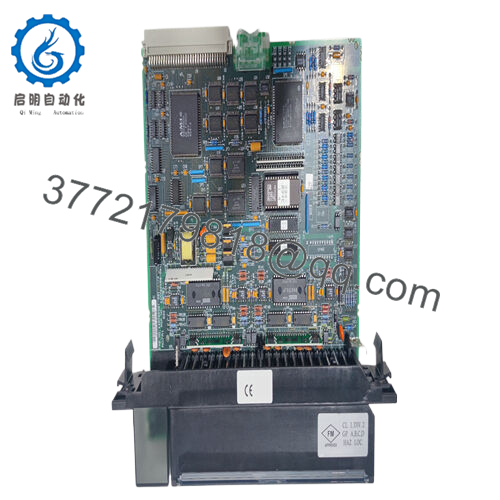
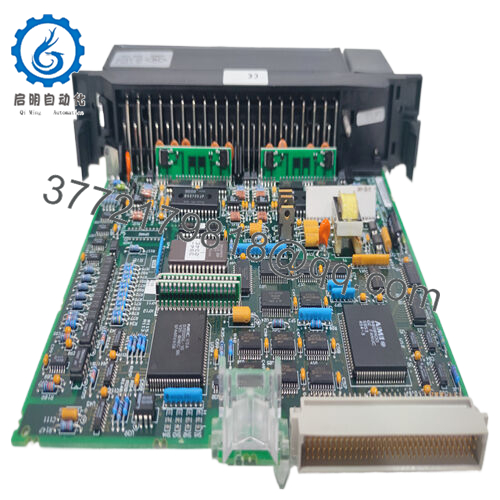
The GE IC697ALG320 (High-Level Analog Output Module) directly addresses this need. It provides four individually configurable output channels, delivering both standard industry current loops ($0-20\text{ mA}$ or $4-20\text{ mA}$) and bipolar/unipolar voltage signals ($\pm 10\text{ VDC}$) from a single slot.This flexibility simplifies system design and reduces spare parts inventory. Crucially, the module features a high reliability 16-bit resolution (with 14-bit monotonicity) and a fast $2.0\text{ ms}$ update rate for all four channels. This precision ensures that the digital value calculated by the PLC’s control algorithm is converted into a physical I/O signal with minimal error, making the GE IC697ALG320 indispensable for demanding, closed-loop industrial automation systems.
How the Product Works & Fits into a System
The GE IC697ALG320 is a single-slot module designed to integrate directly into the backplane of a GE Fanuc Series 90-70 baseplate (either a 5-slot or 10-slot rack). Its primary function is to act as a Digital-to-Analog Converter (DAC). It accepts 16-bit digital data from the Series 90-70 CPU (via the PLC backplane’s high-speed internal bus) which corresponds to the desired output value in engineering units.The module then processes this data and generates the corresponding analog voltage or current signal to drive field devices.
Each of the four output channels on the GE IC697ALG320 is independently configurable via the programming software (such as Logicmaster or Control Software for Windows). This means one channel can be set to output $4-20\text{ mA}$ to a current-controlled valve, while another can output $\pm 10\text{ VDC}$ to a motor drive, all without requiring any manual DIP switch or jumper settings (unlike many earlier modules). This software-only configuration capability streamlines setup and reduces the potential for wiring errors
A key architectural feature of the GE IC697ALG320 is the isolation of its output circuitry from the backplane. This isolation provides protection against transient overvoltage conditions and prevents ground loop currents between the control system and field devices, ensuring clean, stable analog outputs.The module features on-board non-volatile EEPROM memory that stores the factory calibration data, guaranteeing long-term accuracy without the need for periodic manual calibration in the field.

- IC697ALG320
Technical Highlights Summary
| Specification | Details |
| Model Number | GE IC697ALG320 |
| Brand | GE Fanuc (now under Emerson) |
| Type | High-Level Analog Output Module |
| Channels | 4 (Individually configurable) |
| Output Signal Types | Voltage ($\pm 10\text{ VDC}$) or Current ($0-20\text{ mA}, 4-20\text{ mA}$) |
| Resolution | 16-bit (with 14-bit monotonicity) |
| Conversion Rate | $2.0\text{ ms}$ (Maximum for all 4 channels sequentially) |
| Output Loading | Current: Up to $800\text{ ohms}$ resistive |
| Output Isolation | Isolated from backplane |
| Mounting Style | Series 90-70 Backplane Slot Mount |
| Power Requirement | $1.66\text{ A}$ at $5\text{ VDC}$ (Module) + External $10\text{ VDC}$ to $30\text{ VDC}$ (Field Power for current) |
| Calibration | Factory calibrated with data stored in EEPROM |
| Disconnect | Removable 40-terminal connector block |
Real-World Benefits
The primary benefit of deploying the GE IC697ALG320 is the precision it brings to output control, which directly translates into process optimization.The $16$-bit resolution ensures that the smallest digital command change from the CPU results in a smooth, proportionate change in the physical output signal.This capability is engineered for accurate valve positioning or precise motor speed control, thereby minimizing overshoot and oscillation in control loops. Tighter control directly reduces material waste, improves energy efficiency, and ensures product consistency, leading to significant operational savings.
Furthermore, the module’s flexibility to handle both voltage and current outputs simultaneously from a single unit significantly simplifies system architecture and reduces engineering complexity. This feature dramatically reduces engineering overhead during system design and expansion, allowing field engineers to quickly adapt a control rack to different field device requirements without swapping modules. The isolation from the backplane provides a reliable barrier against electrical disturbances in the field, ensuring long-term performance stability and protecting the module’s sensitive internal components.
Even though the Series 90-70 platform is aging, the robust design and the embedded factory calibration—stored in non-volatile memory—mean the GE IC697ALG320 retains its accuracy over time without frequent manual intervention. Its high output capacity and fast update rate make it a key contributor to maintaining high reliability in legacy systems that still demand high-performance output capability for critical control loops.
Typical Use Cases
The GE IC697ALG320 is deployed in robust, high-availability process control environments served by the Series 90-70 platform. A central application is in petrochemical refineries and chemical processing facilities, where precise control of flow rates, blending ratios, and reactor temperatures is vital for product quality and safety. The module’s $\pm 10\text{ VDC}$ outputs are often used to command positioners on large pneumatic control valves, while the $4-20\text{ mA}$ loops are used to drive VFDs or electronic actuators.
Another key use case is in power plants, particularly for turbine control or burner management systems. The fast $2.0\text{ ms}$ conversion rate is essential here, providing the low-latency response needed to quickly adjust fuel flow or damper positions, directly impacting efficiency and safety interlocks.The ability to handle both voltage and current signals is beneficial for interfacing with legacy $0-10\text{ V}$ controllers alongside modern $4-20\text{ mA}$ devices.
The module is also used extensively in large utility infrastructure, such as water treatment plants, where it provides the reliable, calibrated output signals necessary to precisely regulate chemical feed pumps or effluent flow control valves, thereby ensuring regulatory compliance and critical system uptime.
Compatible or Alternative Products
GE IC697ALG440 – A higher channel count Analog Input module for the Series 90-70, often paired with the GE IC697ALG320 to complete a closed loop.
GE IC697CMM742 – An Ethernet Communications Module for the Series 90-70, used to network the system hosting the output module.
GE IC697CPX935 – A high-performance CPU module in the Series 90-70 family that processes the control logic for the IC697ALG320.
GE IC697ALG321 – A potential alternative or later revision of a similar analog output module within the same product family.
GE IC697PWR710 – The power supply module for the Series 90-70 backplane, which provides the $5\text{ VDC}$ power required by the IC697ALG320.
GE IC697ACC722 – A Blank Slot Interrupt Jumper often required to fill unused slots in the backplane when using I/O like the IC697ALG320.
GE IC695ALG708 – A modern equivalent Analog Output module in the succeeding GE PACSystems RX3i platform.
Setup Notes & Maintenance Insights
Installation of the GE IC697ALG320 requires careful attention to wiring to ensure high-fidelity outputs. All field connections should use high-quality, twisted, shielded instrumentation cable, with proper grounding of the shields at a single point to prevent ground loops. The module requires an external $10\text{ VDC}$ to $30\text{ VDC}$ user power supply to energize its current outputs; this external supply voltage must be correctly sized for the load resistance (up to $800\text{ ohms}$). Configuration is performed exclusively through the programming software, where the engineer specifies the output type (voltage/current) and the range (unipolar/bipolar) for each of the four channels.
Maintenance is primarily preventive. Since the module is factory-calibrated, manual adjustments are not required, but routine verification of output accuracy using a calibrated multimeter is recommended during scheduled shutdowns.The module’s output circuitry is protected against continuous short circuits, but checking the field wiring for insulation integrity and secure connections at the removable $40$-terminal connector block is good practice. Monitoring the LED status indicators on the module and reviewing the system’s diagnostic logs for over/under-range faults are the key steps for practical, ongoing health checks.