 WhatsApp: +86 16626708626
 Email:
  Phone: +86 16626708626
Description
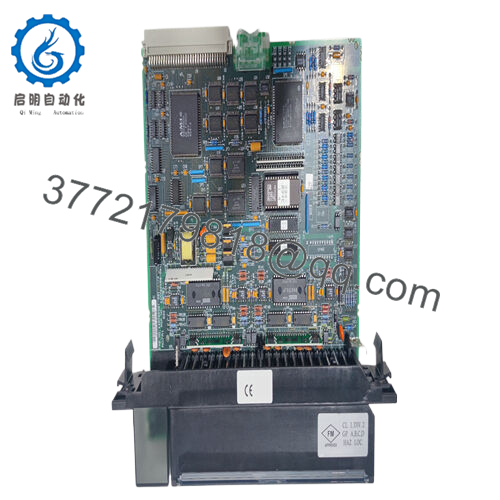
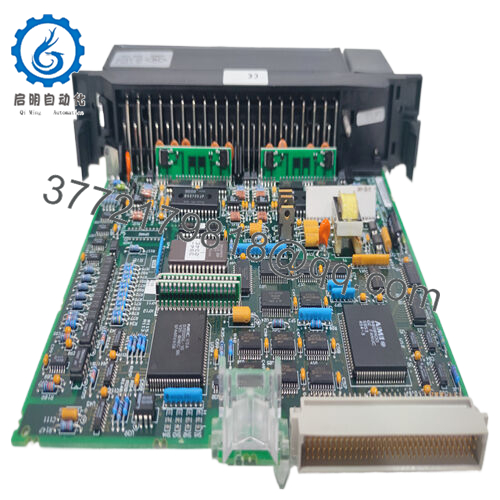
On heavy process lines where precise analog feedback drives quality and safety, the GE IC697ALG440D is typically used to expand the number of current or voltage inputs available to a Series 90‑70 or RX7i-based control system. This module shows up in refineries, chemical blending skids, and power generation balance-of-plant systems where dozens of 4–20 mA transmitters report pressure, level, flow, or temperature back to a central PLC. Engineers deploy the GE IC697ALG440D when a single analog base module is no longer enough, but they want to keep a unified, consistent analog input subsystem instead of scattering smaller I/O blocks across multiple racks. Used in industrial automation for large continuous processes, it helps consolidate sensor wiring into one high-density location, simplifying marshalling cabinet design and long-term maintenance.
In water treatment plants or district heating networks, integrators often pair the GE IC697ALG440D with a base analog converter module to add extra differential channels for remote wells, booster pumps, or heat exchangers without re-engineering the control strategy. Applicable in control systems that must handle both 4–20 mA loops and ±10 V signals, it lets each channel be individually configured and scaled in software, which matters when field instrumentation comes from different vendors and ranges. In metals, paper, and cement plants, where electromagnetic noise and transient overvoltage events are common, the module’s input protection and isolation help protect the PLC backplane while still delivering stable digital data to the CPU. That combination of high channel count, flexible configuration, and robust protection is why the GE IC697ALG440D is widely selected for legacy Series 90‑70 modernization projects and long-lived process installations.
Product Introduction & Positioning
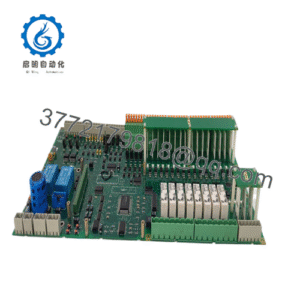
The GE IC697ALG440D is a 16‑channel analog input expander module designed to work in conjunction with a compatible base analog converter module (such as an IC697ALG230) in GE’s Series 90‑70 and related systems. Functionally, it does not convert the signals by itself; instead, it extends the number of high-level analog inputs that the base converter can handle, forming a complete analog subsystem. Within a control architecture, the base module provides the A/D conversion and core diagnostics, while the GE IC697ALG440D provides additional field input points that share the same scaling, diagnostics, and configuration mechanisms over the VME backplane.
The module is positioned for medium to large systems that require a high density of 4–20 mA or ±10 V channels, but where engineers want unified configuration via software rather than jumpers or DIP switches. Each input is defined in %AI memory as a 16‑bit value, and the combined base-plus-expander subsystem can support up to 120 channels, depending on the number of expander modules installed. For system integrators, this means a single engineering and maintenance strategy across all analog inputs: one type of base module, multiple GE IC697ALG440D units, and consistent diagnostics accessible from the CPU. That makes it especially attractive in plants standardizing on GE 90‑70 / RX7i racks while still needing modern analog performance.
Key Technical Features & Functional Benefits
One of the primary strengths of the GE IC697ALG440D is its flexible input capability. Each of its 16 differential channels can be configured for either a voltage input in the range −10 to +10 volts or a standard 4–20 mA current loop, matching what is commonly found in industrial transmitters and positioners. Default scaling uses 16‑bit resolution, giving about 312.5 microvolts per least significant bit in voltage mode and roughly 0.5 microamps per step in current mode, which provides fine granularity for control loops that depend on small process changes. For many applications, that level of resolution is more than adequate to drive tight PID control while also allowing room for user scaling in engineering units.
Another important benefit is accuracy and stability. The associated base converter is factory calibrated so that full scale (10 V) is held within a small error band, and the combined base-plus-expander system maintains low percentage-of-full-scale errors over the specified temperature range. The system self‑calibrates continuously for zero and positive full scale values before user scaling, which significantly reduces the need for field calibration, particularly in clean, temperature-controlled environments like pharmaceutical plants or modern food and beverage facilities. For critical applications, a small trim adjustment on the base converter lets maintenance teams fine-tune full scale if long-term drift ever becomes a concern.
From a protection standpoint, the GE IC697ALG440D is built for harsh plant conditions. Inputs are isolated from the VME backplane and are protected against both transient and steady-state overvoltage conditions; they can survive common-mode surges and ring waves well beyond typical instrumentation levels without permanent damage. Each channel has a low-pass filter to attenuate high-frequency noise, and the combination of analog filtering plus digital sample-and-hold provides stable readings even when wiring runs are long or routed through noisy areas. Update times are fast enough for typical process control: base converter inputs update in a few milliseconds, and expander channels are refreshed sequentially with deterministic timing based on the number of expanders in the rack. For plant engineers, this results in predictable scan behavior and confidence that new analog values will be available when the CPU expects them.
Detailed Technical Specifications
| Parameter | Value |
|---|---|
| Model | GE IC697ALG440D |
| Brand | GE Fanuc / GE Vernova (Series 90‑70 family) |
| Type | 16‑Channel Analog Input Expander Module |
| Voltage Input Range | −10 to +10 volts |
| Current Input Range | 4 to 20 milliamps |
| Number of Inputs | 16 differential analog inputs |
| Resolution (default scaling) | 16‑bit; 312.5 microvolts per step (voltage), 0.5 microamps per step (current) |
| Calibration | Factory set, 10 V full scale ±2 mV on associated base converter |
| Input Impedance (voltage) | Greater than 10 megohms (DC), with defined AC impedance network |
| Input Impedance (current) | 250 ohm precision shunt (approximately 0.1% tolerance) |
| Isolation | Inputs isolated from VME backplane; channels not isolated from each other |
| Power Requirements | No separate module power; current for 4–20 mA loops supplied by user |
| Module Mounting | Series 90‑70 / RX7i rack, installed after an analog base converter |
| Memory Usage | One 16‑bit %AI word per channel |
| Overvoltage Protection | Survives specified AC/DC faults and surge conditions without backplane damage |

- IC697ALG440D
Related Modules or Compatible Units
IC697ALG230 – Base analog input converter module that provides A/D conversion; the IC697ALG440D attaches as an expander to increase channel count.
IC697ALG440 – Earlier or alternate revision of the same expander family, with similar electrical characteristics.
IC697ALG441 – Related expander variant, typically used when mixing different input ranges or configurations within the same subsystem.
IC697CPU781 – Series 90‑70 CPU often paired with high-density analog subsystems including IC697ALG440D in large process racks.
RX7i main rack (IC697CHS7xx) – Rack hardware that houses the base and expander analog modules in systems migrating toward PAC-based architectures.
Installation Notes & Maintenance Best Practices
When installing the GE IC697ALG440D, the base converter module must always be placed in a lower-numbered slot than the expander, and in many RX7i configurations the base must not be installed below slot 4 if expanders follow it. This requirement ensures that the firmware correctly associates expander channels with the base converter and avoids configuration errors such as “Base Module with Expanders Not in Any Slot Lower Than 4.” Careful slot planning in the rack—especially in mixed digital and analog systems—prevents rework later. Field wiring should be landed on the removable terminal board, keeping current and voltage channels grouped logically and routing sensor cables away from high-noise conductors.
From a maintenance perspective, technicians rarely need to recalibrate the GE IC697ALG440D, because the subsystem continually self-calibrates for zero and full scale prior to user scaling. Periodic verification with a known reference source is still good practice in regulated industries, but most plants can limit intervention to visual inspections, checking for damaged wiring, loose terminal screws, or signs of overvoltage events. Because inputs are well protected and interaction between expander channels is negligible, long-term reliability tends to be high; however, arranging channels with similar signal levels adjacent to each other can further minimize small interactions in high-speed applications. Routine checks of %AI values during commissioning and after major plant changes help confirm that scaling and engineering units remain correct for every channel.