 WhatsApp: +86 16626708626
 Email:
  Phone: +86 16626708626
Description
The GE IC697BEM733G (a production revision of the IC697BEM733 series) solves the challenge of geographically distributing high-density I/O while preserving the deterministic performance and centralized programming of a Series 90-70 PLC system. In large-scale industrial automation and process control installations—such as those spanning multiple buildings, long production lines, or remote equipment skids—engineers often encounter issues with cable length limits, signal degradation, or the overhead of adding separate PLCs for distant I/O. These can result in higher latency for critical loops, increased wiring costs, fragmented diagnostics, or the need for protocol converters that introduce complexity and potential failure points.
The GE IC697BEM733G becomes essential when your Series 90-70 CPU needs to control remote drops (up to 7500 feet/2275 meters away) using the Genius I/O bus, interfacing local IC697 I/O modules in expansion racks as intelligent remote nodes on the Genius network. It’s particularly valuable in retrofits of VME-based systems or expansions in power utilities, chemical plants, water treatment facilities, or mining operations where physical separation demands reliable, long-distance I/O without sacrificing scan consistency or requiring full distributed control upgrades. By acting as an intelligent Genius Remote I/O Scanner, GE IC697BEM733G handles Genius protocol communication, data mapping, and fault management locally in the remote rack—ensuring high reliability in I/O signals, supporting up to 128 I/O bytes per drop, and enabling seamless integration of discrete/analog modules over a single twisted-pair Genius bus for critical system uptime in dispersed or hazardous environments.

- IC697BEM733G
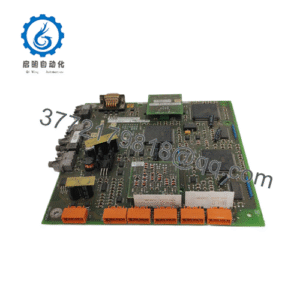
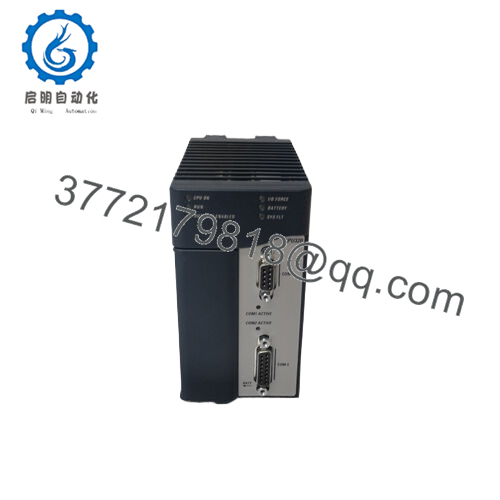
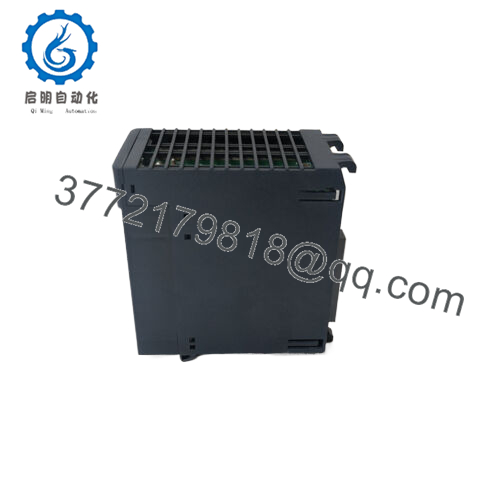
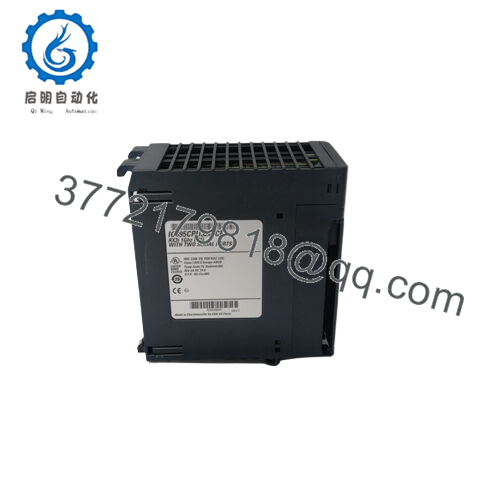
The GE IC697BEM733G functions as a Genius Remote I/O Scanner module in the Series 90-70 family, mounting in a remote IC697 rack (5-slot or 9-slot) to serve as the interface between local I/O modules and the central Genius bus. It communicates bidirectionally with the Genius Bus Controller (typically in the main CPU rack) at selectable baud rates (38.4 Kbaud to 153.6 Kbaud standard/extended), handling cyclic I/O data exchange, diagnostics, and configuration services for up to 32 devices on the bus (fewer at higher speeds).
In a typical industrial automation stack, the module installs in the remote rack’s dedicated slot, connecting to the Genius bus via a 15-pin RS-422/485 serial port (for bus wiring) and a 9-pin port for hand-held monitor (HHM) access. It scans and maps data from attached IC697 I/O modules (discrete, analog, specialty) into Genius datagrams, supporting features like hold-last-state on bus faults, fault reporting to the CPU, and configuration via the central PLC logic. While it lacks active processing for complex local logic (remote drops cannot host interrupt-driven or COMREQ-dependent modules), it provides transparent I/O extension—allowing the CPU to treat remote modules as local for addressing and timing—ideal for centralized control architectures with physically distributed field points in process control setups.
| Specification | Details |
|---|---|
| Model Number | IC697BEM733G |
| Brand | GE Fanuc (now Emerson Automation) |
| Type | Series 90-70 Genius Remote I/O Scanner Module |
| Input Voltage | Backplane-powered (from rack supply) |
| Operating Temp Range | 0 to 60 °C (32 to 140 °F) |
| Mounting Style | Series 90-70 rack slot (single-slot VME) |
| Dimensions | Standard 90-70 module form (approx. single-slot) |
| Weight | Approx. 0.8–1 kg |
| Interface/Bus | Genius bus (RS-422/485 serial, twisted-pair); VME backplane |
| Compliance | CE, UL, industrial standards |
| Supported Protocols | Genius I/O protocol (38.4–153.6 Kbaud) |
| Typical Power Draw | Approx. 1.3 A at 5 VDC |
Selecting the GE IC697BEM733G enables efficient, long-distance I/O distribution without compromising the Series 90-70’s native determinism. Engineered for the Genius bus, it supports distances up to 7500 feet at lower baud rates, with robust error checking and diagnostics that ensure reliable data transfer even in electrically noisy or extended environments—critical for maintaining accurate control in remote skids or auxiliary systems.
Maintenance teams benefit from integrated fault reporting (bus errors, drop faults visible in CPU tables), HHM compatibility for local troubleshooting, and straightforward daisy-chaining on the Genius network—reducing downtime during diagnostics or expansions. The module’s intelligent design handles local scanning and buffering, offloading the CPU while supporting up to 128 I/O bytes per drop for dense remote configurations. In legacy facilities, GE IC697BEM733G extends platform viability cost-effectively, avoiding full migrations while delivering dependable process control across dispersed assets.
The GE IC697BEM733G is frequently deployed in Series 90-70 systems requiring remote I/O over significant distances. In power generation and utilities, it’s used to connect auxiliary racks in substations, switchyards, or dam controls to a central CPU rack, handling discrete/analog points for monitoring and interlocking with critical system uptime in spread-out facilities. Chemical and petrochemical plants rely on it for remote field skids or tank farms, interfacing transmitters, valves, and pumps via Genius bus in hazardous or corrosive areas where long cable runs are unavoidable.
Water/wastewater treatment and mining operations also favor this scanner for distributed pump stations or conveyor monitoring, ensuring reliable I/O extension in harsh, remote environments with vibration or electrical interference. Across these applications, the GE IC697BEM733G excels when centralized logic paired with physically separated I/O directly supports operational scale, safety, and efficiency.
Here are some compatible or related products in the GE Series 90-70 and Genius I/O families:
- IC697BEM733 – Base or earlier revision (G denotes a later production variant; fully interchangeable)
- IC697BEM731 – Alternative Genius Bus Controller or scanner variant for specific configurations
- IC66 Genius Bus Controller* (e.g., IC660BBA020) – Required in main CPU rack to communicate with remote scanners
- IC697CHS series (e.g., IC697CHS782) – Remote rack chassis for mounting the scanner
- IC697CPU series (e.g., IC697CPU788) – CPUs in the main rack supporting Genius remote drops
- IC660 series Genius I/O blocks – Field-mounted devices often on the same bus as remote scanners
- Hand-Held Monitor (HHM) – IC66 HHM for local configuration and diagnostics on Genius networks
- RX3i IC695 series with Genius gateways – Modern migration paths for Series 90-70 remote I/O setups
Before installing the GE IC697BEM733G, confirm the remote rack is a compatible IC697 type (5- or 9-slot) and that the Genius bus topology adheres to guidelines (daisy-chain or multidrop, termination resistors at ends, max 7500 ft total length). Set the drop number via configuration software (Logic Developer), wire the 15-pin bus port with shielded twisted-pair cable, and connect the 9-pin HHM port if needed for local access. Pre-configure the scanner in the CPU hardware setup to map I/O points, then power up the remote drop and verify Genius bus status LEDs and CPU diagnostics for drop recognition before loading field wiring.
Ongoing maintenance includes routine LED checks during inspections—monitor for bus faults, power OK, or activity indicators—and cable/connection verification annually for corrosion or looseness in exposed environments. Use HHM or CPU fault tables to review drop status and alarms, and test I/O continuity during outages. As an intelligent but solid-state module, failures are infrequent, but spares allow quick replacement to restore remote I/O without extended downtime.