 WhatsApp: +86 16626708626
 Email:
  Phone: +86 16626708626
Description
The GE IC697BEM741BE (a production revision of the IC697BEM741 series) resolves the challenge of integrating a Series 90-70 PLC into open, deterministic fieldbus networks for distributed I/O and device control without relying on proprietary protocols or multiple gateways.
In industrial automation environments with GE Fanuc Series 90-70 controllers—common in large-scale utilities, chemical processing, or manufacturing where multi-vendor field devices are prevalent—engineers often face interoperability barriers when connecting to FIP (Factory Instrumentation Protocol) or WorldFIP networks. These include limited device support on standard buses, constrained data throughput for real-time cyclic exchanges, or the need for custom interfaces that increase complexity and risk in process control loops. Such limitations can lead to fragmented systems, slower response to field events, higher integration costs, or challenges maintaining high reliability across geographically dispersed I/O or smart devices.
The GE IC697BEM741BE becomes essential when your Series 90-70 CPU requires direct attachment to a 1 Mbit/s FIP/WorldFIP fieldbus network, enabling the PLC to act as a bus master scanning up to 128 field devices—including IC693 FIP remote I/O scanners, IC670 Field Control modules, generic FIP devices, or field control I/O via bus interface units. It’s particularly valuable in retrofits of VME-based systems or expansions in power substations, petrochemical skids, or water treatment plants where FIP’s deterministic performance (cyclic/acyclic services, variable-length messaging) supports precise synchronization and diagnostics over extended distances. By providing dual-channel FIP connectivity in a single-slot module, GE IC697BEM741BE ensures seamless, high-speed data exchange, reduces engineering overhead for multi-vendor integration, and maintains critical system uptime in applications demanding reliable, open fieldbus communication.
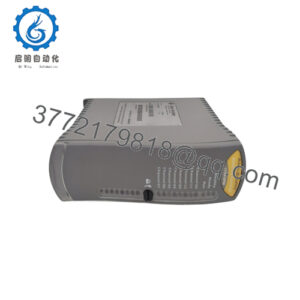
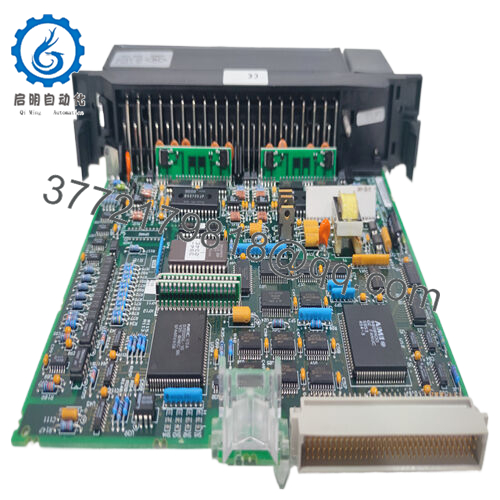
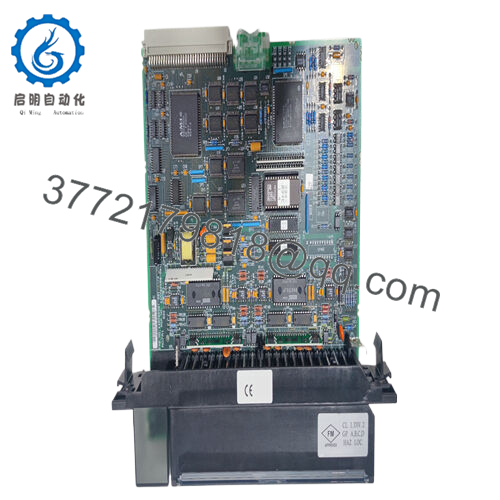
The GE IC697BEM741BE operates as a FIP Bus Controller (FBC) in the Series 90-70 family, serving as the network interface that allows the PLC to master a FIP/WorldFIP fieldbus at 1 Mbit/s. It occupies a single slot in a standard or VME Integrator rack, drawing power from the backplane, and features dual FIP bus connectors (typically for redundant or segmented networks) plus a 15-pin port for configuration or monitoring.
In a typical industrial automation stack, the module mounts in the main CPU rack, connecting to the FIP bus via shielded twisted-pair cabling to form a deterministic network linking field devices, remote I/O scanners, or smart instruments. It handles master functions like cyclic data polling, acyclic services (parameterization, alarms), device addressing (up to 128 stations), and error detection/reporting, mapping fieldbus data directly into PLC memory (%I/%Q/%AI/%AQ) for use in logic. Configuration occurs via the central CPU using Logic Developer software, with diagnostics fed back to fault tables. While it supports dual-channel operation for enhanced availability or segmentation, it integrates tightly with the VME bus for low-latency CPU access—ideal for centralized control over distributed field points in process control architectures.
| Specification | Details |
|---|---|
| Model Number | IC697BEM741BE |
| Brand | GE Fanuc (now Emerson Automation) |
| Type | Series 90-70 FIP Bus Controller (FBC) Module |
| Input Voltage | Backplane-powered (from rack supply) |
| Operating Temp Range | 0 to 60 °C (32 to 140 °F) |
| Mounting Style | Series 90-70 rack slot (single-slot VME) |
| Dimensions | Standard 90-70 module form (approx. single-slot) |
| Weight | Approx. 0.8–1 kg |
| Interface/Bus | Dual FIP/WorldFIP bus (1 Mbit/s); VME backplane |
| Compliance | CE, UL, industrial standards (hazardous area ratings possible) |
| Supported Protocols | FIP/WorldFIP (cyclic/acyclic, 1 Mbit/s) |
| Typical Power Draw | Approx. 1.3 A at 5 VDC |

- IC697BEM741BE
Opting for the GE IC697BEM741BE delivers open, deterministic fieldbus mastery in Series 90-70 deployments. Engineered for FIP/WorldFIP conformance, its dual-channel design supports network redundancy or segmentation while accommodating up to 128 devices with efficient cyclic scanning and acyclic services—ensuring fast, reliable data flow for time-critical applications like motor control, valve positioning, or safety interlocking.
Maintenance and operations teams benefit from comprehensive diagnostics (bus faults, device status, configuration errors reported to the CPU), straightforward GSD-like configuration in Logic Developer, and easy bus wiring for extended topologies. The module’s rugged VME construction tolerates industrial noise, vibration, and temperature swings, minimizing communication disruptions. In plants with legacy FIP infrastructure, GE IC697BEM741BE preserves investments by enabling seamless multi-vendor integration, reducing total ownership costs through reliable process control and simplified troubleshooting.
The GE IC697BEM741BE is commonly deployed in industries leveraging FIP/WorldFIP for its determinism and openness in legacy setups. In power generation and utilities, it’s used to connect Series 90-70 PLCs to field devices in substations or turbine auxiliaries, supporting precise monitoring and control over distributed networks with critical system uptime. Chemical and petrochemical facilities favor it for process skids or remote I/O, interfacing transmitters, actuators, and safety modules in hazardous areas where 1 Mbit/s performance ensures responsive loops.
Water treatment, mining, or heavy manufacturing sites also rely on this controller for connecting dispersed sensors and valves, maintaining reliable data exchange in extended or electrically noisy environments. Across these, the GE IC697BEM741BE excels when open fieldbus integration directly enhances scalability, interoperability, and operational continuity.
Here are some compatible or related products in the GE Series 90-70 and FIP/Genius families:
- IC697BEM741 – Base or earlier revision (BE is a later production variant; functionally equivalent)
- IC693BEM331 – FIP Bus Interface Unit or related remote I/O scanners often connected via this FBC
- IC670 series Field Control modules – FIP-compatible I/O frequently scanned by GE IC697BEM741BE
- IC697CPU series (e.g., IC697CPU788) – CPUs in the main rack that host and configure the FBC
- IC697CHS series – Rack chassis for mounting the module
- IC697BEM731 – Genius Bus Controller (alternative protocol for non-FIP networks)
- FIP/WorldFIP field devices – Generic or vendor-specific slaves (e.g., from Schneider or others on FIP)
- RX3i IC695 series with Ethernet gateways – Modern migration paths for Series 90-70 FIP setups
Before installing the GE IC697BEM741BE, confirm rack slot compatibility in a powered Series 90-70 backplane and ensure FIP bus cabling follows topology guidelines (twisted-pair, termination, max length per baud rate). Set network parameters (address, baud rate) via Logic Developer configuration, wire dual connectors for redundancy if used, and pre-validate bus recognition and basic cyclic data in a test setup—checking LEDs for status and CPU diagnostics for faults before connecting live devices.
Ongoing maintenance involves periodic LED monitoring during rounds—verify bus activity, faults, or power OK—and cable/connection inspections annually for corrosion or damage in industrial settings. Use CPU fault tables or configuration tools to review device status, alarms, or parameterization, and perform network health checks during outages. As a solid-state interface module, failures are rare, but spares enable fast swaps to sustain fieldbus communication.