 WhatsApp: +86 16626708626
 Email:
  Phone: +86 16626708626
Description
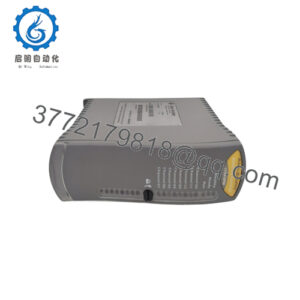
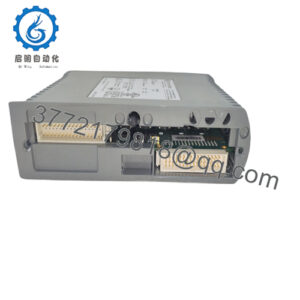
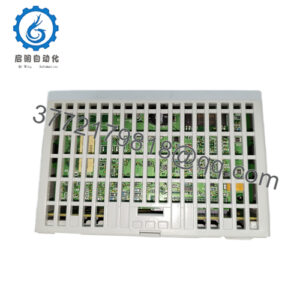
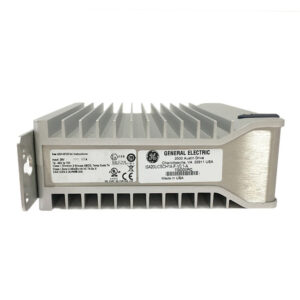
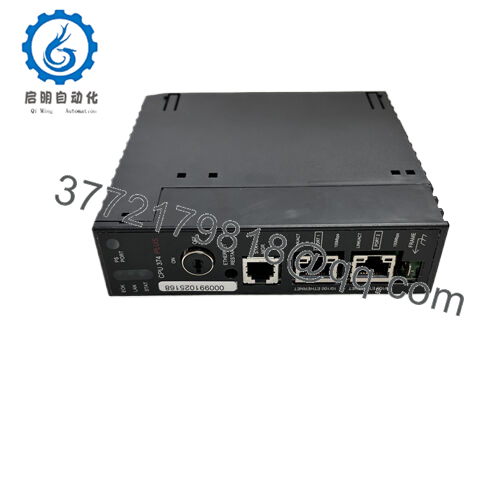
The GE IC697BEM781-HA resolves a key limitation in expanding Series 90-70 PLC systems: the need for reliable, high-density local I/O extension beyond a single rack without sacrificing performance or introducing excessive wiring complexity. In large-scale industrial setups—where control racks house hundreds or thousands of I/O points for discrete sensors, actuators, analog signals, or specialty modules—engineers often hit constraints with standard single-rack configurations, leading to overcrowded cabinets, longer scan times from remote bus delays, or the need for distributed remote I/O that adds latency and cost. The GE IC697BEM781-HA functions as a Bus Receiver Module (BRM) in the Series 90-70 architecture, enabling seamless expansion to additional local racks while maintaining tight integration and deterministic communication with the CPU.
This module becomes critical in applications requiring high I/O counts in close proximity, such as large machine lines, conveyor systems, or process skids where minimizing cable runs and preserving fast response times is essential. Facilities upgrading legacy Series 90-70 installations to handle growing production demands or new equipment integration frequently deploy it to avoid full system migrations. By supporting parallel rack expansion over dedicated expansion cables, GE IC697BEM781-HA ensures high reliability in I/O signal handling and process control, reducing risks from signal degradation over distance or the overhead of Genius/remote protocols in local zones.
The GE IC697BEM781-HA installs as a dedicated Bus Receiver Module in expansion racks of the GE Series 90-70 family, typically in the leftmost slot to receive signals from an upstream Bus Transmitter Module (BTM, such as IC697BEM713) via a parallel expansion cable. It interfaces directly with the VME-style backplane, propagating the full bus signals—including address, data, control lines, and interrupt handling—to all modules in the expansion rack, allowing them to operate as if they were in the main CPU rack. This setup supports up to a certain number of expansion racks (commonly 7-8 total racks depending on configuration and cable length limits, often up to 50 feet total from CPU to farthest rack).
In the automation stack, it extends the local I/O domain without protocol conversion, keeping scan cycle impacts minimal compared to Genius or fieldbus remote options. The module includes status indicators for power, bus activity, and faults, plus connectors for daisy-chaining to further downstream BRMs if needed. It works in conjunction with the main CPU (various IC697CPU models) and supports the full range of Series 90-70 I/O, coprocessors, and option modules in expanded racks. This positioning keeps control logic centralized while distributing physical I/O footprint, ideal for cabinet layouts in space-constrained or modular machine designs where local determinism matters most.

- IC697BEM781-HA
| Specification | Details |
|---|---|
| Model Number | IC697BEM781-HA |
| Brand | GE Fanuc (now Emerson) |
| Type | Bus Receiver Module (BRM) for local expansion |
| Input Voltage | +5 VDC and +12 VDC from backplane |
| Operating Temp Range | 0°C to +60°C |
| Mounting Style | Single slot in Series 90-70 expansion rack |
| Dimensions | Approx. 3.5″ H x 1.5″ W x 7″ D (standard module) |
| Weight | Approx. 0.5–0.8 kg |
| Interface/Bus | Parallel expansion bus via cable from BTM; VME backplane |
| Compliance | Industrial standards (CE typical for series) |
| Supported Protocols | Series 90-70 native backplane signaling |
| Typical Power Draw | Low (backplane supplied, ~2-5 W range) |
The GE IC697BEM781-HA delivers practical expansion without compromising the tight timing and simplicity that make Series 90-70 systems enduring choices for many facilities. Engineered for robust local rack interconnection, it ensures consistent I/O access and low-latency signal propagation across multiple racks, supporting stable process control even as I/O demands scale. This helps avoid the performance hits or added configuration complexity of remote I/O alternatives, while allowing better cabinet organization and reduced field wiring.
Maintenance teams appreciate the straightforward diagnostics—LEDs provide immediate visibility into bus status and power health, simplifying troubleshooting during startups or faults. The module’s passive bus extension design minimizes active components that could fail, contributing to long-term reliability and easier lifecycle management in installed bases. Overall, it lowers engineering overhead for expansions, preserves deterministic behavior in critical loops, and extends the viability of proven Series 90-70 hardware investments.
The GE IC697BEM781-HA finds common application in heavy manufacturing, automotive assembly lines, and material handling systems where large numbers of local I/O points need coordinated control across adjacent racks. In these environments, it supports continuous uptime under industrial conditions—vibration, dust, or moderate temperature swings—while enabling fast I/O updates for synchronized machine sequences or high-speed discrete logic. Process industries with skid-mounted equipment or large panel builds also use it for modular expansions that keep control centralized yet physically distributed, ensuring reliable performance in setups requiring hundreds of points without resorting to slower remote buses.
Compatible or alternative products include:
IC697BEM781 (base or other revisions) – Standard Bus Receiver Module, often interchangeable with -HA depending on exact hardware/firmware needs.
IC697BEM713 – Bus Transmitter Module (BTM), required in the main CPU rack to drive the expansion bus to this BRM.
IC697BEM711 – Earlier or variant Bus Receiver Module, suitable for similar local expansion but check revision compatibility.
IC697BEM731 – Genius Bus Controller, alternative for remote/distributed I/O when local expansion limits are exceeded.
IC697CHS790 – Redundancy-capable rack, compatible for TMR setups that include expansion via BRM modules.
IC697CPU772 – Common CPU paired with expansion modules for high-performance local I/O handling.
IC697CMM742 – Ethernet interface, add-on for network connectivity in expanded rack systems.
Before installing the GE IC697BEM781-HA, confirm the upstream BTM (typically IC697BEM713) is properly seated in the main rack and that expansion cables match specifications for length and shielding to avoid signal integrity issues. Verify rack power supply capacity supports the additional modules, and ensure adequate ventilation in multi-rack cabinets to prevent overheating during extended operation. During commissioning, power up sequentially (main rack first), check LEDs for bus active/power OK status, and use programming software to verify I/O recognition across expanded racks—address assignments should auto-propagate if configured correctly.
For ongoing maintenance, include LED checks in routine patrols to detect bus faults or power problems early. Inspect expansion cable connections periodically for secure seating, wear, or contamination, especially in vibrating or dusty areas. Clean connectors if needed and test continuity during shutdowns. Firmware or hardware updates are rarely required for this passive module, but confirm compatibility if mixing revisions across racks. These steps help sustain reliable expansion performance with minimal intervention.