 WhatsApp: +86 16626708626
 Email:
  Phone: +86 16626708626
Description
In many industrial automation and process control applications, achieving true high-availability operation requires more than just redundant CPUs or I/O—it demands a physical backplane architecture that supports dual independent systems without compromising slot density or power distribution. Single-rack failures, power supply issues, or the need for isolated control zones can force costly multi-rack expansions, increasing cabling complexity and panel space requirements while risking single points of failure in critical uptime scenarios.
The GE IC697CHS770C addresses this by providing a specialized dual-system rack designed specifically for redundancy in the Series 90-70 platform, allowing two separate 6-slot control systems (each with its own power supply and modules) to reside in a single physical chassis. This becomes essential in situations where system stability demands hot-standby or synchronized redundancy, such as in fault-tolerant configurations using Genius I/O or VME integrations. Engineers rely on the GE IC697CHS770C when consolidating redundant setups in space-constrained cabinets, ensuring high reliability through isolated backplane sections while supporting VME module spacing for third-party cards. In industrial automation environments focused on continuous operation and minimal downtime, this rack enables robust modular integration without the overhead of separate enclosures, making it a key component for process control systems prioritizing critical system uptime and high-reliability I/O signal handling.
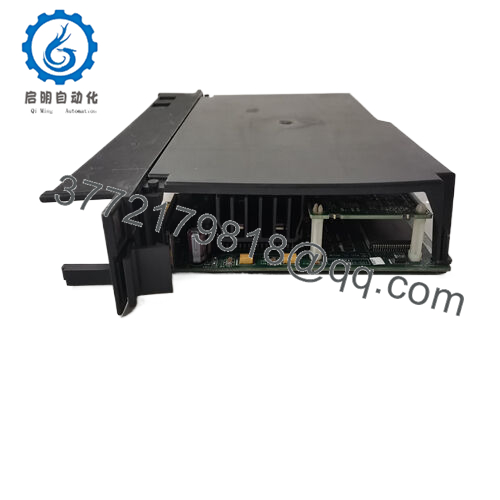
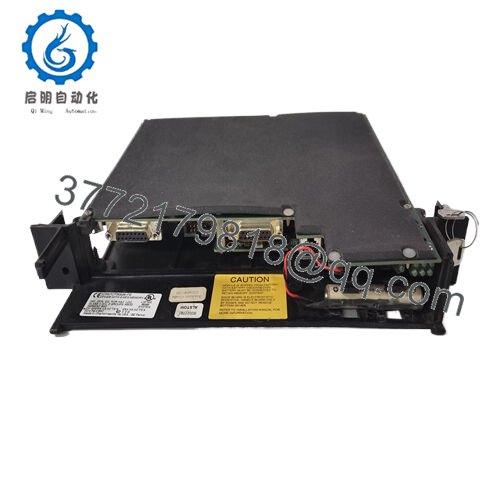
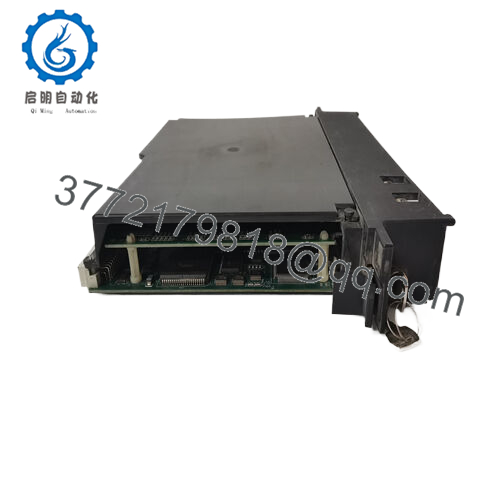
The GE IC697CHS770C serves as a rear-mount redundant rack in the Series 90-70 architecture, featuring two independent backplane sections—each with a dedicated power supply slot and six module slots—within one chassis. This layout positions it ideally for building synchronized redundant controllers, where primary and backup systems operate in parallel, communicating via bus links or shared I/O for seamless bumpless transfer during faults.
It integrates into the broader VME-based stack by providing 0.8-inch connector spacing to accommodate standard VME cards alongside native IC697 modules (which span two positions), offering flexibility for hybrid systems with custom or third-party processors. Power distribution is handled separately per section, supporting high-current supplies without cross-interference, and the rack draws minimal overhead from the I/O bus itself.
In redundant configurations, the GE IC697CHS770C works with transfer links or Genius bus controllers to synchronize data, placing it at the foundation of the automation stack for applications requiring diagnostics, hot-swapping, and isolated fault domains. Its design avoids the need for external paralleling hardware, streamlining system builds while maintaining compatibility with the full Series 90-70 ecosystem.
| Specification | Details |
|---|---|
| Model Number | GE IC697CHS770C |
| Brand | GE Fanuc / Emerson |
| Type | Dual Redundant Rear-Mount Rack |
| Input Voltage | Powered via rack supplies (typically 120/240 VAC or 24/48/125 VDC) |
| Operating Temp Range | 0°C to 60°C |
| Mounting Style | Rear-mount (panel or enclosure) |
| Dimensions | Standard 19-inch rack form (approx. 17 x 12 x 8 inches depth) |
| Weight | Approx. 10 kg |
| Interface/Bus | VME-compatible backplane (0.8″ spacing) |
| Compliance | CE, FCC, UL (typical for series) |
| Supported Protocols | Via installed modules (e.g., Genius, Ethernet) |
| Typical Power Draw | 0.5A from I/O bus; up to 20A @5V per section depending on supply |

- IC697CHS770C
Opting for the GE IC697CHS770C gives you a consolidated foundation for redundancy that directly enhances system resilience in high-stakes operations. Engineered for isolated power and signal paths between sections, it ensures long-term performance by preventing a fault in one system from propagating to the other, supporting true fault-tolerant designs without additional isolation hardware.
This architecture reduces engineering overhead through its plug-compatible layout—standard Series 90-70 modules drop in without adapters—allowing faster deployment of redundant loops and easier scaling as process demands grow. In practice, the dual-section design contributes to maintenance efficiency by enabling service on one side while the other maintains control, minimizing unplanned outages.
Overall, the GE IC697CHS770C delivers consistent high availability, protecting investments in legacy Series 90-70 hardware while providing the structural reliability needed for modern predictive maintenance strategies in industrial automation.
The GE IC697CHS770C is frequently deployed in utilities and power distribution systems for substation controls requiring critical system uptime, where dual redundant CPUs handle protection schemes in harsh conditions with electrical noise. In chemical processing plants, it’s used for reactor or batch controls within process control environments, supporting synchronized operation across temperature extremes and continuous cycles.
Manufacturing facilities with assembly lines often incorporate it for motion or packaging coordination, leveraging the rack’s density for fast data exchange and high-reliability communication in 24/7 setups demanding rapid fault recovery.
GE IC697CHS771 – Front-mount variant of the dual redundant rack for easier access in panel designs
GE IC697CHS790 – Standard 9-slot rear-mount rack for non-redundant expansions
GE IC697CHS791 – Standard 9-slot front-mount rack alternative
GE IC697CHS782 – 17-slot VME integrator rack for larger hybrid systems
GE IC697PWR711 – High-capacity power supply commonly installed in each section
GE IC697CPX935 – High-performance CPU frequently used in redundant pairs
GE IC697BEM731 – Genius I/O bus controller for distributed redundancy
Before mounting the GE IC697CHS770C, confirm panel depth accommodates rear-mount depth and that ventilation allows full airflow across both sections to stay within 0-60°C limits. Verify total current budget per section against planned modules and supplies—up to 20A at 5V for high-power configs—and ensure grounding follows VME standards to minimize noise.
Cable routing should separate power and signal wiring between sections to maintain isolation. During initial population, power one section at a time to baseline operation.
For ongoing maintenance, visually inspect backplane connectors for dust or corrosion annually, particularly in humid sites, and check fan filters if rack cooling is active. Periodically review power supply status LEDs and log module diagnostics via the programming tool for trending. A full system synchronization test during planned maintenance confirms redundancy integrity without disrupting production.