 WhatsApp: +86 16626708626
 Email:
  Phone: +86 16626708626
Description
In industrial automation landscapes built around the GE Series 90-70 platform, engineers frequently confront the limitations of legacy systems when integrating with modern Ethernet-based networks for data visibility, remote monitoring, or enterprise-level connectivity. Isolated PLC racks can bottleneck process control by confining critical I/O signals, alarms, and trend data within the backplane, forcing reliance on slow serial links or external gateways that add latency, complexity, and single points of failure. This becomes especially problematic in large-scale facilities—like refineries or assembly plants—where real-time access to controller status is essential for minimizing downtime, enabling predictive maintenance, and meeting regulatory logging requirements. The GE IC697CMM742-GH resolves these challenges as a high-performance Ethernet TCP/IP communication module, delivering 10/100 Mbps connectivity directly into the Series 90-70 VME backplane to ensure high reliability data exchange in demanding industrial automation environments.
Imagine a power generation turbine hall where multiple Series 90-70 CPUs manage generator sets, but lack native IP networking, requiring manual data pulls or third-party converters that compromise critical system uptime. Or consider a chemical batching system needing secure, high-speed links to SCADA or DCS layers without disrupting proven control logic. The GE IC697CMM742-GH becomes indispensable in such cases, supporting dual Ethernet ports for redundant or switched topologies, SRTP for GE-native clients, and EGD for peer-to-peer data sharing across controllers. It handles up to 32 simultaneous SRTP connections and embeds a web server for browser-based diagnostics, eliminating custom middleware. With built-in email alerting and SNMP support, it proactively notifies operators of faults, supporting goals like reducing mean time to repair (MTTR) and enhancing I/O signal accessibility across the plant. By enabling Modbus TCP master/slave functionality and direct register mapping, the GE IC697CMM742-GH streamlines integration with HMIs, historians, and cloud platforms, preserving investments in Series 90-70 while future-proofing network infrastructure.
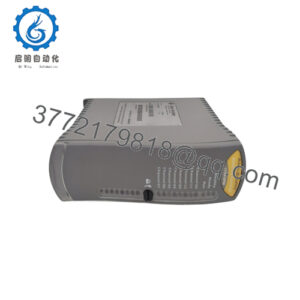
The GE IC697CMM742-GH functions as a dual-port Ethernet interface within the Series 90-70 PLC architecture, occupying a single VME slot to bridge the backplane bus with standard RJ-45 10/100Base-T networks. It supports auto-negotiation for speed and duplex, with one port configurable for redundancy via RSTP or as a standalone link, ensuring continuous operation during cable faults. Data exchange occurs through SRTP channels for client-server access to %R, %AI, and %G registers, or via Ethernet Global Data (EGD) for producer-consumer multicast messaging at sub-50 ms cycles—ideal for synchronized control across racks.
Positioned in the communication layer of the automation stack, the GE IC697CMM742-GH operates independently of the CPU sweep, using dedicated processors to offload network traffic and prevent scan time inflation. Configuration is handled via CIMPLICITY Machine Edition or Logicmaster over the network itself, where you define IP parameters, EGD exchanges, and Modbus maps without halting logic. It includes diagnostics for port status, collision rates, and packet errors, reported to the PLC fault table or via SNMP traps to network management systems.
For protocols, it natively supports SRTP, EGD, Modbus TCP, and HTTP, with firmware-flashable updates via TFTP to address security patches or feature enhancements. In redundant CPU setups, the module synchronizes with hot-standby logic for bumpless failover, maintaining network sessions. Interaction with field I/O remains through the backplane, while the GE IC697CMM742-GH exposes data upstream—pair it with analog or discrete modules for comprehensive visibility. This modular fit allows incremental upgrades in existing Series 90-70 systems, reducing engineering overhead and supporting scalable process control networks.

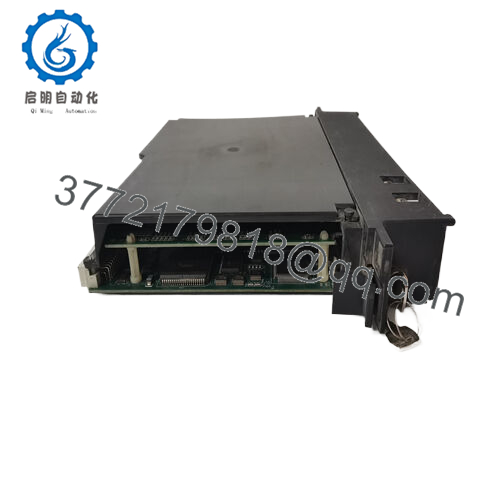
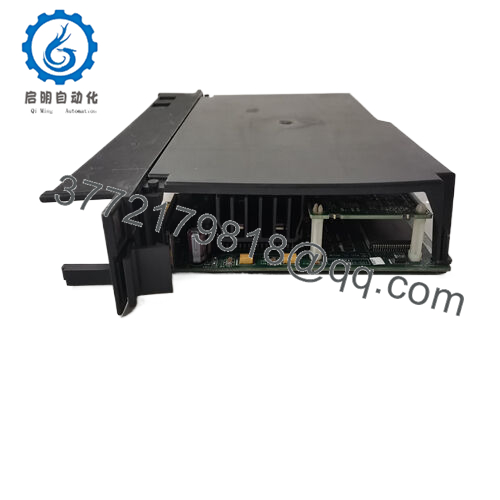
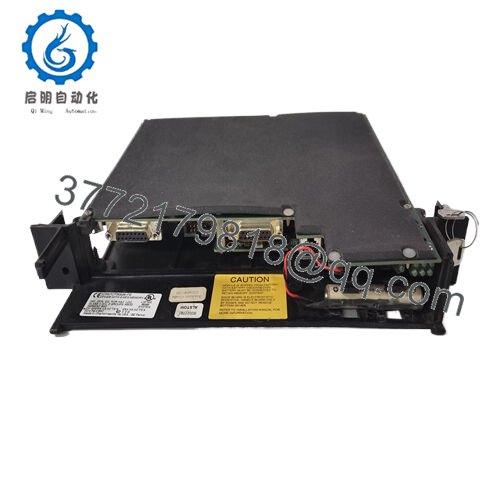
- IC697CMM742-GH
- IC697CMM742-GH
| Specification | Details |
|---|---|
| Model Number | IC697CMM742-GH |
| Brand | GE |
| Type | Ethernet TCP/IP Communication Module |
| Input Voltage | 5 VDC (from backplane) |
| Operating Temp Range | 0°C to 60°C |
| Mounting Style | VME slot in Series 90-70 baseplate |
| Dimensions | 11.1 x 1.3 x 5.6 inches (standard module) |
| Weight | 1.8 lbs |
| Interface/Bus | Dual 10/100Base-T Ethernet, VME backplane |
| Compliance | CE, UL, CSA, FCC Class A |
| Supported Protocols | SRTP, EGD, Modbus TCP, HTTP, SNMP |
| Typical Power Draw | 1.8 A at 5 VDC |
Choosing the GE IC697CMM742-GH means equipping your Series 90-70 system with a module engineered for resilient, high-throughput networking that sustains performance under heavy data loads. Dual ports with support for redundancy protocols like RSTP ensure high reliability by maintaining link integrity during switch failures or maintenance, preventing communication blackouts that could trigger process halts. The embedded web interface delivers real-time module health—viewable from any browser—simplifying diagnostics and reducing engineering overhead when validating configurations or troubleshooting from remote locations.
Integration ease is a standout value: direct EGD exchanges eliminate polling overhead in multi-controller setups, enabling sub-second data consistency across zones and supporting advanced control strategies like load sharing or fault-tolerant sequencing. Security features, including role-based access and firmware signing, ensure long-term performance in regulated environments, while the module’s isolation from the CPU logic protects against network storms. In practice, this translates to lower operational risk, with diagnostic logs feeding into historian systems for trend analysis that anticipates issues before they impact production.
The GE IC697CMM742-GH further reduces maintenance burden through hot-swappable design in powered racks and comprehensive SNMP integration, allowing IT teams to monitor alongside traditional OT tools, fostering converged operations and extending system lifespan in evolving industrial automation frameworks.
The GE IC697CMM742-GH is deployed in power plants for generator synchronization, where EGD enables fast peer-to-peer sharing of voltage and frequency data across Series 90-70 controllers, ensuring critical system uptime during grid transients in harsh electrical environments. In oil and gas midstream facilities, it connects pipeline compressors to central SCADA via Modbus TCP, supporting continuous monitoring under extreme temperatures and EMI.
Pharmaceutical continuous processing lines use the GE IC697CMM742-GH for real-time recipe parameter distribution and alarm escalation to MES, meeting fast data cycles and audit trail requirements in validated process control environments.
IC697CMM741 – Single-port predecessor for basic Ethernet needs.
IC697CMM742 – Base revision without GH firmware enhancements.
IC697CPU782 – Compatible CPU for maximized EGD performance.
IC697HSC700 – High-speed counter module often networked for pulse data.
IC697ALG230 – Analog input paired for process variable sharing.
IC697BEM731 – Genius I/O bus controller for hybrid field networks.
IC697PWR711 – Rack power supply to support increased draw.
Before inserting the GE IC697CMM742-GH into a Series 90-70 VME slot, confirm the baseplate power budget accommodates its 1.8 A at 5 VDC, and position it away from high-power modules to maintain airflow. Use Cat5e or better-shielded cable for ports, terminate properly, and pre-configure IP settings offline via Machine Edition to avoid live-network conflicts. Verify rack firmware compatibility, especially in redundant CPU setups, and plan for a managed switch with RSTP enabled if using both ports.
Ongoing maintenance includes monthly review of web diagnostics for port statistics and error counters, quarterly firmware checks against GE release notes, and annual cable inspection for wear at RJ-45 connectors. Test redundancy paths during planned outages by simulating link failure, and log SNMP traps to validate alerting. Clear diagnostic buffers periodically via the PLC to prevent overflow.