 WhatsApp: +86 16626708626
 Email:
  Phone: +86 16626708626
Description
The GE IC697CPM790-DC addresses one of the most demanding requirements in safety-critical industrial automation: achieving extremely high availability and fault tolerance in process control systems where failure is not an option. In applications like emergency shutdown (ESD), fire and gas detection, turbine control, or burner management, even brief interruptions or undetected faults can lead to significant safety risks, production losses, or regulatory violations. Standard PLC CPUs often fall short here due to single-point vulnerabilities, insufficient diagnostic coverage, or inadequate handling of hardware faults in real time. The GE IC697CPM790-DC is specifically engineered as a Triple Modular Redundancy (TMR) CPU for the Series 90-70 platform, providing built-in voting logic and fault detection to maintain continuous, reliable operation even if one of three synchronized processing paths experiences a failure.
This module becomes essential in environments governed by strict safety integrity levels (SIL), where systems must demonstrate high mean time between failures (MTBF) and support hot-swappable redundancy without process disruption. Facilities operating legacy Series 90-70 racks in critical loops—such as those in oil & gas refineries, power utilities, or chemical processing—frequently rely on it to extend the life of proven control architectures while meeting modern safety and uptime demands. By incorporating TMR with autotest routines and deterministic execution, GE IC697CPM790-DC ensures process stability, rapid fault isolation, and predictable behavior under fault conditions, reducing the probability of spurious trips or dangerous undetected failures in high-reliability I/O signal processing and control.
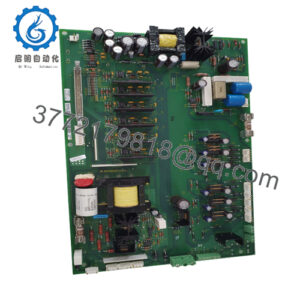
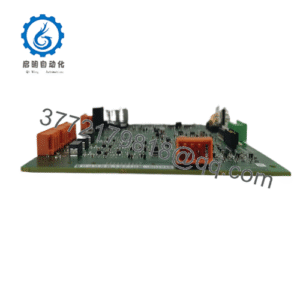
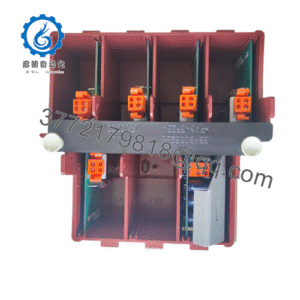
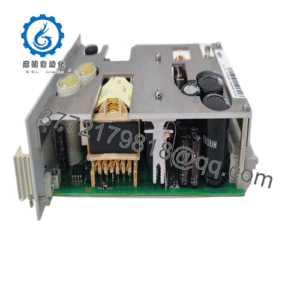
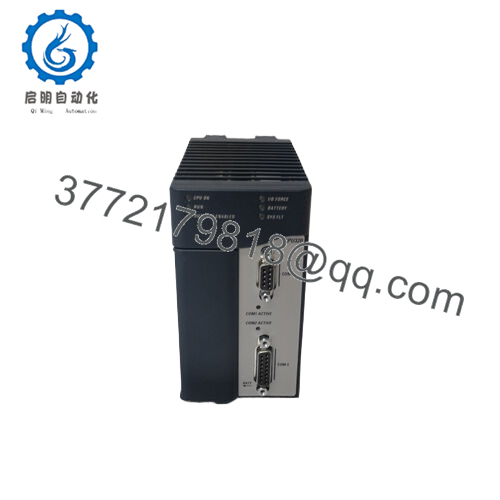
The GE IC697CPM790-DC operates as the central processing unit in GE Series 90-70 TMR (GMR) configurations, occupying a single slot in compatible racks (such as IC697CHS790 or similar) and executing application logic with 64 MHz 80486DX2-based performance. It integrates three independent processing channels that run identical programs in lockstep, continuously comparing outputs via hardware voting to detect and mask discrepancies—ensuring the system delivers correct control actions even during internal faults. This CPU communicates with I/O modules, smart option cards, and Genius or fieldbus devices over the VME-style backplane, supporting up to thousands of discrete and analog points in simplex or redundant setups.
In the broader automation stack, it serves as the core of a redundant hot-standby or TMR pair (often with additional synchronization hardware), interfacing with supervisory systems like CIMPLICITY HMI or higher-level DCS via optional LAN modules. A required Standalone C program provides the TMR operating framework, autotest routines, and fault handling logic—without it, the CPU will not run applications. Front-panel LEDs indicate status across the redundant channels, while serial ports (RS-485 compatible) enable programming, diagnostics, and firmware updates. This architecture allows seamless fault recovery, online replacement of failed modules, and minimal impact on scan times, making the GE IC697CPM790-DC ideal for positioning in safety instrumented systems (SIS) where deterministic, high-integrity control is paramount.
| Specification | Details |
|---|---|
| Model Number | IC697CPM790-DC |
| Brand | GE Fanuc (now Emerson) |
| Type | 64 MHz, 32-Bit Floating Point CPU for TMR/GMR Systems |
| Input Voltage | 24 VDC ±20% (from backplane) |
| Operating Temp Range | 0°C to +60°C (forced air cooling required above 40°C in some configs) |
| Mounting Style | Single slot in Series 90-70 rack |
| Dimensions | Approx. 21 x 23 x 5 cm |
| Weight | Approx. 0.6–1.1 kg |
| Interface/Bus | VME C.1 backplane; serial RS-485 port |
| Compliance | Industrial standards (CE, Class I Div 2 typical) |
| Supported Protocols | Series 90-70 native; Genius, optional Ethernet/LAN via add-ons |
| Typical Power Draw | Approx. 5–10 W (backplane supplied) |

- IC697CPM790-DC
Selecting the GE IC697CPM790-DC brings proven TMR reliability to legacy Series 90-70 installations, ensuring long-term performance in safety-critical environments by masking hardware faults and maintaining control continuity. Its voting architecture and integrated diagnostics minimize spurious shutdowns while maximizing dangerous-failure detection, directly supporting higher SIL ratings and reducing overall risk exposure. Operators gain confidence from the system’s ability to handle faults transparently, often without process interruption, which preserves production schedules and avoids costly downtime.
Maintenance efficiency improves through clear LED indications, accessible fault logs, and the ability to replace modules online in redundant setups—cutting repair times and engineering effort compared to non-redundant alternatives. The CPU’s floating-point capability handles complex calculations (e.g., PID loops or math-intensive safety logic) without performance penalties, while battery-backed 1 MB memory preserves programs and data during power cycles. Over the lifecycle, this translates to lower total ownership costs, easier compliance audits, and smoother integration with existing field devices and HMIs.
The GE IC697CPM790-DC is deployed extensively in industries requiring fail-safe control, including oil & gas (for ESD and fire & gas systems), power generation (turbine governors, boiler protection), and chemical/pharmaceutical processing (reactor safety interlocks). In these settings, it supports critical system uptime under harsh conditions—vibration, temperature extremes, or electrical noise—while executing fast boolean scans (0.4 µs per function) and handling large I/O counts. For continuous processes with high safety demands, the TMR design ensures deterministic response times and fault-tolerant operation, making it a go-to choice for upgrading or sustaining high-availability control in legacy racks.
Compatible or alternative products include:
IC697CPM790 (base version) – Standard non-DC variant, functionally similar for TMR applications.
IC697CPU788 – High-performance Series 90-70 CPU with redundancy support, alternative for non-TMR or hybrid setups.
IC697CPU772 – Mid-range CPU often used in simplex configurations or as a companion in redundant pairs.
IC697BEM713 – Bus transmitter module, essential for parallel programmer interface in TMR racks.
IC697CHS790 – Redundancy-capable rack, required for proper TMR deployment with this CPU.
IC697BEM731 – Genius Bus Controller, for integrating Genius I/O in TMR architectures.
IC697CMM742 – Ethernet interface module, add-on for network connectivity in critical systems.
Before installing the GE IC697CPM790-DC, confirm rack compatibility (must be a supported redundancy rack like IC697CHS790) and ensure the required Standalone C program for TMR is loaded—without it, the CPU won’t execute applications. Verify backplane power supply delivers stable 24 VDC within ±20%, and plan for forced-air cooling if ambient exceeds 40°C to prevent thermal throttling. Check firmware alignment across redundant CPUs for synchronization, and inspect battery condition/install a fresh lithium battery to safeguard memory retention. During initial setup, use the RUN/STOP switch and serial port to load programs and verify configuration matching via programming software.
For ongoing maintenance, monitor the four front LEDs regularly during patrols to detect channel faults, sync issues, or power anomalies early. Periodically test redundancy failover (online if possible) and review diagnostic buffers for trends in discrepancies or autotest results. Inspect connectors and battery every 6–12 months, especially in corrosive or high-vibration areas, and apply firmware updates from Emerson during scheduled outages to maintain compatibility and security. These practices help sustain the high MTBF and fault coverage the module is designed for.