 WhatsApp: +86 16626708626
 Email:
  Phone: +86 16626708626
Description
In power stations, chemical plants, and heavy manufacturing facilities that still rely on robust 120 volt alternating current field wiring, the GE IC697MDL240D plays a quiet but critical role as the interface between hardwired plant signals and a Series 90‑70 control system. Typical uses include monitoring motor starters, contactors, interlocks, limit switches, and panel pushbuttons that are wired at 120 volt alternating current for noise immunity and legacy compatibility. In a turbine hall, for example, the GE IC697MDL240D can be tasked with reading breaker status, transformer alarms, and permissive chains so that the programmable logic controller can make safe decisions about synchronization and loading. In a refinery or batch chemical unit, it often sits in marshalling cabinets, collecting discrete field statuses from process heaters, pump skids, and ventilation systems where control engineers prefer the higher signal levels associated with 120 volt alternating current wiring. Because it offers isolated points, the GE IC697MDL240D is particularly valuable when signals originate from different power sources or control panels, reducing the risk that a wiring fault in one area will propagate noise or damage to the rest of the control system. For integrators doing brownfield upgrades, this module allows them to retain existing 120 volt alternating current field circuits while modernizing the programmable logic controller hardware, which keeps project risk, rewiring effort, and shutdown durations under control.
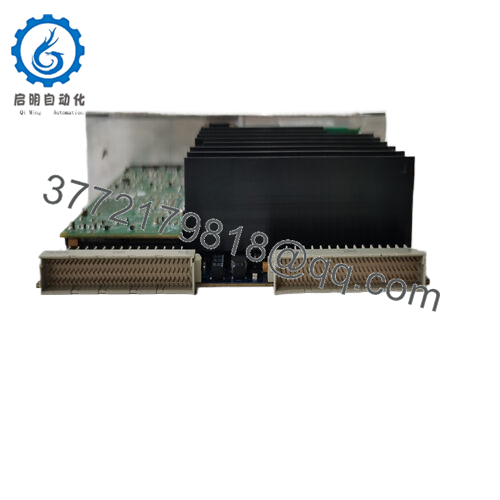
The GE IC697MDL240D is a 16‑point isolated 120 volt alternating current discrete input module designed for the GE / Emerson Series 90‑70 programmable logic controller family. Functionally, it converts field‑level 120 volt alternating current on/off signals into logic‑level status bits that the central processing unit can read over the backplane, so each channel becomes a clean, debounced input in the programmable logic controller’s reference table. Within a control system architecture, the GE IC697MDL240D is mounted in a Series 90‑70 rack alongside other discrete, analog, and communication modules; it typically handles higher‑voltage cabinet and field wiring while low‑voltage modules cover sensors and transmitters. Each of the 16 inputs is designed as an isolated point or group, which allows circuits from different sources or panels to share the same module without compromising electrical separation. Engineers and integrators view the GE IC697MDL240D as a straightforward, dependable “front end” device that lets them standardize on a proven 120 volt alternating current input design rather than mixing third‑party relays or interface strips into their Series 90‑70 cabinets.
From a functional performance standpoint, the GE IC697MDL240D is built to recognize standard 120 volt alternating current levels reliably over a wide range of real‑world supply conditions. Its input voltage range of approximately 90 to 132 volt alternating current at 47 to 63 hertz provides enough tolerance for brownouts and minor supply variations common in industrial plants. Typical input thresholds and internal filtering are tuned so that normal switching noise, brief transients, or contact bounce do not cause false transitions, which is crucial on safety interlocks and permissives.
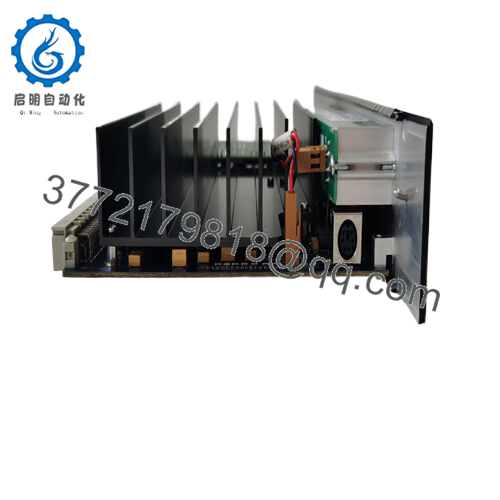
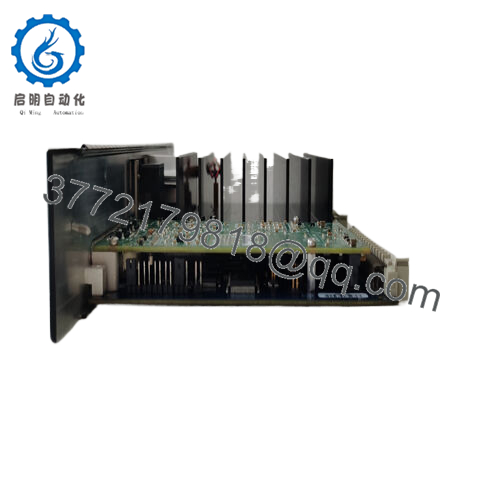
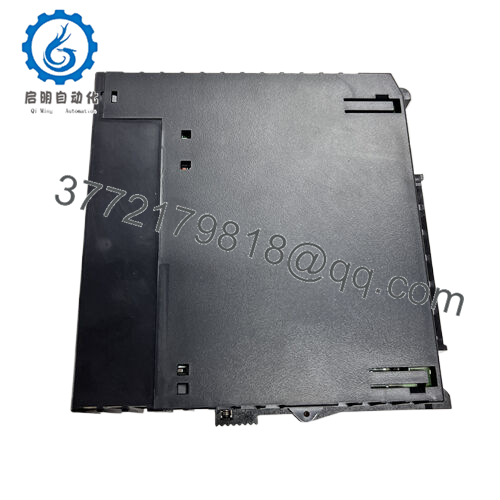
Hardware design is centered on isolation and durability. The GE IC697MDL240D offers 16 individually isolated or grouped isolated channels (depending on internal design), so field circuits can be sourced from different breakers or panels while still occupying a single module slot. This isolation reduces the need for extra interposing relays purely for galvanic separation, which simplifies wiring and can improve panel reliability. The module’s mechanical format follows the Series 90‑70 form factor, with a plug‑in front terminal strip that allows technicians to remove or replace the module without disturbing field wiring, an important advantage during troubleshooting or planned outages.
Compatibility is another advantage of the GE IC697MDL240D. It fits standard Series 90‑70 racks and is recognized by common GE programming and configuration tools alongside other discrete and analog modules. This makes it easy to map the 16 points into the programmable logic controller’s discrete input (%I) address space and combine them with alarm handling, sequence logic, and interlocks managed by the central processing unit. The module is often used together with related 24 volt direct current or relay output modules to create a coherent I/O strategy across panels and remote cabinets.
Long‑term reliability is supported by an operating temperature range that typically extends from around 0 to 60 degrees Celsius, allowing the GE IC697MDL240D to operate in most control rooms and equipment shelters when panel cooling is properly managed. Guidance from platform documentation notes that some Series 90‑70 and RX7i modules benefit from added insulation strips and adequate airflow to maintain safe temperature margins, and the GE IC697MDL240D is among the modules referenced in these upgrade notes. With correct enclosure design and periodic inspection of terminal screws and wiring condition, users can expect many years of stable service from this discrete input module.

- IC697MDL240D
| Parameter | Value |
|---|---|
| Model | GE IC697MDL240D |
| Brand | GE (Emerson Automation) |
| Type | 16‑Point Isolated 120 Volt Alternating Current Discrete Input Module |
| System Platform | GE / Emerson Series 90‑70 Programmable Logic Controller |
| Number of Input Points | 16 isolated input channels |
| Input Voltage Range | 120 Volt Alternating Current nominal (approximately 90–132 Volt Alternating Current, 47–63 Hertz) |
| Input Type | Discrete on/off status sensing |
| Power Supply Source | Backplane power from Series 90‑70 rack |
| Operating Temperature Range | Typically 0 °C to 60 °C (per Series 90‑70 I/O environmental ratings) |
| Mounting | Plug‑in module for Series 90‑70 racks |
| Field Wiring Connection | Front terminal strip, removable for service |
| Isolation | Electrically isolated input channels or groups |
| Environmental Rating | Industrial control panel use within Series 90‑70 guidelines |
| Typical Applications | 120 Volt Alternating Current motor starters, interlocks, panel signals |
IC697MDL240 – Earlier or base catalog version of the 120 Volt Alternating Current 16‑point input module closely related to GE IC697MDL240D.
IC697MDL241D – Companion discrete input module (different voltage or wiring style) often combined with GE IC697MDL240D in mixed‑voltage cabinets.
IC697MDL250G – Higher‑density or alternate‑voltage discrete input module used where more points are needed in one rack.
IC697MDL341E – Discrete output module paired with GE IC697MDL240D to drive contactors and indicators corresponding to its inputs.
IC698CPE010 – RX7i central processing unit that can coexist with Series 90‑70 I/O, including GE IC697MDL240D, during migration projects.
IC698CPE030 – Higher‑performance RX7i central processing unit used when upgrading control while reusing Series 90‑70 discrete modules like GE IC697MDL240D
Before installing the GE IC697MDL240D, an integrator should verify that the cabinet has adequate space, backplane power capacity, and airflow for the overall Series 90‑70 or RX7i configuration. Panel layouts should keep 120 volt alternating current wiring segregated from low‑voltage and communication cabling to minimize noise coupling, and protective devices such as fuses or miniature circuit breakers should be sized so that a field short will clear upstream protection without damaging the module. Grounding practices should follow GE and local standards, with shields and commons terminated in a controlled manner to avoid ground loops, especially when signals arrive from long runs in the field. During commissioning, it is good practice to walk each input with a test source or the actual field device, confirming status changes in the programmable logic controller and documenting address assignments.
Maintenance for the GE IC697MDL240D centers on keeping terminations tight, the environment within specified temperature limits, and the backplane free from contamination. Periodic visual inspections for discoloration, loose conductors, or signs of moisture ingress help catch issues before they lead to intermittent faults on discrete inputs. When firmware or platform guidance is updated—for example, recommendations about insulation strips or rack cooling for certain module versions—plants should incorporate these changes during planned outages to preserve long‑term reliability. For facilities migrating towards newer RX7i or PACSystems platforms, documenting how each GE IC697MDL240D channel is used will simplify the transition, whether the module is retained under a supported backplane or replaced with a functionally similar I/O card.