 WhatsApp: +86 16626708626
 Email:
  Phone: +86 16626708626
Description
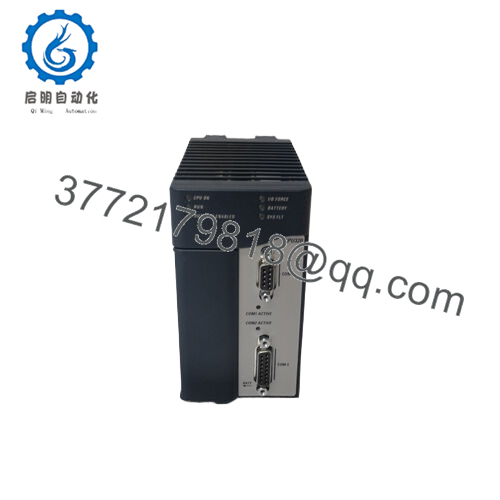
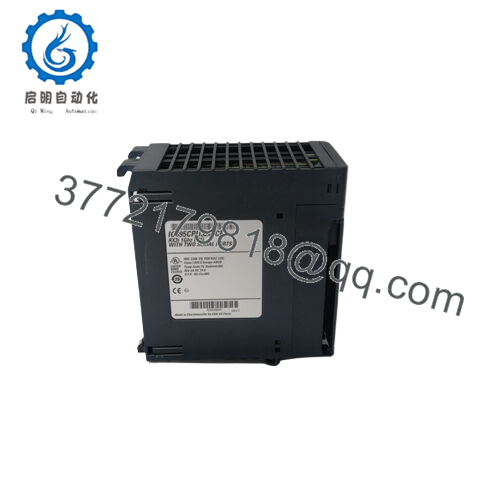
The GE IC697MEM735D 32-bit CMOS expansion memory module supplies the substantial extra capacity needed for Series 90-70 systems pushing the limits of onboard CPU memory through extensive ladder logic, large data tables, retentive registers, or integrated diagnostic and trending functions. In industrial automation and process control, mature 90-70 racks frequently encounter memory exhaustion as applications mature—adding more subroutines, recipe handling, alarm histories, or math-intensive blocks fills available space, leading to forced optimizations, split programs, or performance compromises that affect scan times and maintainability. The GE IC697MEM735D counters this with a full 512 KB of configurable CMOS RAM, providing ample room for growth while keeping execution deterministic and avoiding the need for external data handling solutions.
This makes GE IC697MEM735D a go-to choice for engineers in demanding mid-to-large installations where program size and data storage requirements exceed what base CPUs or smaller expansions (like 256 KB options) can support. It preserves system integrity in continuous operations by enabling richer functionality—such as detailed batch tracking or complex sequencing—without sacrificing reliability or forcing premature platform changes.
The GE IC697MEM735D attaches as a daughterboard directly to compatible Series 90-70 CPUs, including models like IC697CPU780, CPU781, CPU782, CPU788, and CPU789, in the same rack slot—no additional backplane space required. It uses low-power CMOS SRAM technology, with all memory retained via the host CPU’s lithium battery (typically IC697ACC701), offering nominal 6-month hold-up without applied power and a battery shelf life up to 10 years at 20 °C. The entire 512 KB is user-configurable through programming software (VersaPro or Control) into logic memory, data/storage areas, or a combination, with CPU-performed background checks on program portions and validation during power-up/reset for storage regions.
Integration is transparent: the expanded memory appears seamlessly to the system for program loading, execution, and register access. Diagnostics tie into the host CPU’s fault tables and LEDs—no separate indicators on the memory board. Positioned at the processor core, GE IC697MEM735D boosts capacity for more sophisticated control algorithms, larger I/O mapping, or local data buffering while interfacing smoothly with backplane I/O, Genius networks, and higher-level SCADA or HMI systems.

- IC697MEM735D
| Specification | Details |
|---|---|
| Model Number | IC697MEM735D |
| Brand | GE Fanuc (now Emerson) |
| Type | 32-Bit CMOS Expansion Memory Module |
| Input Voltage | Powered from host CPU (5 V DC) |
| Operating Temp Range | 0 to +60 °C |
| Mounting Style | Daughterboard on compatible CPU (same slot) |
| Dimensions | Fits within host CPU footprint (standard Series 90-70 compatible) |
| Weight | Approx. 0.2–0.5 lbs (0.09–0.2 kg) |
| Interface/Bus | Direct connection to host CPU |
| Compliance | CE, various industrial standards |
| Supported Protocols | N/A (memory expansion only) |
| Typical Power Draw | Negligible (powered via host) |
Incorporating the GE IC697MEM735D unlocks significant headroom for program and data expansion, allowing teams to build more comprehensive logic, maintain larger retentive datasets, or incorporate advanced features like extended trending without hitting ceilings that degrade performance. The CMOS implementation with reliable battery backup ensures data integrity through power events, minimizing recovery efforts and supporting consistent long-term operation in mission-critical setups.
Maintenance stays low-impact: attachment is straightforward, diagnostics centralize through the CPU, and the design withstands industrial environmental stresses like vibration and moderate temperature variation. By maximizing existing rack investments, it defers costly migrations, reduces engineering rework on memory-constrained code, and keeps systems agile as operational needs scale—delivering better value in environments where downtime or redesign carries high consequences.
Power utilities often equip GE IC697MEM735D-enhanced CPUs for detailed generator control logic, event logging, or protective relay coordination where extensive programs demand extra memory for critical system uptime. In heavy manufacturing—steel, automotive, or paper mills—it accommodates complex machine sequencing, production recipes, and diagnostic buffers in high-throughput, continuous processes. Chemical, petrochemical, and batch-oriented plants rely on it for expanded interlock logic, historical data storage, or recipe management in settings prioritizing high reliability and minimal interruptions.
Compatible or alternative products include:
IC697MEM735 (base or other suffixes) – Standard 512 KB version; D suffix typically a later production revision
IC697MEM733 – 256 KB CMOS expansion (with or without flash options) for moderate needs
IC697MEM731 – 128 KB variant suited to lighter expansions
IC697MEM717 – Earlier 256 KB option often used on similar CPUs
IC697CPU782 – High-performance CPU commonly hosting
GE IC697MEM735D for demanding applications IC697CPU788 – Advanced CPX-family CPU that supports this memory for larger programs
IC697CPU789 – Another compatible high-end CPU model for expansion
IC697ACC701 – Replacement lithium battery for host CPU to ensure memory retention
Before installing the GE IC697MEM735D, power down the rack and confirm your host CPU (e.g., CPU781, CPU782, CPU788) supports this expansion—check compatibility in the relevant GFK manual. Align and secure the daughterboard carefully per host instructions to avoid pin damage, then power up and use programming software to allocate the 512 KB (logic vs. data/retentive) before downloading programs. Validate no memory faults appear in CPU tables post-install, and inspect/replace the host battery if it’s aged beyond 5–10 years or shows low status.
Maintenance remains practical: periodically review CPU fault tables for parity/checksum errors that might signal battery degradation or rare issues. No routine cleaning or calibration applies beyond general rack hygiene—keep vents clear and environment controlled. Verify key retentive data or program integrity after long outages. Stock a spare GE IC697MEM735D for fast attachment; with program backups, recovery is quick and non-disruptive.